

![Blockchain, the Rail for Everything [FP Weekly 28]](/_next/image?url=https%3A%2F%2Fkrotgrfjzckvumudxopj.supabase.co%2Fstorage%2Fv1%2Fobject%2Fpublic%2Fassets%2Fimg%2Fcontent%2Farticle%2Fnotion-import%2F43cg86mr8ytpg1.png&w=3840&q=75)
Table of Contents
- 1. Major News
- [Institution] Robinhood, The World Is Flat
- [Tech] What Does Cloudflare’s Monetization Gateway Mean?
- Others
- 2. Data Spotlight
- Why Emerging Markets Matter: From Crypto Cards to Headless Merchants (Link)
- 3. Four Pillars Weekly
- : : Lido: The Most Important Protocol on Ethereum (Link)
- : : A Six-Month Review of Cap: From Stablecoin to Credit Market (Link)
- : : Korea is at a Turning Point (Link)
- : : What You Missed Yesterday: Robinhood’s “New” Tokenized Stock Playbook (Link)
- Comments
- 4. Macro & Onchain Metrics
Researcher

1. Major News
[Institution] Robinhood, The World Is Flat
What Happened?

On July 1, 2026, Robinhood held its “Robinhood Presents: The World Is Flat” event in London and announced a series of major updates:
- Official launch of the Robinhood Chain mainnet: Robinhood launched the mainnet of Robinhood Chain, an RWA-focused chain built using Arbitrum’s technology stack. From Day 1, it onboarded major dApps including Uniswap, LayerZero, Morpho, 1inch, and dYdX.
- Support for new Stock Tokens in Robinhood Wallet: New Stock Tokens, available in more than 120 countries, were launched and can be used in Robinhood Wallet and on Robinhood Chain.
- Launch of Robinhood Earn: Robinhood will launch a lending product for U.S. investors offering approximately 7% APY. It operates on Morpho on top of Robinhood Chain. The product is protected by insurance through Lloyd’s of London and RELM.
- Lighter integration: Users in eligible jurisdictions can access Lighter’s perpetual futures feature inside Robinhood Wallet.
- Expansion of perpetual futures trading in the EU: In the EU, Robinhood is expanding beyond crypto futures into perpetual futures trading based on traditional financial assets such as gold, silver, equities, and crude oil.
- Maker/taker fee structure for professional traders: Robinhood is introducing a maker/taker fee structure favorable to U.S. professional traders based on trading volume.
- Launch of crypto trading services in Canada: Robinhood acquired Canada’s WonderFi and officially launched crypto trading services based on that acquisition.
- Acquisition of Singapore MAS Capital Markets Services license: Robinhood announced that its Robinhood Singapore entity received a capital markets services license from the MAS, laying the groundwork to provide brokerage services to Singapore customers in the future.
- Planned launch of crypto trading services in the UK: Robinhood already operates a stock investing platform in the UK and plans to expand soon into crypto trading services.
- Expansion of agentic trading technology into crypto: Robinhood announced agentic trading for stocks and options in the U.S. last month, and it plans to expand this feature into crypto.
Among these, two points deserve particular attention. The first is the official launch of the Robinhood Chain mainnet. Robinhood officially launched a new Ethereum Layer 2 network called Robinhood Chain, built on Arbitrum’s technology stack. Unlike other general-purpose blockchains, Robinhood Chain has a clear goal of building an ecosystem centered on tokenized stocks, and from Day 1, it onboarded core DeFi protocols such as Uniswap, Morpho, Lighter, and Rialto.
The second is the launch of Robinhood’s new Stock Tokens service. Robinhood had already been offering a Stock Tokens service to EU investors. However, that service simply tokenized derivative contracts between investors and Robinhood EU in the form of receipts, and it had a closed structure in which trading was only possible inside the app. By contrast, the newly announced Stock Tokens from Robinhood are issued using a Jersey offshore structure, in a format similar to Backed Finance or Ondo Global Markets, and they can be freely used on Robinhood Chain and in the DeFi protocols built on top of it.
Researcher’s Comment
True to the name of the event, Robinhood presented a vision of lowering entry barriers created by countries, asset types, time zones, and other factors, enabling anyone to access global financial markets. This is a declaration that blockchain will not be just one feature among many, but a core system in the future Robinhood is envisioning.
What Robinhood Chain suggests is whether it can show a playbook that differentiates itself from Coinbase. Coinbase has had target narratives that change by season, such as social and trading, but the broad direction has been to build a general-purpose onchain ecosystem that can connect with the Coinbase ecosystem. Robinhood Chain takes a different approach. Robinhood aims to build an ecosystem based on tokenized assets. In addition, since Coinbase is hinting that it may move beyond the Optimism ecosystem and launch a token, it will also be interesting to watch whether Robinhood Chain continues to use Arbitrum’s technology stack and whether it eventually issues a token.
Robinhood’s new Stock Tokens service also offers an interesting insight. Through a regulatory framework and tokenization structure that are completely different from its existing Classic Stock Tokens, Robinhood is launching a tokenized stock service with a completely different target investor base and use case from before. Although it cannot serve U.S.-based investors or U.S. persons due to U.S. Reg S regulations, it will be interesting to see how far this service, which is based on U.S. stocks, can expand globally through onchain rails.
[Tech] What Does Cloudflare’s Monetization Gateway Mean?
What Happened?
On July 1, Cloudflare announced a Monetization Gateway that can charge AI bots for web requests on a per-request basis. When an agent requests a resource, the gateway returns an HTTP 402 code along with the price, payment asset, and wallet address. When the agent approves the payment from its wallet and makes the request again, only requests with verified proof of payment are forwarded to the origin server. Since the entire process, from price notification to payment verification, is handled at the edge, the origin does not see payment traffic. Sellers can add payments simply by writing billing rules through the dashboard, API, or Terraform, without building billing infrastructure or integrating a payment gateway.
The features announced alongside it include behavior-based billing that charges only for GET and POST requests to specific API paths, variable pricing based on task complexity or computing usage, and unauthenticated user billing that returns 402 instead of 401 when unregistered agents try to access a resource. Dashboard examples include pricing levels that existing card rails structurally could not serve, such as $2 per image generation API request and $0.001 per news article path request. The announcement also included a feature in which Cloudflare observes traffic and proactively suggests endpoints that could be monetized.
The payment protocol used is x402. In September 2025, Cloudflare co-founded the x402 Foundation with Coinbase and introduced a Pay-Per-Crawl model. This announcement is a continuation of that direction, formally productizing per-request billing. As examples of payment assets, the announcement specified USDC as well as OUSD, Open USD, a consortium stablecoin announced on June 30, one day before the announcement, by a coalition of more than 140 companies including Cloudflare.
Researcher’s Comment
For 30 years, the web’s revenue model was designed around human visits. Referrals from search results or links supplied visits to websites, and ad impressions and subscription conversions occurred on top of that. In the era of search, when allowing a few pages to be crawled would bring referrals back, allowing crawling was not a cost but an investment. However, AI bots have broken this implicit exchange formula. Automated traffic has already exceeded half of all traffic at 57.5%, and while Googlebot crawls 5 pages per referral, GPTBot crawls 1,276 pages and ClaudeBot crawls 23,951 pages. Content is extracted at the moment of request, and people do not come to the original site. From the site’s perspective, the revenue event disappears and essentially only the serving cost remains.
That said, fully blocking AI bots is unlikely to be the answer. 53.3% of AI bot requests come from training crawlers that have no path to generate referrals in the first place. By contrast, agents that access content only when instructed by users still account for just 2.6% of total traffic, but they have grown 15 times in one year and are increasing their share the fastest. Behind agents are users with real demand. Yet for these buyers, to whom neither ads nor subscriptions apply, the only practical unit that can be charged is the request itself, and until now, the web did not have a payment method that could collect such payments. In other words, agents were not free riders, but customers entering a store with no checkout counter. The Monetization Gateway is an attempt to place a checkout counter in that store, replacing the old binary of allow or block with price lists tailored to each agent.
The background behind choosing x402 as the payment protocol is also worth examining. Functionally, it is open-source based and enables micropayments. The payment itself serves as a form of identity credential, so separate account registration is not required, and it has the flexibility to accommodate other rails such as card networks in addition to stablecoins. From a governance perspective, x402 also became a neutral standard in April 2026 when it launched under the Linux Foundation with participation from 22 organizations. In June, AWS integrated x402 into CloudFront, meaning that the world’s two major edge networks began using the same payment handshake. From the perspective of agents that cannot implement different payment APIs for every site, a single handshake that works across the web is an attractive condition for adoption.
The potential combination with OUSD is another key axis of this announcement. OUSD has a revenue-sharing structure that distributes most reserve income to partners that drive adoption. As more of the gateway’s payment flow is settled in OUSD, Cloudflare earns revenue through reserve economics rather than transaction fees. An edge network covering roughly 20% of global web traffic becomes OUSD’s native distribution surface, creating a structure in which the same face appears across every layer of the agent payment stack, from the protocol, x402, to the settlement asset, OUSD, and distribution, the edge network.
Ultimately, this announcement shows that when the web’s primary users shift from humans to agents, the revenue model can also be reorganized from a visit-based model to a request-based model. However, the price tags and checkout counter have only just been set up, and whether agents actually have willingness to pay has not yet been verified. The key point to watch is whether content businesses set billing rules, whether agent operators accept those prices, and whether real transactions emerge. In other words, the question is whether a request-based revenue model can function in the market.
Others
Crypto
- Ethereum zkRollup project Loopring sunsets DEX, citing lack of meaningful adoption
- Symbiotic officially pivots to collateral markets with Core V2 launch
- Solana onchain governance is live
- Drift is rebranding to Velocity
- World Launches as the Solana Prediction Market
Institution
- BlackRock's Aladdin platform adds deeper support for Ethena's stablecoin products
- BNY and Circle expand partnership, adding mint and burn capabilities for USDC
- Ondo tokenizes BlackRock's IVV ETF and Micron stock under US custodial model
- Backpack EU has secured its MiCA license and Payment Institution license from the Bank of Latvia
Tech
Investment
- eToro leads $12.5 million round in onchain perps exchange Extended
- Access to certain services on Bybit Global for EEA residents will be progressively limited
Asia
- India's USDT premium tops 8.5% as crypto remittance crackdown squeezes stablecoin supply
- Taiwan passes key crypto law, clearing legal uncertainty for digital asset sector
2. Data Spotlight
Why Emerging Markets Matter: From Crypto Cards to Headless Merchants (Link)
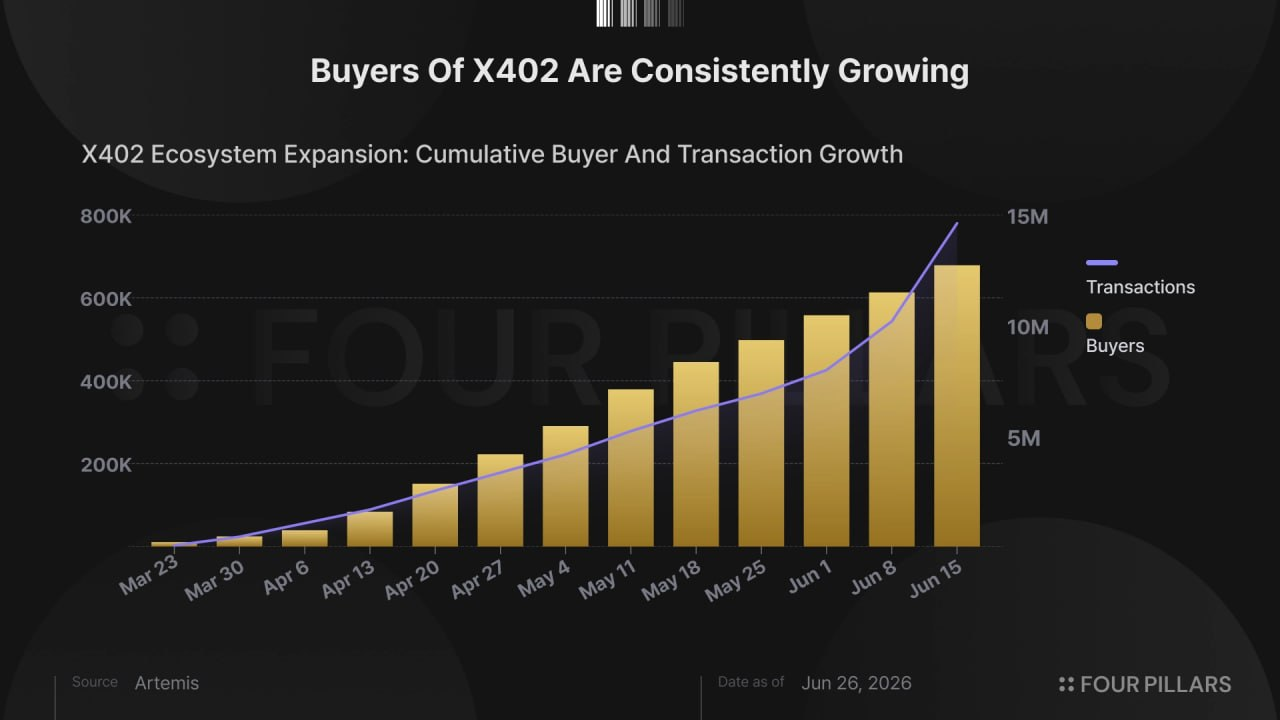
3. Four Pillars Weekly
: : Lido: The Most Important Protocol on Ethereum (Link)
- Understanding Lido lets you understand the changes in the Ethereum staking market and DeFi infrastructure. This article covers how Lido popularized liquid staking by solving the high barrier to entry and the liquidity problem of early Ethereum staking, and how a protocol once criticized as a symbol of centralization risk is evolving into core staking infrastructure aligned with Ethereum's direction of decentralization.
- Lido's history runs alongside the process by which the Ethereum staking market matured through experiment and crisis. Having grown by solving the early user experience problems, Lido went through several risks and learned from them, evolving into more sophisticated staking infrastructure.
- Although Lido protocol's market share has declined significantly since its 2023 peak, its staked ETH has remained relatively resilient, staying near historical highs. This means not so much a weakening of Lido's competitiveness as the rapid maturing of the Ethereum staking market. The differentiation of the staking service itself is leveling off, and today's staking market is no longer a simple competition over share among protocols. It should be seen as a market differentiated by target user segment. Lido too is now expanding from a single liquid staking product into a platform on which various staking demands can sit.
- Lido protocol's decentralization is not a finished state but a process of continually coordinating different trust models and interests. Lido has gradually differentiated its modules, governance, and operating entities, distributing power and accountability more widely.
- Lido's next task is to be redefined as institutional onchain/DeFi infrastructure suited to a changing Ethereum era. As market demand and Ethereum itself change rapidly, Lido's future depends on how safely it can absorb and productize the market's changes. This is why Lido is worth looking at again now. Tracing Lido's history and changes lets you understand, in compressed form, how Ethereum financial infrastructure has been productized, and gauge what form the next standard, demanded by the new institution-centric crypto demand, will take.
: : A Six-Month Review of Cap: From Stablecoin to Credit Market (Link)
- The core challenges that lingered at Cap six months ago, namely its heavy reliance on self-delegation and low capital utilization, have now been resolved to a meaningful degree. EtherFi and Bedrock have each stepped into independent underwriter roles backed by ETH and BTC collateral, moving the system away from self-delegation, and reserve utilization, which sat at just 5.3% in December 2025, climbed to roughly 60% by the end of the first quarter of 2026. The 100 million dollar revolving credit facility extended to Susquehanna Crypto also signaled that institutional borrowing has begun to move beyond the pilot stage.
- The number of registered underwriters grew from 12 to 22 and borrowers from 18 to 30, yet it remains unconfirmed whether an independent credit market, in which different underwriters price different borrowers differently, is actually functioning. It is still untested in practice how far operators' real strategies and legal agreements can be publicly verified, and whether the slashing and repayment paths will work as intended in the event of a large default.
- In terms of metrics, the borrowing utilization rate and the composition of yield sources now matter more than total value locked. TVL stands at around 250 million dollars, below its previous peak, but borrowed capital has grown substantially compared with before. The yield on stcUSD has also fallen from about 8.6% in December 2025 to the low 5% range today, yet its relative standing against comparable products has actually improved.
: : Korea is at a Turning Point (Link)

- Korea's fast-moving, speed-driven culture made it an early crypto hotbed, producing the 2017 kimchi premium, the 2021 NFT mania, and the painful 2022 Terra/Luna collapse before the market began to mature.
- Retail trading rebounded powerfully to roughly $77.5B in H2 2024 with close to 20% of the population invested, though liquidity has recently rotated toward a booming equities market.
- The market is now institutionalizing as clearer laws recognize tokenized securities, the Bank of Korea's CBDC pilot and private won stablecoins move toward coexistence, and major banks and platforms race to build the payments stack.
- Korea has long been restless and risk-seeking, always looking toward whatever comes next. That same restlessness once produced chaos in its crypto market, and now it is producing structure.
: : What You Missed Yesterday: Robinhood’s “New” Tokenized Stock Playbook (Link)
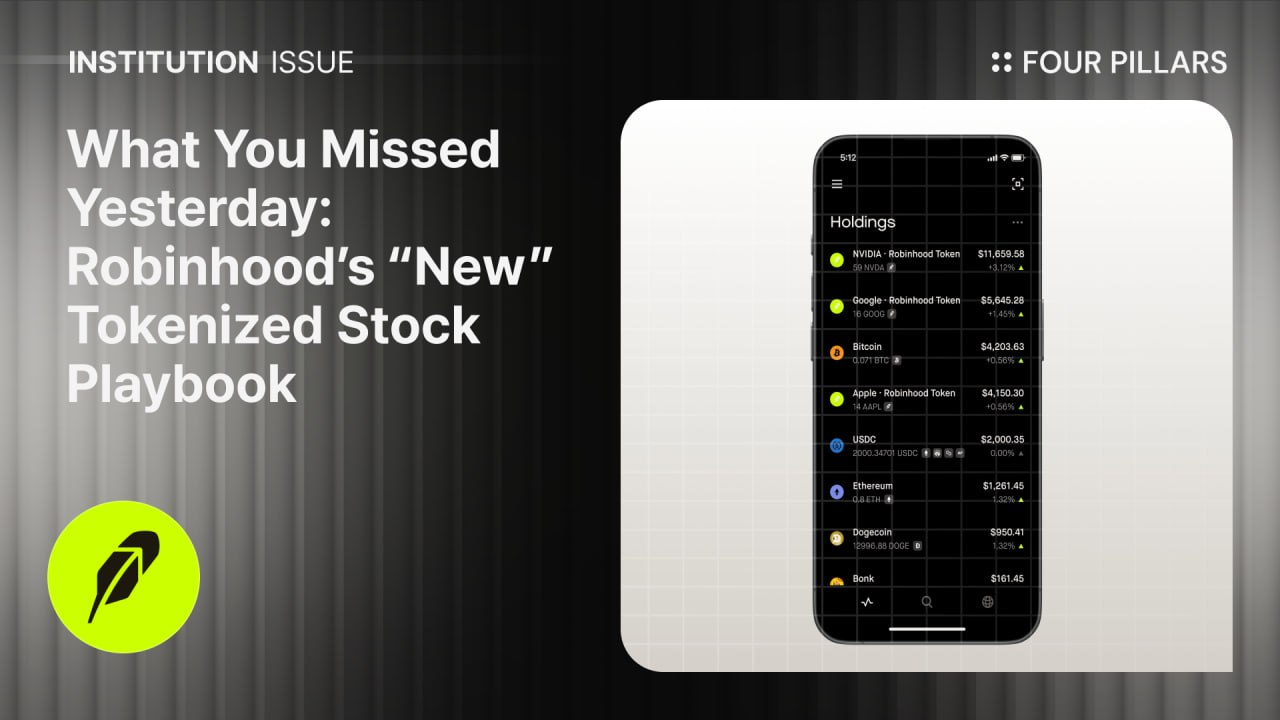
- On July 1, 2026, Robinhood held an event in London called “Robinhood Presents: The World is Flat” and announced a series of major updates. The news that attracted the most attention was the mainnet launch of Robinhood Chain, but taking a closer look at the news around tokenized stocks reveals some interesting insights.
- Robinhood renamed its existing service offered through its European entity, Stock Tokens, to Classic Stock Tokens, and launched a new Stock Tokens service. The two are similar in that they tokenize stocks with 1:1 backing, but they differ across every dimension, including tokenization structure, jurisdictional authorities, and regulatory frameworks. As a result, they show very different characteristics in functional terms, such as investor accessibility and onchain composability.
- This article provides an in-depth analysis of how Classic Stock Tokens and Stock Tokens differ, and uses that analysis to examine the direction Robinhood aims to take.
Comments
- They Sold MSTR Again, But I Stopped Shorting MSTR
- Why Cloudflare's Monetization Gateway Matters
- What Asia's Stance Means for USDT and USDC
4. Macro & Onchain Metrics
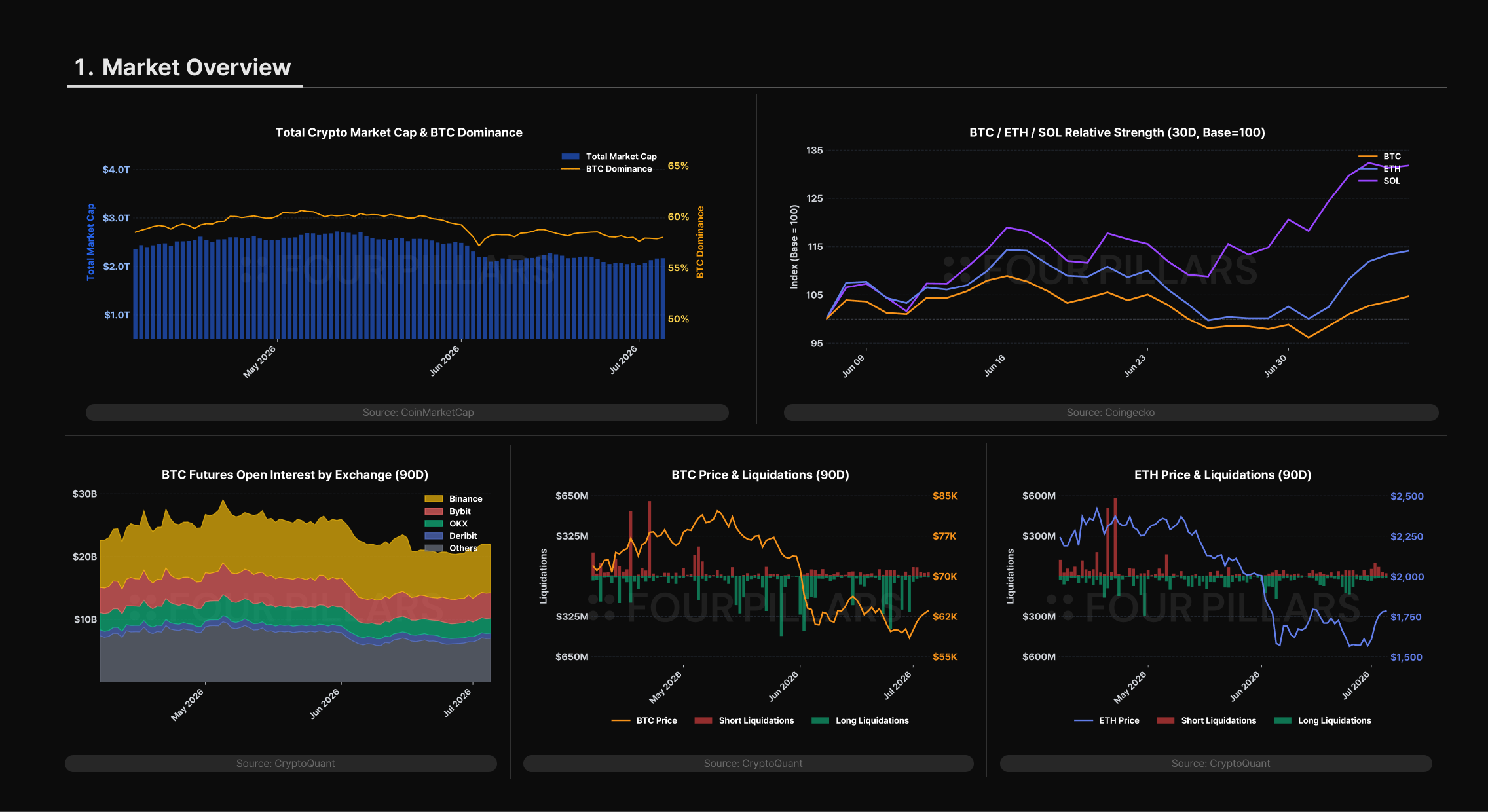
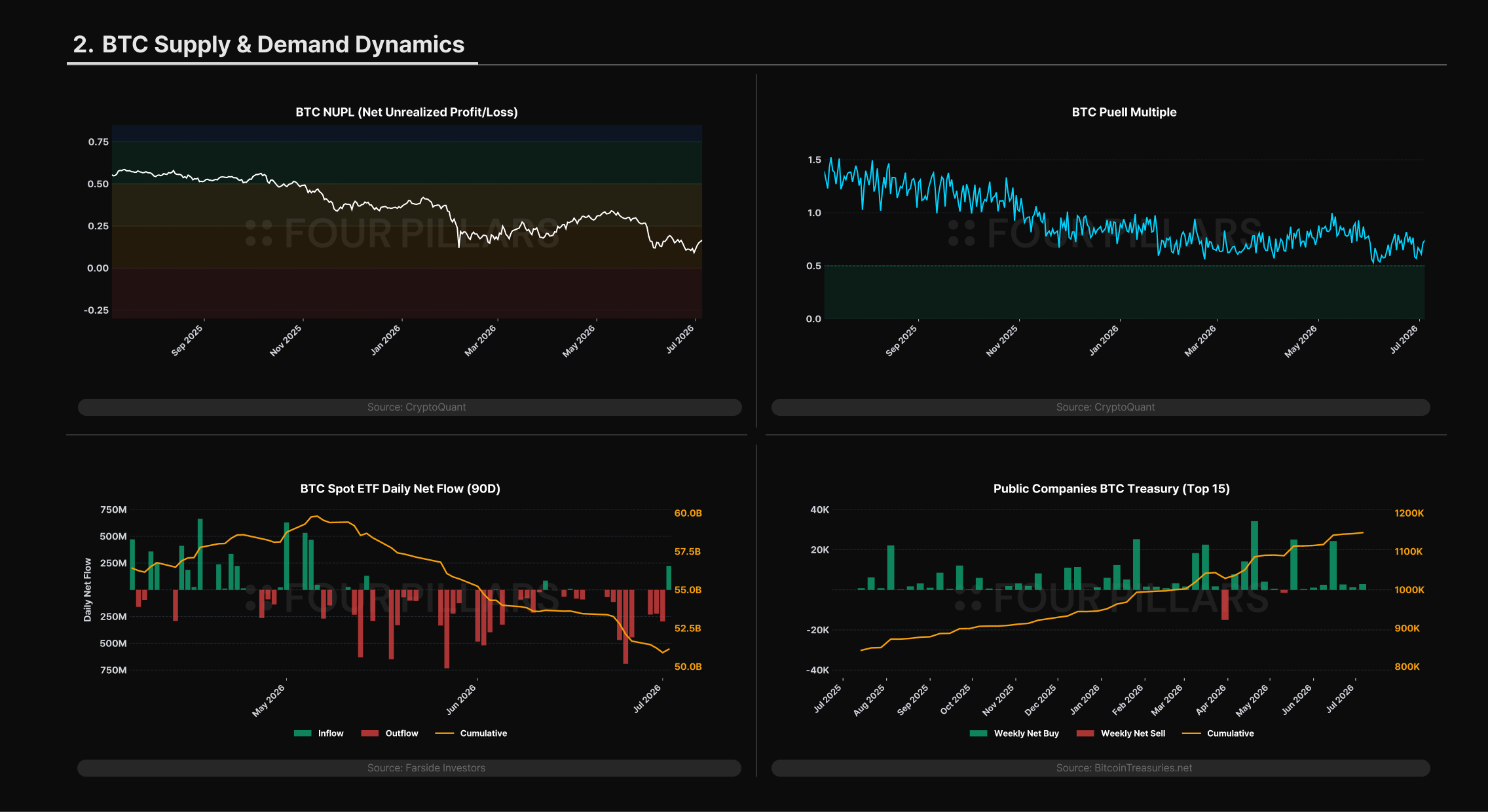
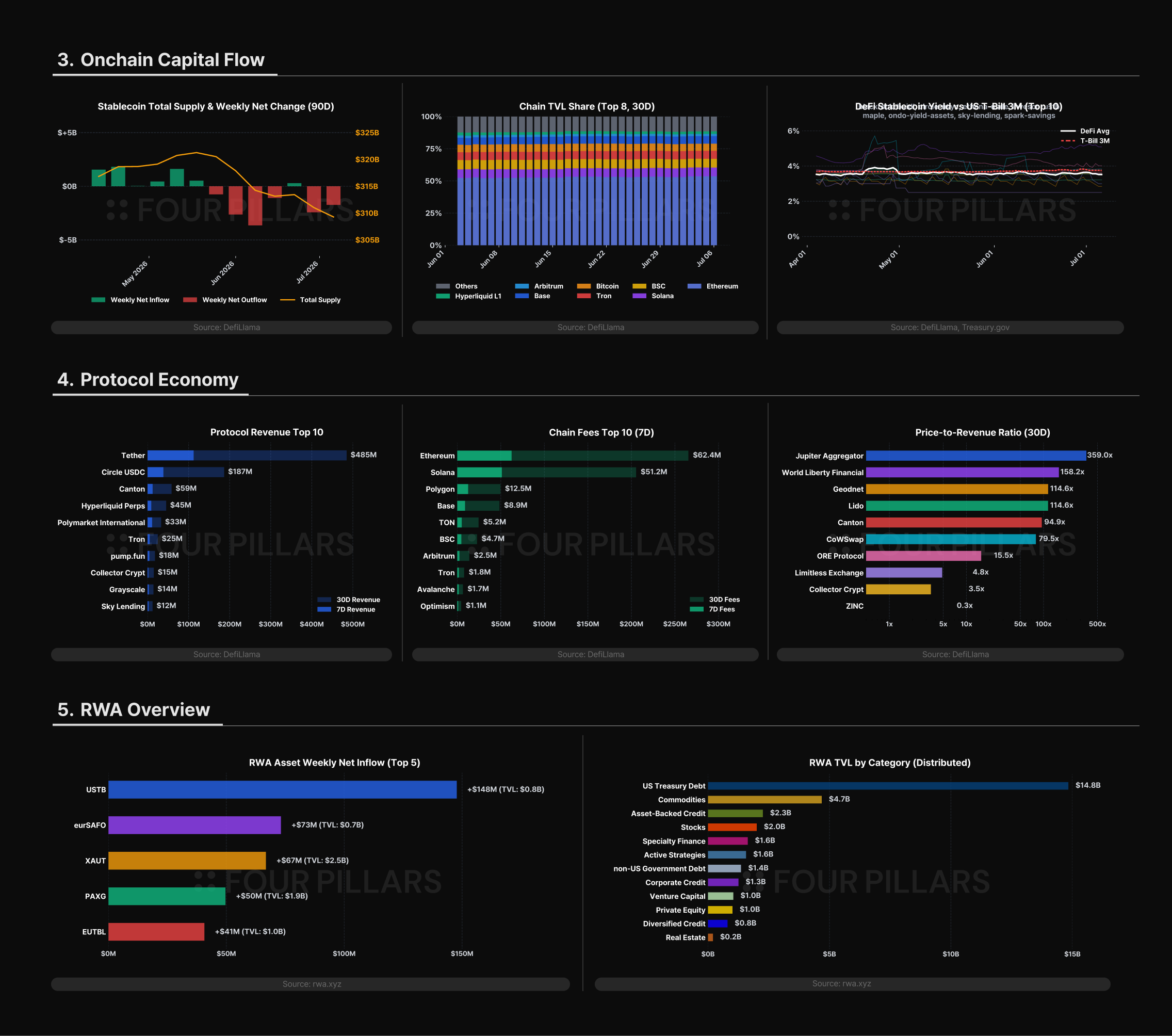
Some of the charts below are powered by CryptoQuant. For those interested in exploring the underlying data in greater detail, CryptoQuant provides access to a comprehensive suite of onchain and market analytics used by institutional participants.
The author of this report may have personal holdings or financial interests in assets or tokens discussed herein. However, the author affirms that no transactions have conducted using material non-public information obtained in the course of research or drafting. This report is intended solely for general information purposes and does not constitute legal, business, investment, or tax advice. It should not be used as a basis for making any investment decisions or as guidance for accounting, legal, or tax matters. Any references to specific assets or securities are made for informational purposes only and should not be construed as an offer, solicitation, or recommendation to invest. The opinions expressed herein are those of the author and may not reflect the views of any affiliated institutions, organizations, or individuals. The opinions and analyses expressed herein are subject to change without prior notice. In addition, beyond the individual disclosures included in each report, Four Pillars, may hold existing or prospective investments in some of the assets or protocols discussed herein. Furthermore, FP Validated, a division of Four Pillars, may already be operating as a node in certain networks or protocols discussed herein or may do so in the future. Please see below links in the footer for FP Validated's participating network disclosures and for broader disclosure details.
![CLARITY Act Fails, the SEC Steps In [FP Weekly 39]](/_next/image?url=https%3A%2F%2Fkrotgrfjzckvumudxopj.supabase.co%2Fstorage%2Fv1%2Fobject%2Fpublic%2Fassets%2Fimg%2Fcontent%2Farticle%2Fnotion-import%2Fmqlpp6muat2oq6.png&w=3840&q=75)

![CLARITY Act Faces the Senate, $LAPTOP Faces Reality [FP Weekly 38]](/_next/image?url=https%3A%2F%2Fkrotgrfjzckvumudxopj.supabase.co%2Fstorage%2Fv1%2Fobject%2Fpublic%2Fassets%2Fimg%2Fcontent%2Farticle%2Fnotion-import%2Fc3ygeemu0lqxb5.png&w=3840&q=75)

![Robinhood Takes Over Onchain
[FP Weekly 37]](/_next/image?url=https%3A%2F%2Fkrotgrfjzckvumudxopj.supabase.co%2Fstorage%2Fv1%2Fobject%2Fpublic%2Fassets%2Fimg%2Fissues%2Frobinhood-takes-over-onchain-fp-weekly-37.png%3Ft%3D1788765790150&w=3840&q=75)