Table of Contents
- 1. Major News
- [Institution] Democrats Take Control of Congress: What Comes Next for U.S. Crypto Regulation?
- [Institution] CFTC Opens the Door to Single Stock Perpetual Futures in the U.S.
- Others
- 2. Data Spotlight
- How Regulation Reshaped Korea CEX Listings (Link)
- 3. Four Pillars Weekly
- : : Reflections on the Binance Exploit (Link)
- : : 2026 H1 Hyperliquid Half-Year Report (Link)
- Comments
- 4. Macro & Onchain Metrics
Researcher

1. Major News
[Institution] Democrats Take Control of Congress: What Comes Next for U.S. Crypto Regulation?
What Happened?
Democrats secured control of both the House and Senate in the November 3 U.S. midterm elections, flipping at least seven Senate seats and gaining more than 20 seats in the House. When the new Congress convenes in January 2027, Democrats will control the legislative agenda and key congressional committees, giving them greater authority to challenge President Trump's policy priorities during the remainder of his term.
The election outcome has significantly weakened the prospects for comprehensive crypto legislation, particularly the CLARITY Act. The bill, which aims to establish a federal digital asset market structure framework and clarify jurisdiction between the SEC and CFTC, passed the House in July 2025 but failed to advance in the Senate following a 49 to 50 procedural vote in September. Negotiations had stalled over stablecoin rewards, DeFi developer liability, and ethics provisions addressing conflicts of interest involving government officials.
Democratic control of Congress is also expected to bring increased scrutiny of the Trump family's crypto businesses. Democratic lawmakers have already raised concerns about potential conflicts of interest involving World Liberty Financial (WLFI), its USD1 stablecoin, and the TRUMP memecoin. Congressional investigations into whether the family's financial interests have influenced the administration's digital asset policies are expected to become a priority.
Meanwhile, regulatory agencies have continued advancing crypto frameworks despite the legislative deadlock. In August, the SEC proposed Regulation Crypto Assets, introducing tailored registration exemptions for certain crypto offerings and a conditional safe harbor addressing investment contract status. The CFTC followed in October by initiating rulemaking for Regulation Crypto Asset Transactions (CTX) and Regulation Crypto Asset Markets (CAM), seeking to establish a tailored regulatory framework for retail crypto commodity transactions.
Researcher's Comment
The most immediate consequence of the midterm elections is likely to be a slowdown in congressional crypto legislation rather than a complete reversal of U.S. crypto policy. The CLARITY Act failed to advance even under Republican control of both chambers. With Democrats now setting the legislative agenda, passing the bill in its current form will become considerably more difficult, particularly without stronger provisions addressing consumer protection, illicit finance, and conflicts of interest.
The Trump family's involvement in crypto is likely to remain a major political obstacle. For Democrats, supporting industry-friendly legislation could be portrayed as indirectly benefiting the president's personal business interests. As a result, congressional priorities may shift away from broad market structure reform toward investigations, oversight, and stricter safeguards against conflicts of interest.
However, slower legislative progress does not necessarily mean that the institutional development of the U.S. crypto market will come to a halt. The SEC and CFTC have already demonstrated their willingness to establish clearer regulatory frameworks through interpretations, rulemaking, and exemptive relief under existing statutory authority. The SEC's Regulation Crypto Assets proposal and the CFTC's CTX and CAM initiatives suggest that meaningful regulatory progress remains possible even without comprehensive legislation.
This approach has limitations. Agency rules and interpretations are more vulnerable to changes in future administrations or commission leadership than legislation enacted by Congress. Regulators also remain constrained by their existing statutory authority. Nevertheless, as long as the current SEC and CFTC leadership maintain their policy direction, incremental agency rulemaking could become the primary driver of regulatory clarity in the near term.
Ultimately, the key question following the midterms is not simply whether the CLARITY Act can be revived, but whether the SEC and CFTC can translate their ongoing initiatives into finalized rules and meaningful market access. Congressional gridlock may slow comprehensive reform, but it does not necessarily prevent continued progress toward a more established regulatory framework for digital assets.
[Institution] CFTC Opens the Door to Single Stock Perpetual Futures in the U.S.
What Happened?
On November 3, the U.S. Commodity Futures Trading Commission (CFTC) cleared the way for perpetual futures on individual stocks to trade on regulated U.S. exchanges for the first time. Under the new framework, CFTC-registered futures exchanges that are also registered with the SEC for security futures trading can offer perpetual contracts tracking individual equities.
Unlike traditional futures, perpetual futures have no expiration date and allow traders to gain exposure to price movements without owning the underlying assets. While these products have grown rapidly on offshore crypto platforms such as Hyperliquid, their introduction in the U.S. has been constrained by regulatory uncertainty between the SEC and CFTC. The newly permitted contracts are classified as security futures under the Commodity Futures Modernization Act of 2000 and are subject to joint oversight by both agencies.
Market participants have already begun responding. On November 5, Kalshi became the first U.S. platform to launch regulated single stock perpetual futures, offering contracts on more than 50 companies, including Nvidia, Meta, and Palantir. The platform reported over $300 million in trading volume during the early hours of its launch. Payward, Kraken's parent company, is also preparing to offer single stock perpetuals through its regulated exchange Bitnomial, initially targeting 10 major U.S. stocks. Coinbase Derivatives and a Crypto.com affiliated exchange have also pursued listings for similar products.
Traditional financial institutions are entering the market as well. On October 29, Intercontinental Exchange (ICE), the parent company of the New York Stock Exchange, announced a strategic investment and partnership with Trade[XYZ], a perpetual futures platform built on Hyperliquid. The two companies plan to establish a regulated U.S. trading venue and clearing infrastructure using Hyperliquid's underlying technology. Separately, Hyperliquid Strategies, a publicly traded company holding HYPE tokens, is pursuing futures commission merchant registration to facilitate regulated access to perpetual markets built on Hyperliquid. Both initiatives remain subject to regulatory approval.
However, the decision has also faced legal opposition. A coalition including Cboe and Citadel Securities filed a lawsuit challenging the CFTC's authority to permit single stock perpetual futures under the current regulatory framework.
Researcher's Comment
The significance of this decision goes beyond the introduction of another derivatives product. Perpetual futures, which initially gained traction as a crypto-native trading instrument, are beginning to establish themselves as a legitimate trading structure within the U.S. financial system. Following the approval of bitcoin perpetual futures earlier this year, the expansion into individual equities suggests that perpetual contracts are increasingly being recognized as a flexible trading instrument applicable across multiple asset classes.
What is particularly notable is the participation of established financial institutions. ICE's partnership with Trade[XYZ] demonstrates that traditional exchanges are beginning to view decentralized trading infrastructure as an opportunity rather than simply a competitive threat. By combining onchain trading technology with regulated clearing, customer verification, and compliance infrastructure, these institutions are exploring a model that bridges crypto-native market design with traditional financial regulation.
This development presents both opportunities and challenges for decentralized perpetual exchanges such as Hyperliquid and Lighter. A regulated U.S. market could eventually unlock access to a substantially larger pool of retail and institutional capital that has historically been restricted from offshore perpetual platforms. Hyperliquid, in particular, has positioned itself to benefit from this transition through HIP-3, which allows external operators to deploy perpetual markets for a wide range of assets on its infrastructure.
However, regulatory acceptance of perpetual futures does not automatically grant decentralized exchanges permission to serve U.S. customers. Platforms seeking access to the regulated market must still address requirements around exchange registration, custody, surveillance, and clearing. As a result, competition may increasingly depend not only on execution speed and trading fees, but also on the ability to connect existing onchain infrastructure with compliant market structures. Lighter faces a similar opportunity, although it has yet to establish a comparable regulatory pathway.
Legal challenges from traditional financial market participants could also slow adoption. Nevertheless, the CFTC's decision represents a meaningful shift in how perpetual futures are perceived. Traditional equity markets remain largely organized around fixed trading hours and spot ownership, while perpetual futures offer an alternative interface through which traders can manage exposure across different assets with greater flexibility.
Ultimately, perpetual futures have the potential to evolve from a crypto-specific derivatives product into a broader trading interface for equities, commodities, currencies, and other financial assets. With the U.S. now beginning to incorporate this structure into its regulated markets, other jurisdictions may increasingly explore similar frameworks. If this trend continues, perpetual futures could become an important part of how global financial markets are accessed and traded.
Others
Crypto
- NEAR governance approves proposal to cut token issuance ceiling to 1.6%
- Binance CFO steps down nine days after record hack; co-CEO says transition was planned six months ago
Institution
- CFTC approves individual stock perpetual futures trading in US for the first time
- Democratic sweep of Congress forces crypto industry to rethink Washington strategy
- Samsung Wallet launches USDC accounts on Solana for US Galaxy users
- Hyperliquid Strategies files to become CFTC-registered FCM, posts $13.3 million in quaterly revenue
- Trump administration moves closer to allowing crypto in 401(k) retirement plans
Investment
- Payward-affiliated fund and clients buy AAVE token stake on secondary market
- Bullish Capital and 21shares Earn BTC With Stacks as Bond 3 of Bitcoin Staking Sells Out
- Aave Labs buys Avon team in fixed-rate lending push
2. Data Spotlight
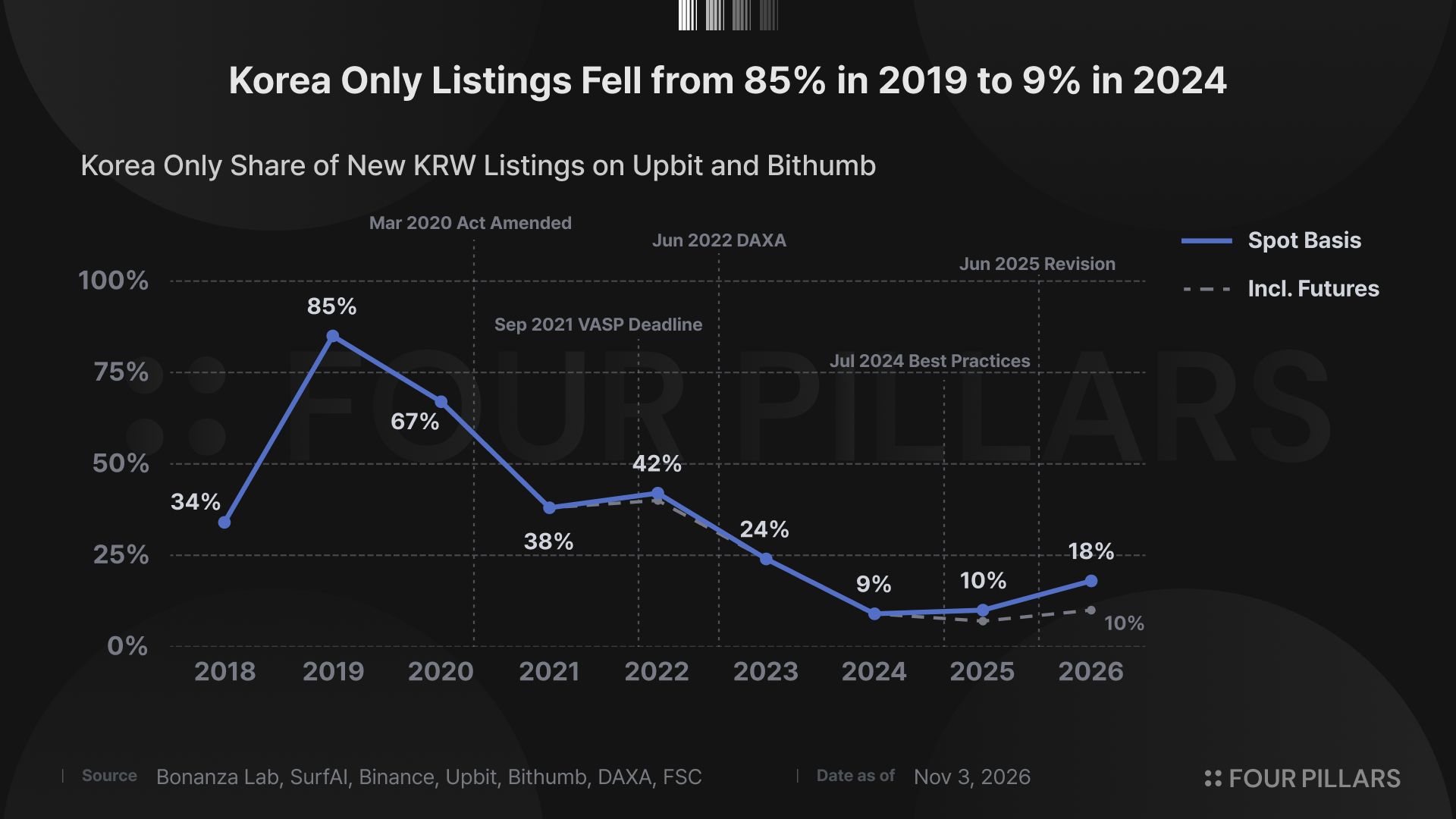
How Regulation Reshaped Korea CEX Listings (Link)
3. Four Pillars Weekly
: : Reflections on the Binance Exploit (Link)

- Starting at 5:04 a.m. on October 30, 2026, $6.36B in assets was stolen from Binance hot wallets on 10 chains, the largest theft of its kind on record. Most of it was drained within about 20 minutes. The FBI named North Korea's TraderTraitor as the group behind the attack. As in the group's other recent exchange hacks, what was compromised was the internal signing infrastructure, not simply a private key.
- Tether and Circle froze about $2.4B in stablecoins within an hour of the incident. With the Arbitrum Security Council and several token projects also stepping in with admin powers, more than $2.8B of the stolen assets has been frozen or recovered. Binance, for its part, raised $6.34B without outside borrowing to cover the losses. Backed by Proof of Reserves and a phased reopening of withdrawals from November 1, it kept first-day net outflows to about 2.1% of total assets, by Binance's own count. That said, this outcome was possible largely because the exchange involved was Binance. Had an exchange with fewer financial resources suffered an incident of the same size, a bank run would have been hard to avoid.
- About 90% of the funds that left Binance after withdrawals reopened went somewhere other than the top 10 exchanges, pointing to growing demand for self-custody. However, as the tampered Ledger devices and the malicious Trust Wallet update show, personal wallets are not a safe haven either. The more often such incidents occur, the more demand there will be for open-source wallets whose design and internals users can check for themselves.
: : 2026 H1 Hyperliquid Half-Year Report (Link)
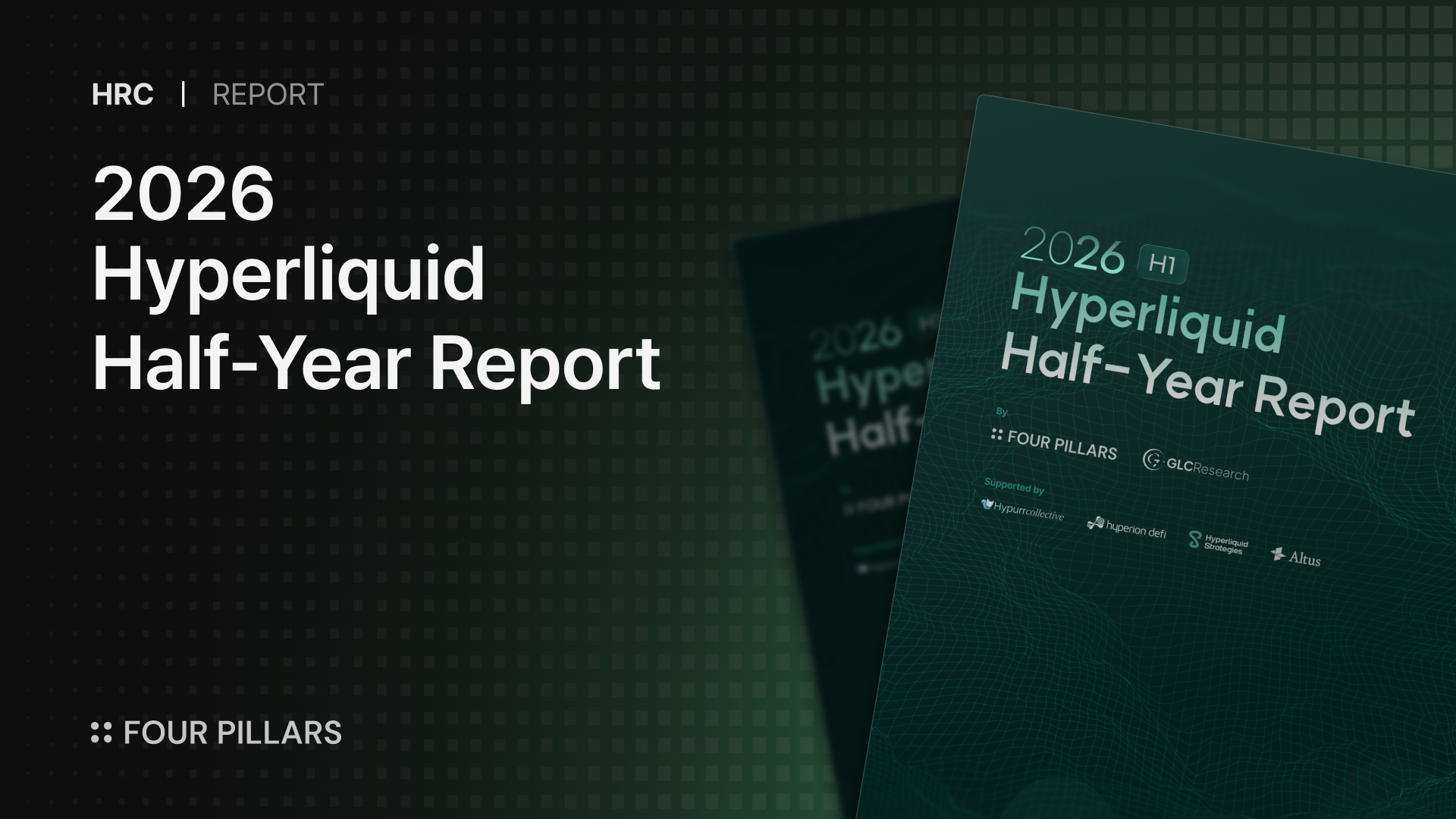
- Hyperliquid generated $351M in protocol revenue in H1, up 6.4% YoY, while HYPE appreciated 155% against Bitcoin’s 33% decline. Revenue fell 38% against a record H2 2025, although the exit rate improved materially: June revenue reached $71M, the strongest monthly result since November. The protocol deployed $288M into HYPE repurchases during the half. We view the combination of earnings resilience and sustained capital returns as support for valuing HYPE increasingly on operating fundamentals.
- HIP-3 materially expanded the exchange’s addressable market. Volume reached $324B in H1, representing 25.1% of matched volume and rising to 32.0% in Q2, as activity broadened across commodities, equity indices, and single stocks. Revenue contribution remains modest relative to volume: subsidized pricing limited HIP-3 to 7.4% of protocol revenue, with native perpetuals contributing 85.6%. Converting this broader trading activity into earnings is a key opportunity. Deployer concentration warrants monitoring, with Trade[XYZ] accounting for 97% of HIP-3 volume in June.
- The USDC realignment introduces a potentially material source of incremental holder returns. HyperEVM’s stablecoin supply reached $5.6B at period-end, of which 96% was USDC. Under AQAv2, approximately 90% of cost-adjusted reserve yield is designated for the Assistance Fund. We estimate an annual contribution of $135–200M at prevailing rates and balances, providing additional buyback capacity alongside trading fees. No contribution was recognized in H1, and realized economics remained unconfirmed at publication. Key sensitivities include stablecoin balances, interest rates, and the effective revenue share.
- Institutional adoption strengthened demand for HYPE as net float contracted modestly. Three US spot ETFs recorded $309M in net inflows through June 30; ETFs, treasury companies, and the Assistance Fund collectively held approximately 82M HYPE, or 8.2% of total supply, on the report’s measurement basis. Limited team claims also supported supply conditions, with just 4.7% of scheduled entitlement claimed during H1. The resulting supply-demand balance is supportive, although the $4.3B vested but unclaimed balance remains a material potential source of supply.
- This report was produced by the Hyperliquid Research Collective (HRC), a joint initiative of GLC Research and Four Pillars dedicated to independent research on Hyperliquid.
Comments
- No One Needs Blockchain
- Monad's Quantum Cadence: Why is Monad's quantum strategy different from Ethereum's?
- Why Mantle Was Mentioned in Anthropic’s FlashProve (ft. zkSNARKs)
- Can Injective SICI Become the Henry Hub of Compute?
4. Macro & Onchain Metrics
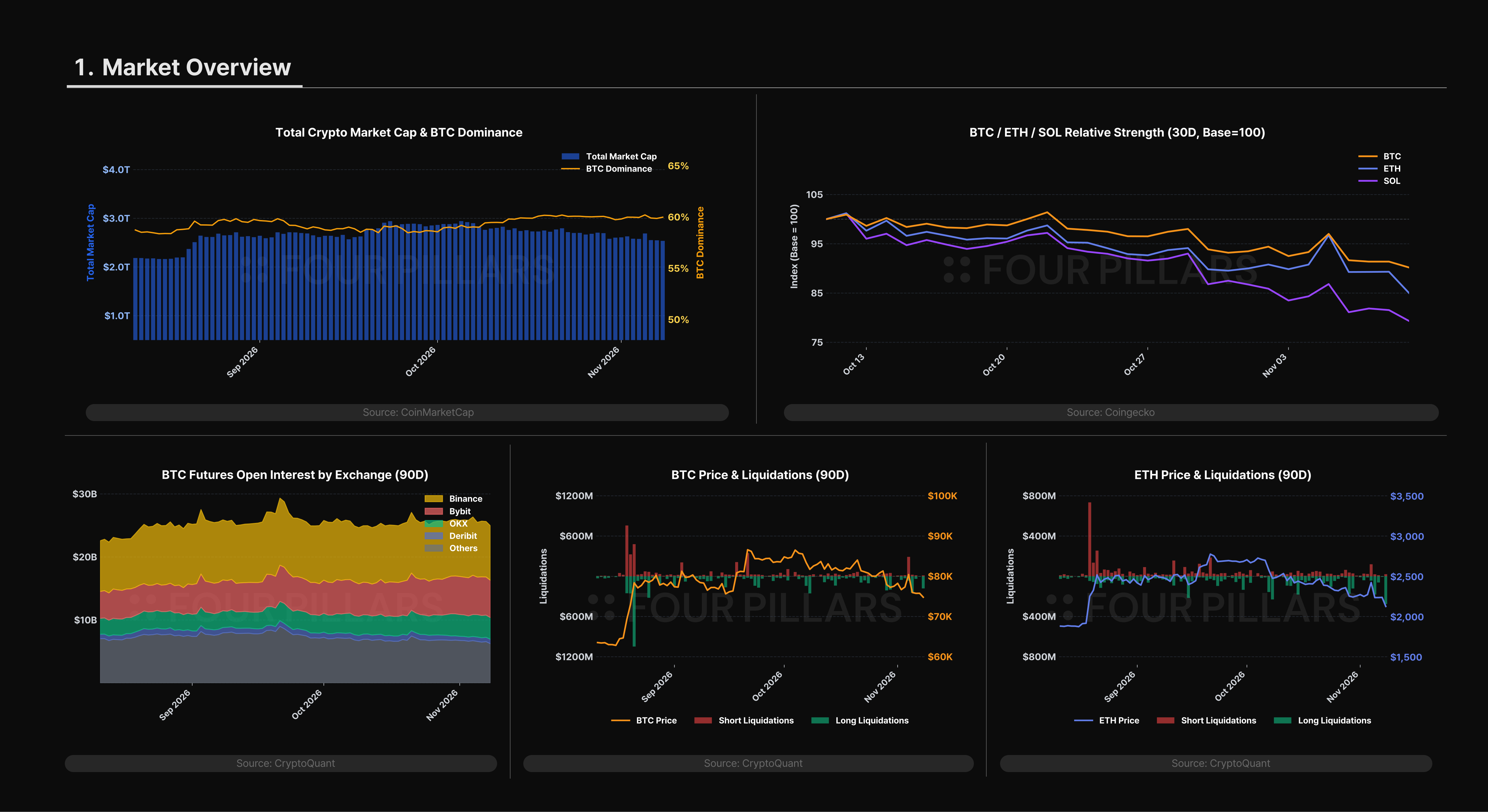
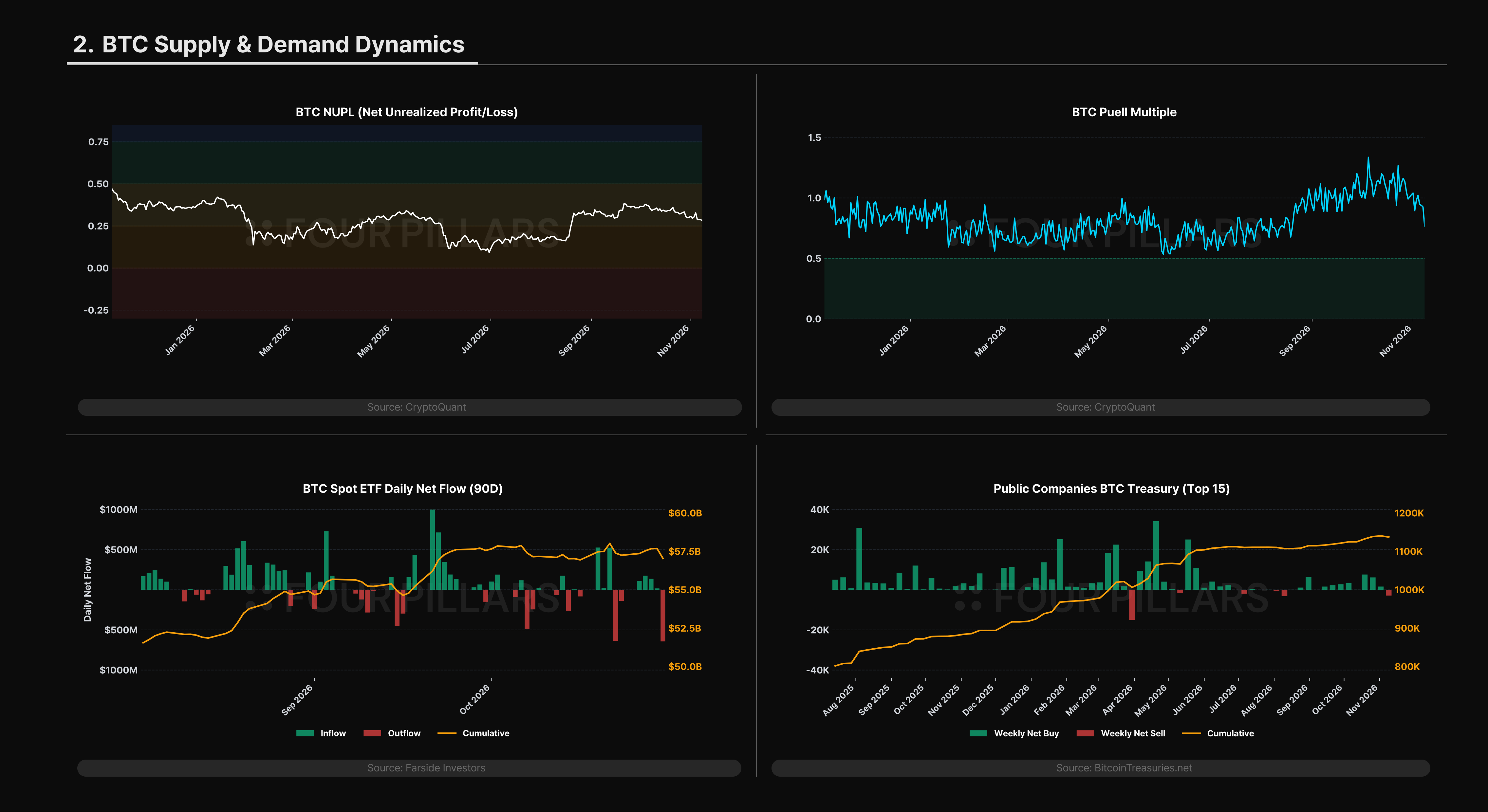
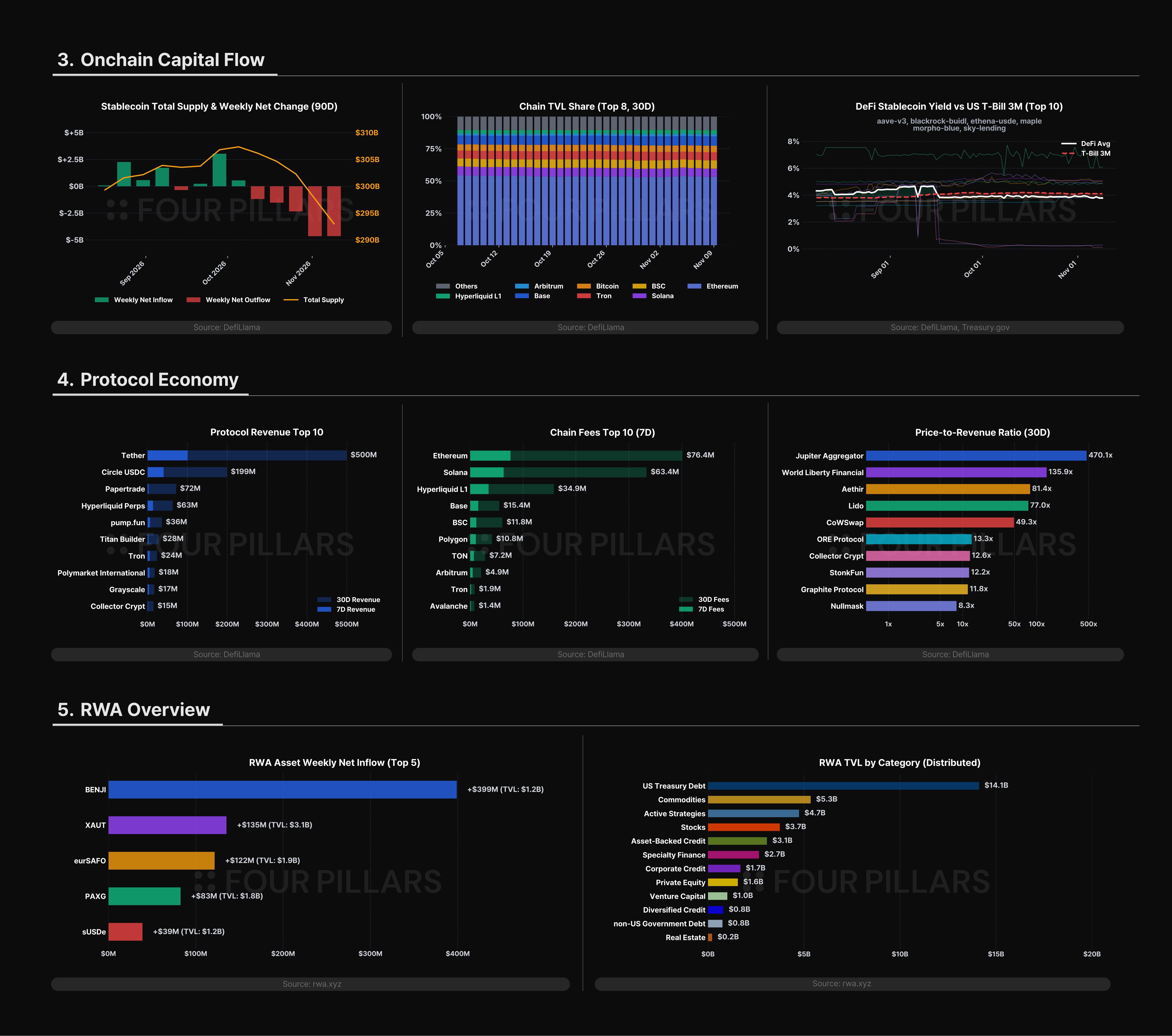
Some of the charts below are powered by CryptoQuant. For those interested in exploring the underlying data in greater detail, CryptoQuant provides access to a comprehensive suite of onchain and market analytics used by institutional participants.
The author of this report may have personal holdings or financial interests in assets or tokens discussed herein. However, the author affirms that no transactions have conducted using material non-public information obtained in the course of research or drafting. This report is intended solely for general information purposes and does not constitute legal, business, investment, or tax advice. It should not be used as a basis for making any investment decisions or as guidance for accounting, legal, or tax matters. Any references to specific assets or securities are made for informational purposes only and should not be construed as an offer, solicitation, or recommendation to invest. The opinions expressed herein are those of the author and may not reflect the views of any affiliated institutions, organizations, or individuals. The opinions and analyses expressed herein are subject to change without prior notice. In addition, beyond the individual disclosures included in each report, Four Pillars, may hold existing or prospective investments in some of the assets or protocols discussed herein. Furthermore, FP Validated, a division of Four Pillars, may already be operating as a node in certain networks or protocols discussed herein or may do so in the future. Please see below links in the footer for FP Validated's participating network disclosures and for broader disclosure details.