Table of Contents
Researcher

Related Projects

1. From ‘Just Trust Me’ to ZK Proofs
Did this answer really come from the model that was promised? It is a question that has never gone away since generative AI like ChatGPT and Claude went mainstream.
AI models today run on ‘just trust me.’ This is because models run in developers’ cloud datacenters or on third-party servers, and all users receive is the output. Even if a routing service quietly swapped in a different model to cut costs, users would have no way of knowing.
Source: Anthropic
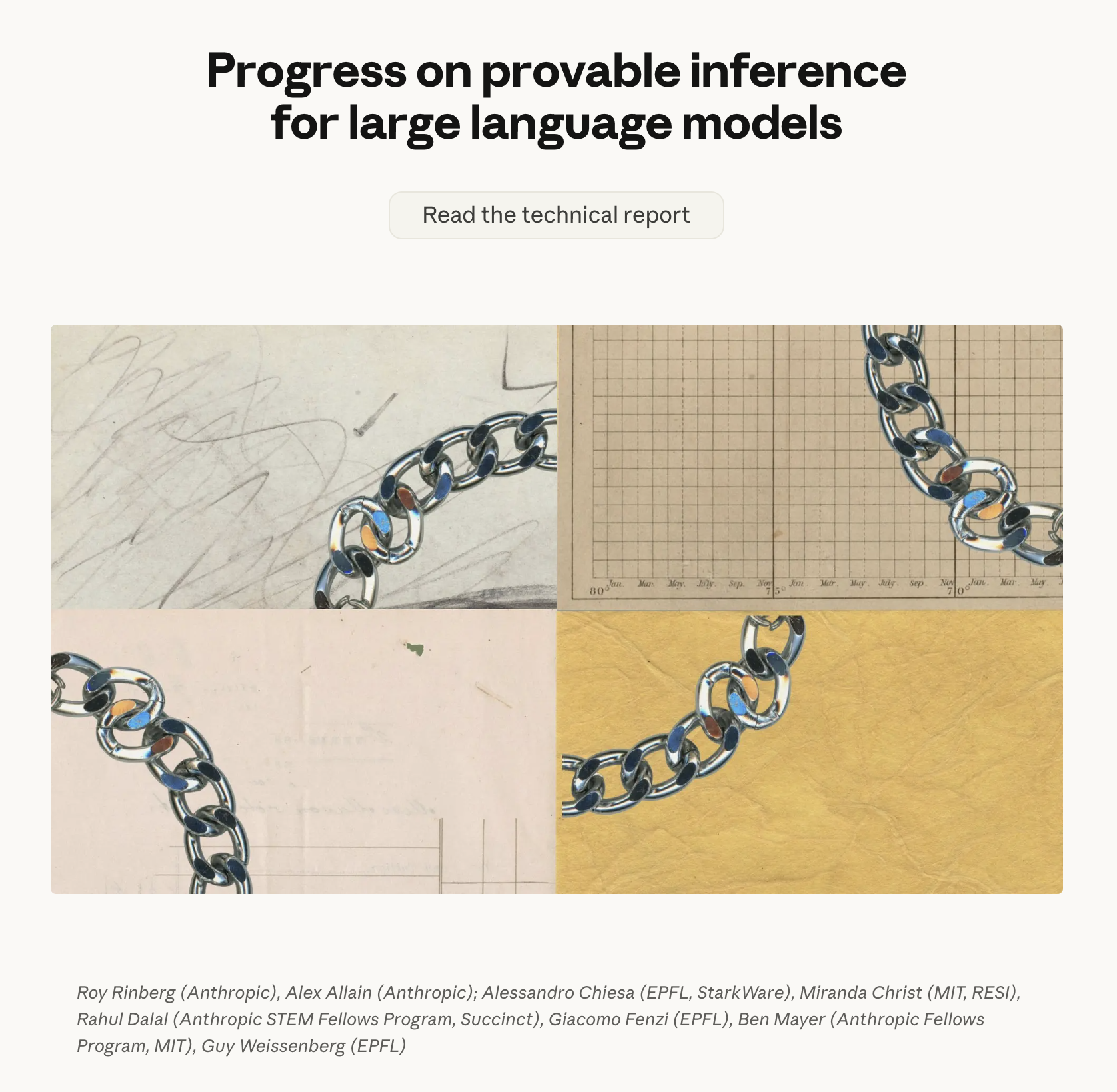
FlashProve, released by Anthropic on November 2, proposes cryptographic proofs of inference as a solution to this problem. The model provider cryptographically commits to using specific model weights, and each response is then guaranteed to have been generated by that exact model.
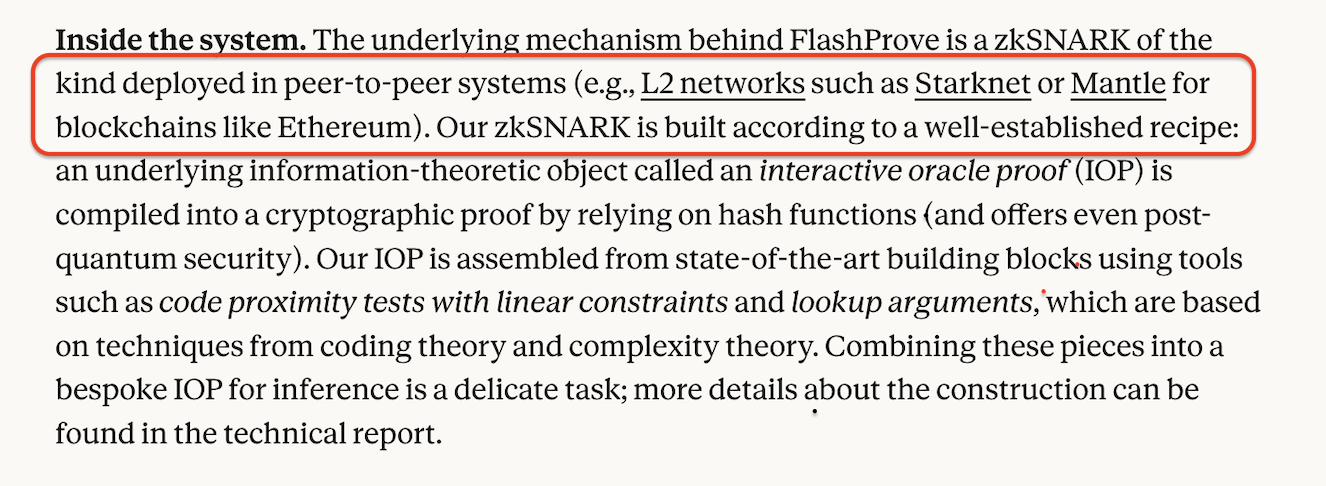
The crypto industry reacted strongly to this research because FlashProve uses zkSNARKs, a technology the industry already knows well. According to Anthropic, ZK proofs do not reveal the model weights, yet the proof files are small and cheap to verify, so they can be delivered to users alongside each response.
Source: Anthropic
Above all, Anthropic noted that these are the same kind of zkSNARKs used in Ethereum L2s, citing Starknet and Mantle as examples. StarkWare, the developer of Starknet, and Succinct, which supplies ZK proving technology to Mantle, are also listed as co-authors of the research.
2. Why Mantle Moved to a ZK Rollup Ahead of Others
Now that even Anthropic, a leading AI company, is seriously researching ZK proofs, ZK proofs deserve a fresh look.
ZK proofs are a cryptographic concept with a history of more than 40 years. In the blockchain industry, however, they were long used as a buzzword, more a part of market narratives than a technology in their own right. Vitalik stressed that zkSNARKs would become as important as blockchains within the next 10 years, yet real-world use long seemed out of reach.
Source: Succinct
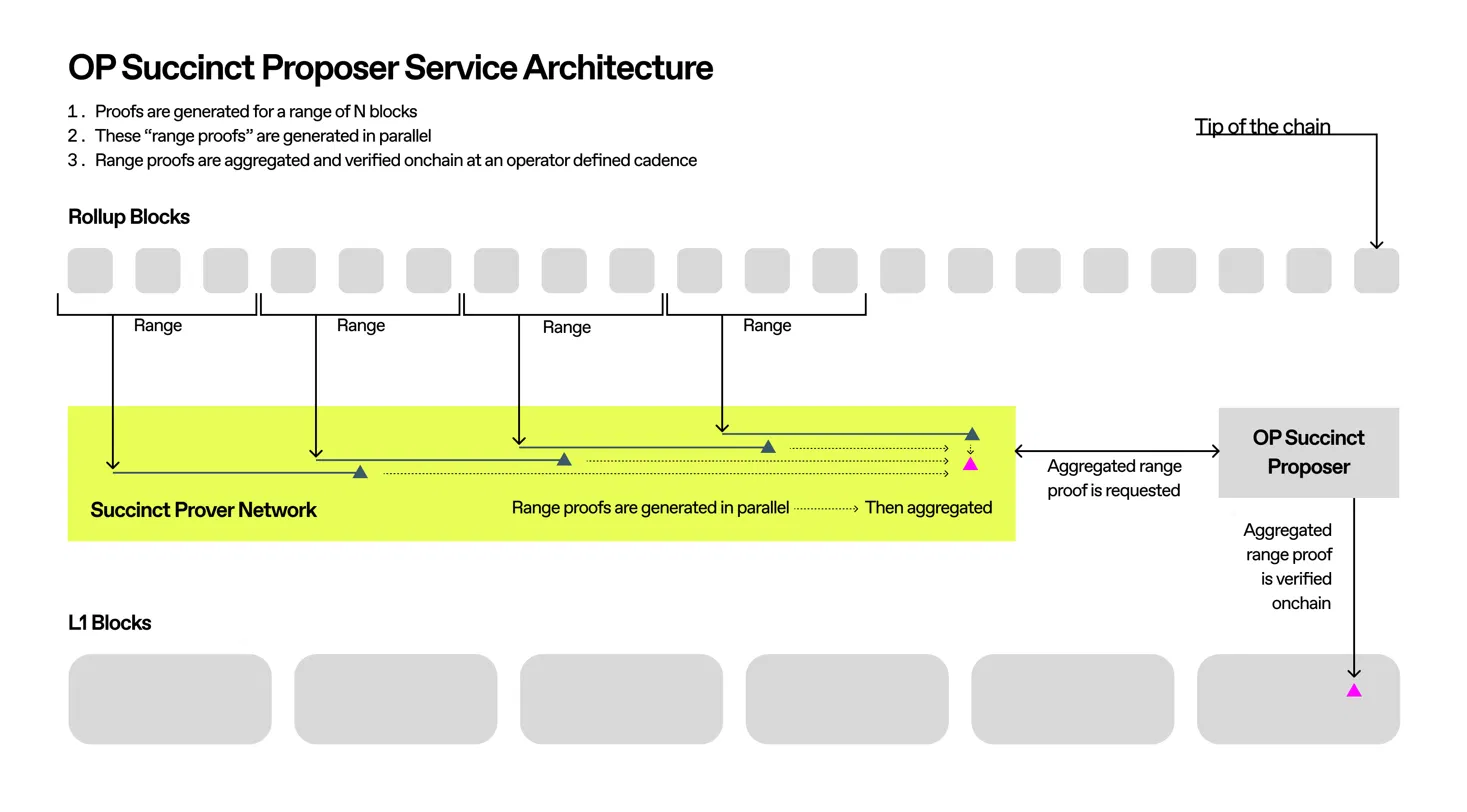
ZK proofs came into sharper focus once L2s actually started adopting them. Mantle upgraded to OP Succinct in September 2025, transitioning from an optimistic rollup to a ZK rollup. In this setup, Succinct’s zkVM, SP1, proves that L2 state transitions are correct, and a contract on Ethereum verifies that proof.
The biggest change from the ZK rollup transition was withdrawal speed. Optimistic rollups require a fraud proof window, so withdrawals took 7 days. With ZK proofs, Mantle cut this to about 1 hour for finality and 6 hours for withdrawals.
Proof generation costs also changed. High proving costs had long been cited as a weakness of ZK proofs, but Mantle’s proving costs have fallen to about $0.002 per transaction through the Succinct Prover Network.
By resolving the two bottlenecks of withdrawal speed and cost, ZK proofs have established themselves as infrastructure that actually runs chains. In the end, what Anthropic tested for AI inference verification is precisely this technology, refined first in blockchain.
3. So, What Does Anthropic’s Shoutout Mean?
What, then, does the mention in Anthropic’s research mean? Mantle clearly did not participate in the research or integrate anything directly, so it is best seen as a technical citation.
Even so, the mention carries considerable meaning for Mantle. First, it can be read as external confirmation that Mantle’s transition to a ZK rollup was the right technical choice. Mantle completed its ZK rollup transition in September 2025, more than six months earlier than OP Mainnet and Base, which only announced plans to adopt ZK in 2026.
Source: ETHBEAT
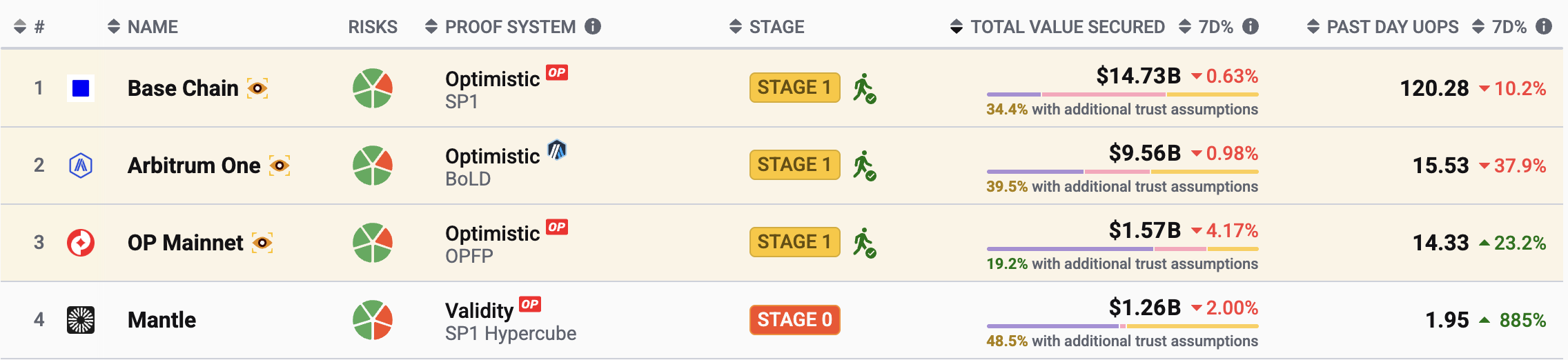
By ETHBEAT’s numbers, Mantle is the only ZK rollup among the top four rollups by TVS (Base, Arbitrum One, OP Mainnet, and Mantle). Now that Anthropic, a leader in the AI industry, has set out to verify AI inference with the same family of proving technology, Mantle’s technical choice has gained further credibility.
Succinct, which provides ZK proving technology to Mantle, being listed as a co-author of the research follows the same logic. It can be read as a sign that the proving technology underpinning Mantle’s security and settlement is proven enough to be used in frontier AI research. For Mantle, which is actively courting institutional-grade assets, this gives one more reason to trust and use the chain.
In short, these circumstances do not prove Mantle’s technical superiority, but they invite a second look at Mantle’s early decision to transition to a ZK rollup. As ZK proofs expand beyond blockchains into AI’s trust problem, Mantle, which already runs on that technology, will be mentioned more and more often.
The report is based on the independent research of the author sponsored/funded by Mantle Network. The author of this report may have personal holdings or financial interests in assets or tokens discussed herein. However, the author affirms that no transactions have conducted using material non-public information obtained in the course of research or drafting. This report is intended solely for general information purposes and does not constitute legal, business, investment, or tax advice. It should not be used as a basis for making any investment decisions or as guidance for accounting, legal, or tax matters. Any references to specific assets or securities are made for informational purposes only and should not be construed as an offer, solicitation, or recommendation to invest. The opinions expressed herein are those of the author and may not reflect the views of any affiliated institutions, organizations, or individuals. The opinions and analyses expressed herein are subject to change without prior notice. In addition, beyond the individual disclosures included in each report, Four Pillars, may hold existing or prospective investments in some of the assets or protocols discussed herein. Furthermore, FP Validated, a division of Four Pillars, may already be operating as a node in certain networks or protocols discussed herein or may do so in the future. Please see below links in the footer for FP Validated's participating network disclosures and for broader disclosure details.