Table of Contents
- 1. Major News
- [Institution] NYSE Parent ICE Invests in TradeXYZ, Moves to Launch Hyperliquid-Based Perpetual Futures in the U.S.
- [Crypto] Binance Suffers Largest Hack on Record as Up to $5.8 Billion Drained From Hot Wallets
- Others
- 2. Four Pillars Weekly
- : : No Relationship Interoperability, No Agentic Stablecoin Payments (Link)
- : : Monad: The Last General-Purpose L1 (Link)
- : : DTCC Tokenization: Less Than the Hype, Bigger Than It Looks (Link)
- : : The Convergence of Asset Management: From Wall Street to Onchain (Link)
- Comments
- 3. Macro & Onchain Metrics
Researcher

1. Major News
[Institution] NYSE Parent ICE Invests in TradeXYZ, Moves to Launch Hyperliquid-Based Perpetual Futures in the U.S.
What Happened?
On October 29, ICE, the parent company of the New York Stock Exchange (NYSE), announced it will partner with TradeXYZ, a HIP-3 builder on Hyperliquid, to launch Hyperliquid-based perpetual futures in the U.S. market. ICE also made a strategic investment in TradeXYZ, though the amount was not disclosed. The launch is subject to approval from the U.S. Commodity Futures Trading Commission (CFTC).
The roles of each partner are divided as follows. ICE will build a dedicated exchange and clearing infrastructure to operate the market, TradeXYZ will handle product design, and Hyperliquid’s HIP-3 will provide the technical foundation. Eligible assets span crypto, equities, indices, commodities, and foreign exchange. Since more than 99% of its market participants are institutions, ICE said it will set up a separate clearing structure for retail perpetual futures so that existing hedging clients are not exposed to retail counterparty risk.
ICE CEO Jeffrey Sprecher explained that retail participation in markets has increased markedly and is becoming increasingly global, and that traders want short-duration exposure around the clock. He added that the new market is meant to complement the existing futures business rather than replace it. Right after the announcement, HYPE rose more than 15% in a day to trade around $93, approaching its all-time high of $98 set on September 23.
This announcement extends the trend of the U.S. gradually opening its perpetual futures market. In May, the CFTC opened a path for perpetual futures to launch in the U.S. through a staff advisory and no-action relief, and in September President Trump mentioned that the CFTC was working to bring Hyperliquid into the U.S. legally. Furthermore, on October 26, it was announced that Kraken parent Payward would become the first CFTC-regulated HIP-3 deployer.
Researcher’s Comment
As recently as May, ICE and CME Group reportedly asked the CFTC to regulate Hyperliquid more strictly. CEO Sprecher also argued that onchain perpetual futures should be subject to the same level of regulation as existing regulated exchanges. Five months later, however, ICE shifted its stance from checking Hyperliquid through regulators to working with it directly.
It has also become clearer that the way the U.S. regulates perpetual futures has changed. Until now, the issue was whether to allow perpetual futures exchanges like Hyperliquid into the U.S. Now, perpetual futures exchanges themselves can fall well within the scope of licensing under certain conditions, and the key question has become which markets to bring under licensing and which to leave offshore.
TradeXYZ is likewise keeping its existing Hyperliquid markets running as they are while opening a separate U.S.-only market with ICE. The U.S. market will be offered only through U.S. brokers on top of the separate exchange and clearing system that ICE is establishing, and the scope of eligible participants and the timing of market openings will be disclosed in stages in line with the approval process. As a result, a structure has emerged in which markets built by the same company on the same infrastructure can be split, with some entering the U.S. regulated perimeter and others remaining in the existing offshore market. In other words, the unit of regulation has moved down from licensing exchanges to selecting markets.
The remaining step is CFTC approval. What detailed conditions apply to retail leverage limits and clearing methods will determine the product lineup and launch timing of the U.S. market. Equity-linked products in particular are likely to be classified as security futures, which will also require separate jurisdictional coordination with the SEC. In August, the Blockchain Association, the Hyperliquid Policy Center, and Coinbase submitted comment letters to the SEC and CFTC in succession, proposing that equity perpetual futures be handled under the existing joint regulatory framework for security futures. These moves appear to have been an attempt to settle the jurisdictional question in advance and open a path to a U.S. launch.
Meanwhile, competing exchanges are likely to pick up the pace of their response. Perpetual futures are already opening up one by one in U.S. regulated markets. In May, the CFTC approved Kalshi’s listing of a bitcoin perpetual contract, Coinbase integrated Deribit to launch Coinbase Global Exchange, and CME introduced 24-hour trading for crypto futures and options at the end of May. However, these products were limited to crypto assets, and ICE has gone a step further, making the first attempt to bring RWA perpetual futures covering equities, commodities, and foreign exchange into the regulated market. Accordingly, the next round of competition is expected to intensify around RWA perpetual futures. CME and other exchanges are likely to follow by launching their own products or partnering with other HIP-3 builders.
[Crypto] Binance Suffers Largest Hack on Record as Up to $5.8 Billion Drained From Hot Wallets
What Happened?
Large amounts of assets were drained from the hot wallets of Binance, the world’s largest crypto exchange, on October 29 (UTC). About $6.36 billion moved out of Binance wallets across 10 blockchains, most of it within a little over 20 minutes. Binance estimated total losses at about $6.3 billion, more than four times the roughly $1.5 billion lost by Bybit in February 2025, making it the largest crypto hack ever.
Binance initially believed that a DevOps engineer’s laptop had been hacked, allowing the attacker to access a service container and execute unauthorized withdrawals, but later corrected this, saying further investigation had uncovered additional points of breach. Co-CEO Richard Teng explained that the attacker did not use only one engineer’s permissions, and that it was a complex attack that bypassed normal approval procedures. No evidence of a wallet private key leak has been found so far, and Binance plans to publish a root-cause analysis report.
On October 31, the U.S. Federal Bureau of Investigation (FBI) officially named TraderTraitor, a North Korean state-sponsored hacking group, as the perpetrator. It is a subgroup of the Lazarus Group and was also behind the 2025 Bybit hack. The FBI expects the hackers to convert the stolen assets mainly into ETH and then launder them through DeFi and instant swap services, and asked the industry to block transactions involving hundreds of related addresses.
Some of the drained assets were frozen within hours. Tether, Circle, Ripple, and World Liberty Financial froze about $2.67 billion worth of stablecoins, and the Arbitrum Security Council also urgently froze ETH and ARB in the hacker’s wallets. Binance put the total frozen amount at about $3 billion. To avoid the freezes, the hacker sold stolen stablecoins to market makers or swapped them into ETH, and deposited $60 million in USDT as collateral on Aave to borrow 19,762 WETH, worth about $44.6 million. Aave temporarily froze its V3 and V4 markets and then reopened them in stages the following day.
Right after the incident, bitcoin fell nearly 5% and BNB nearly 10%. Binance halted all deposits and withdrawals and said the company would bear all losses. It then set aside $6.34 billion in company funds to cover the losses and bought the affected assets through exchanges and over-the-counter (OTC) deals, covering about 95% of the losses by November 1. On the same day, it began resuming withdrawals in phases, starting with assets in high demand such as bitcoin, ether, and USDT.
Researcher’s Comment
The scale of this incident is unprecedented. According to DefiLlama, hacking losses through September this year totaled about $2.2 billion across some 281 incidents, and the Binance hack alone comes close to three times that. Even so, it did not spill over into user losses or a bank run because Binance was able to absorb losses of that size with its own funds. Binance combined the $5 billion worth of affected assets it already held with the rest bought on the market, covering 95% of the losses with company funds within three days of the incident.
What set this recovery apart was a race against time, with issuers’ freezes and the hacker’s conversions separated by only minutes. Tether, Circle, Ripple, and World Liberty Financial froze about $2.7 billion within hours, but in the three minutes before the freezes took effect, the hacker used USDT as collateral on Aave to borrow ETH, which cannot be frozen. Even after reopening its markets, Aave kept the loan-to-value ratio for USDT and USDC at zero.
Freezes by issuers and DeFi protocols always draw mixed reactions within the industry. The speed with which nearly half of the losses were frozen was broadly praised, but there is also unavoidable criticism that if issuers can freeze tokens at any time, they were never anything more than another form of traditional finance. Circle said as recently as April that it would not freeze funds without a court order or instructions from law enforcement, yet this time it acted within an hour. This prompted criticism of a double standard: when a major exchange like Binance is hit, billions of dollars are frozen within hours, but when a small or mid-sized exchange is hacked, legal procedures come first.
On the other side, some argue that intervention is actually insufficient. The $2.4 billion that was not frozen is already being laundered through decentralized protocols, which is why the FBI directly asked the DeFi industry to block related addresses. The side with intervention powers is criticized for intervening too easily, while the side without them is criticized for lax oversight.
The most frequently cited solution is to set intervention procedures in advance. The Arbitrum Security Council, for example, can execute emergency actions only with the approval of 9 of its 12 members, and moves frozen assets to a separate address that cannot be touched without a governance vote. In the Kelp DAO incident in April as well, whether to return the ETH frozen this way was put to governance. Because it was set in advance who could intervene with how many approvals, and how frozen assets would be resolved, the intervention could be distinguished from arbitrary seizure.
For stablecoin issuers, however, the reality is the opposite. Regulation is making the ability to freeze itself mandatory. The GENIUS Act requires issuers to have the capability to freeze and burn tokens in line with lawful orders, and the Treasury has barred stablecoins lacking this capability from trading on U.S. exchanges. The larger hacks grow and the faster responses are demanded, the more likely it is that issuers’ discretion will inevitably widen.
Others
Crypto
- Polymarket resumes trading after $2.65M exploit caused by a compromised third-party provider
- Curve Finance launches on Stellar in its first native deployment outside the EVM ecosystem
- Uniswap Labs opens its fee conversion tool TJAR to third-party apps, starting with Robinhood
- Hyperliquid names Kraken parent Payward as the first CFTC-regulated HIP-3 deployer
- Coinbase adds Ripple’s RLUSD across its retail app, exchange, and Prime
Institution
- Utah files criminal charges against Kalshi and its executives over alleged illegal gambling
- CFTC sues Utah over jurisdiction of prediction markets
- Ripple wins final OCC approval for a national trust bank, bringing RLUSD under federal oversight
- Moody’s assigns investment-grade ratings to Ripple’s RLUSD
- DTCC launches its securities tokenization service on Canton and its private Besu network, with 20 firms including JPMorgan, Citi, and Morgan Stanley
Tech
- Polygon adds Solana to its payment stack linking bank accounts, crypto, and payouts
- Ripple and BNY explore using the XRP Ledger to finance approved invoices
- Google unveils Google Multi-Party Compute, an institutional security service for crypto and tokenized assets, in private preview ahead of an early 2027 launch
Investment
- Strategy reports $19.5B in Q3 net income as shareholders approve daily dividends on preferred stock
- Galaxy Digital swings to a $323M Q3 profit and announces a $200M share buyback
- Robinhood misses Q3 estimates but Robinhood Chain brings in $26M in revenue
Asia
- South Korea weighs a fourth delay of its crypto tax, with a 2029 start under discussion
- BlackRock signs an MoU with SBI and Startale to link tokenized MMFs with yen stablecoins
2. Four Pillars Weekly
: : No Relationship Interoperability, No Agentic Stablecoin Payments (Link)
- Relationship interoperability is the ability to preserve customer status and rights when an agent acts on the customer’s behalf or the payment rail changes. It matters especially in markets where customers expect membership benefits and purchase protection.
- Existing platforms support stablecoin adoption through their customer account and order management systems, while card networks provide established authorization and dispute resolution processes. Integration with these systems offers a practical path to broader adoption in markets where benefits and purchase protection matter.
- Native blockchain payments may gain traction first in API markets where the transaction centers on access to a purchased resource. Broader commerce requires designs that connect wallet authentication to customer accounts, purchase records, and delegated authority.
- In some markets, such as those for APIs, proof of purchase and continued access may be sufficient, while general commerce may also require membership benefits and purchase protection. Payment systems should remain rail agnostic while providing the level of relationship interoperability suited to each market’s transactions and the rights customers expect.
: : Monad: The Last General-Purpose L1 (Link)
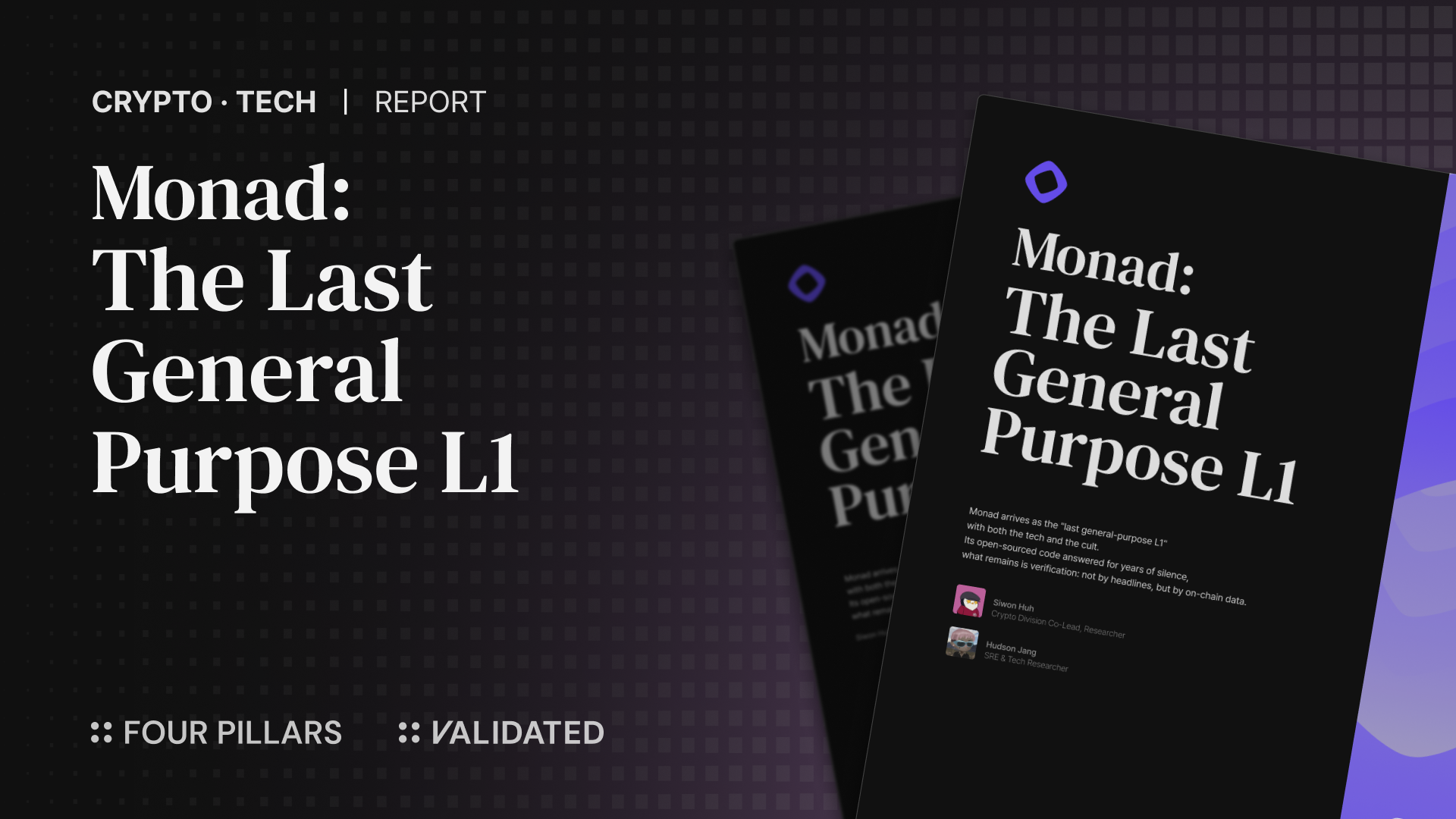
- Monad is a large-scale experiment that revisits the long-standing thesis of a general-purpose, high-performance blockchain through extreme systems engineering. In an environment where specialized chains and appchains are increasingly dividing responsibilities, Monad is testing whether a single chain can deliver sufficient performance and composability at the same time by jointly optimizing consensus, execution, storage, and network propagation while preserving EVM compatibility.
- The ecosystem was built through a long-term funnel spanning community, founders, testnet, and mainnet, and the focus is now shifting from participation to sustainable demand. The testnet and early incentives succeeded in establishing technical credibility and attracting liquidity, but the key question after mainnet is whether users have sufficient reasons to trade, borrow, make payments, and pay fees even without incentives.
- The mainnet ecosystem has already established roughly $1 billion in DeFi and more than $700 million in stablecoin supply, while the center of growth is expanding beyond TVL toward actual capital utilization across trading, lending, payments, and RWAs. Native trading infrastructure led by Kuru is becoming increasingly prominent, while lending markets such as Aave and distribution channels such as MetaMask Money Account are taking root. As a result, Monad is entering a phase of transition from a chain where capital is simply deposited to one where capital is actively put to work.
- The foundation of this performance is not a new VM, but a comprehensive redesign of the EVM, and that performance comes with additional complexity. Monad-specific execution rules, including parallel and asynchronous execution, reserve balances, and its memory cost structure, enable high throughput while also creating additional learning costs for developers and infrastructure providers. Upgrade frameworks such as MIPs and MONAD_NINE can be viewed as part of a gradual process of standardizing and abstracting these differences while developing a high-performance variant of the EVM.
- Monad’s next challenge, therefore, is not simply to prove that it is a “fast EVM,” but to demonstrate that its performance can translate into a durable economic advantage. The key is to create a composability premium that only an integrated chain can provide, reduce the incentives for successful applications to migrate to separate chains, and generate recurring fee-paying demand across trading, borrowing, payments, and other activities even after incentives decline. Ultimately, Monad’s success will be judged not by TPS, but by whether a high-performance general-purpose chain can create a sustainable application economy.
: : DTCC Tokenization: Less Than the Hype, Bigger Than It Looks (Link)
- DTCC has officially launched its Tokenization Service (DTS), marking a major milestone in bringing securities on-chain. However, the service operates under strict regulatory constraints set by the SEC's No-Action Letter.
- DTS's biggest immediate benefit is more efficient collateral mobility. Financial institutions can transfer tokenized securities 24/7, nearly in real time, while potentially automating workflows through smart contracts.
- Despite the move on-chain, much of the traditional financial infrastructure remains unchanged. Ownership rights, custody arrangements, and market structures stay the same, while DTS does not natively support DvP settlement and requires separate cash solutions.
- DTS may be less transformative today than the hype suggests, but its long-term significance should not be underestimated. DTCC's adoption of blockchain is a major institutional milestone, and its roadmap could pave the way for tokenized securities to become mainstream.
: : The Convergence of Asset Management: From Wall Street to Onchain (Link)

- The boundaries between traditional finance and onchain finance are blurring, driving a structural transformation in the asset management industry. While ETFs integrate digital assets into traditional financial markets and vaults bring traditional asset management functions onto the blockchain, both reflect a broader convergence in how assets are incorporated, allocated, managed, and subject to risk management.
- Digital asset ETFs are evolving beyond simple price-tracking instruments into sophisticated financial products that combine portfolio management with onchain yield generation. As the product landscape expands from spot Bitcoin and Ethereum ETFs to multi-asset ETFs, staking ETFs, and liquid staking token (LST) ETFs, investment diversification and the integration of network rewards are emerging as key competitive differentiators.
- The introduction of spot digital asset ETFs in South Korea requires not only a clear legal framework but also the development of robust financial infrastructure to support their operation. Key priorities include the legal recognition of digital assets as eligible underlying assets, reliable benchmark pricing, custody and safekeeping arrangements, creation and redemption mechanisms, and market surveillance systems, alongside a regulatory framework that accommodates future expansion into staking and multi-asset products.
- Curated vaults are emerging as a core infrastructure for onchain asset management, separating professional asset allocation and risk management into independent services. In curated vault ecosystems developed around protocols such as Morpho, specialized curators allocate capital by assessing collateral quality, liquidity, and liquidation risks, effectively replicating key functions of traditional asset managers through smart contract-based infrastructure.
- The long-term growth of ETFs and onchain vaults will depend on regulatory clarity, standardized risk management frameworks, and broader institutional participation. While smart contract, oracle, liquidity, and curator risks, along with the securities classification of vaults, remain key challenges, the proliferation of stablecoins and tokenized real-world assets (RWAs), coupled with the expansion of traditional financial institutions into onchain markets, is expected to structurally increase demand for professional onchain asset management.
Comments
3. Macro & Onchain Metrics
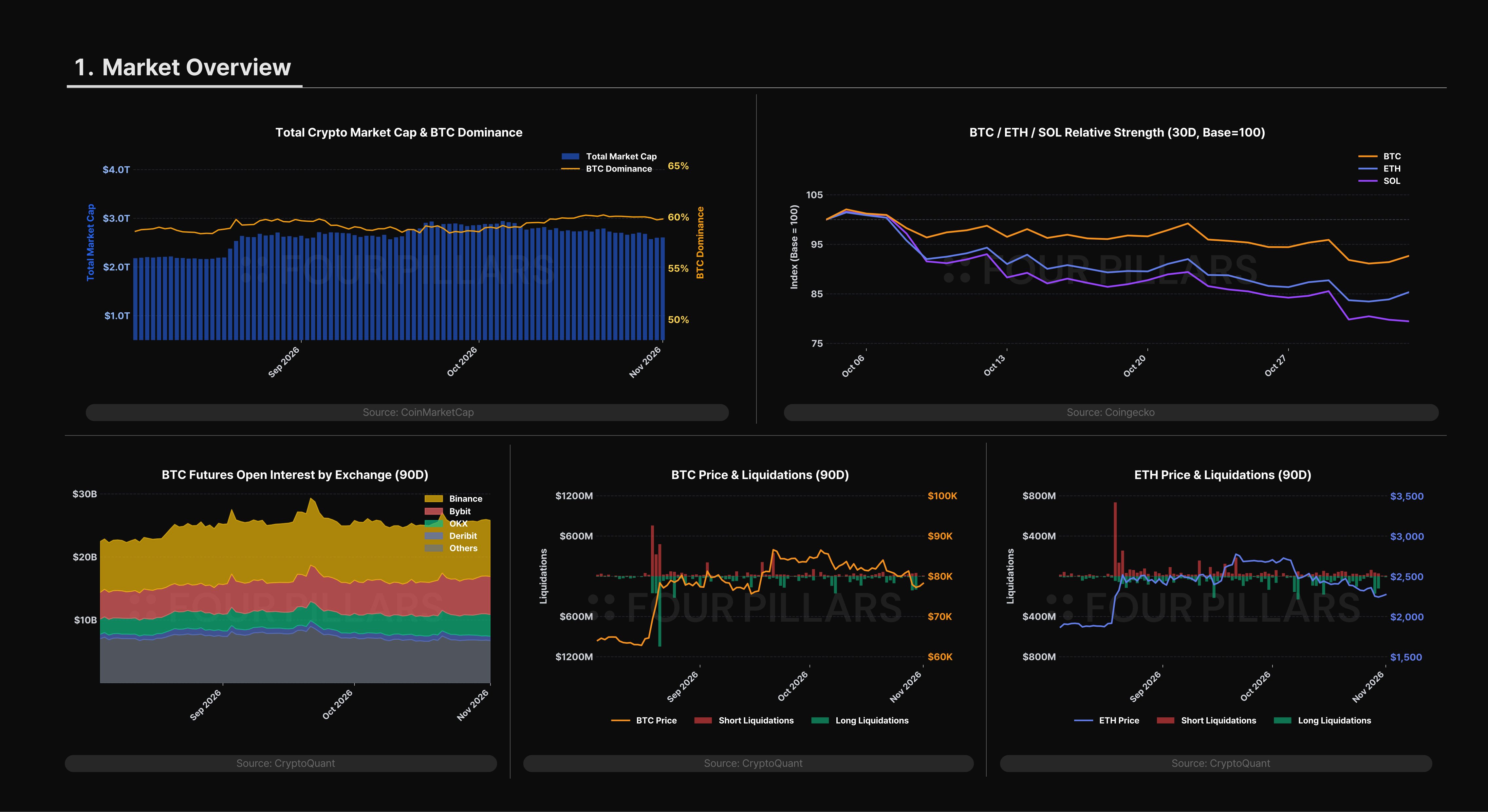
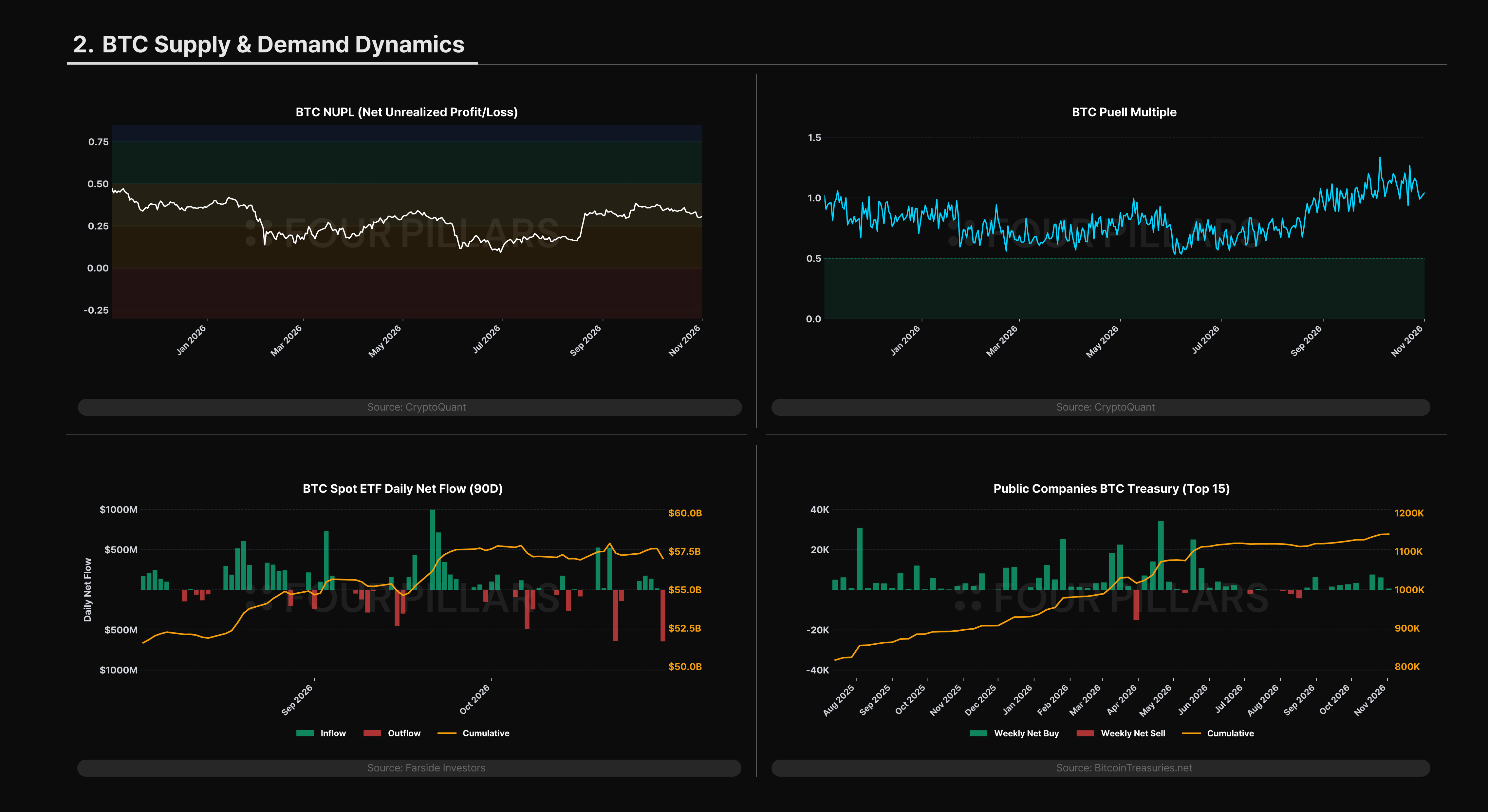
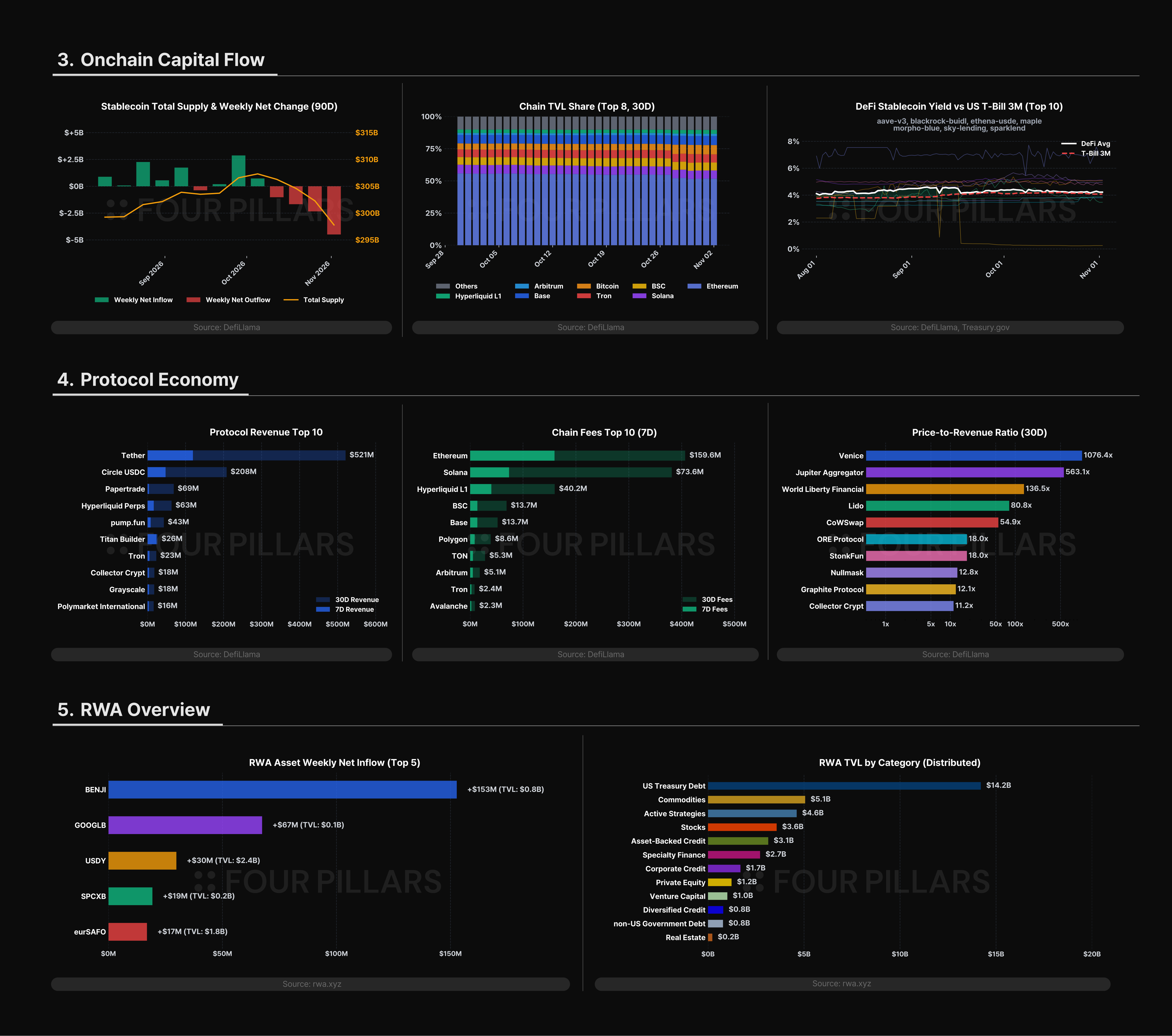
Some of the charts below are powered by CryptoQuant. For those interested in exploring the underlying data in greater detail, CryptoQuant provides access to a comprehensive suite of onchain and market analytics used by institutional participants.
The author of this report may have personal holdings or financial interests in assets or tokens discussed herein. However, the author affirms that no transactions have conducted using material non-public information obtained in the course of research or drafting. This report is intended solely for general information purposes and does not constitute legal, business, investment, or tax advice. It should not be used as a basis for making any investment decisions or as guidance for accounting, legal, or tax matters. Any references to specific assets or securities are made for informational purposes only and should not be construed as an offer, solicitation, or recommendation to invest. The opinions expressed herein are those of the author and may not reflect the views of any affiliated institutions, organizations, or individuals. The opinions and analyses expressed herein are subject to change without prior notice. In addition, beyond the individual disclosures included in each report, Four Pillars, may hold existing or prospective investments in some of the assets or protocols discussed herein. Furthermore, FP Validated, a division of Four Pillars, may already be operating as a node in certain networks or protocols discussed herein or may do so in the future. Please see below links in the footer for FP Validated's participating network disclosures and for broader disclosure details.