


Table of Contents
- 1. Major News
- [Institution] Nine U.S.-Listed Companies Reject Tokenized Trading of Their Shares on OKXICE
- [Institution] MSCI Finalizes Criteria to Exclude Non-Operating Companies: DAT Companies Face Possible Index Removal
- Others
- 2. Data Spotlight
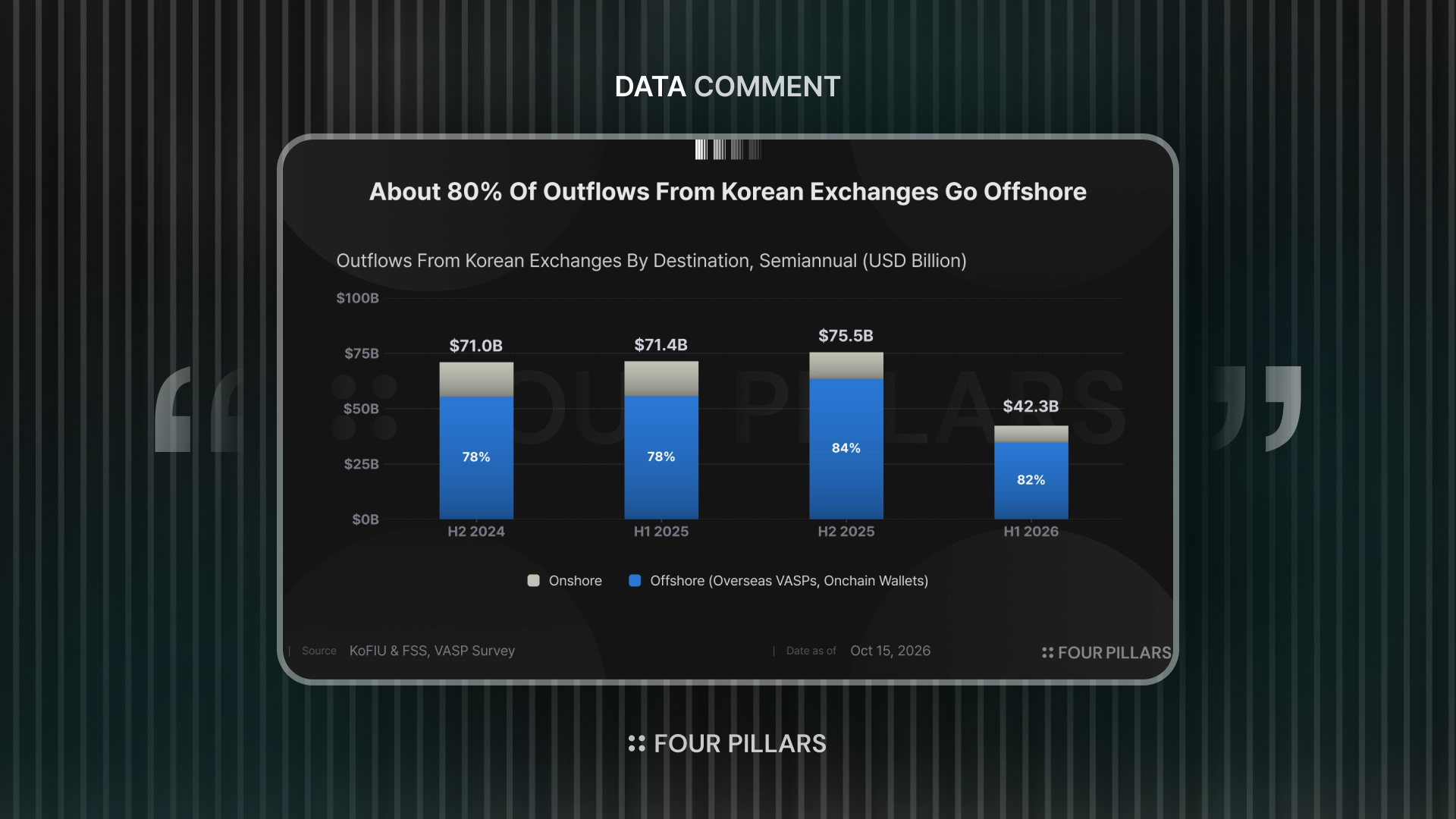
- Crypto Goes Where It Is Welcome and Stays Where It Is Well Treated (Link)
- 3. Four Pillars Weekly
- : : Monthly EIP - Sep 2026 (ft. Making Ethereum’s Ideals Work) (Link)
- Comments
- 4. Macro & Onchain Metrics
Researcher

1. Major News
[Institution] Nine U.S.-Listed Companies Reject Tokenized Trading of Their Shares on OKXICE
What Happened?
Nine U.S.-listed companies, including CoreWeave, Broadcom, and Verizon, have objected to the tokenization and trading of their shares on OKXICE. The notice OKXICE published on October 15 also named Cerebras Systems, AppLovin, Applied Digital, Rocket Lab, Applied Optoelectronics, and UnitedHealth Group.
OKXICE is a joint venture between OKX and Intercontinental Exchange (ICE), the parent company of the New York Stock Exchange, and plans to offer tokenized stock trading under the SEC’s Innovation Exemption. It will build permissioned liquidity pools based on Uniswap v4 on X Layer, designed so that identity-verified users can swap stock tokens for stablecoins.
These objections are based on a right that the Innovation Exemption grants to issuers. A tokenized securities venue (TSV) must give the issuer written notice before trading begins. If the issuer objects within 30 days, the stock token cannot be offered under the exemption. If there is no objection, trading may proceed, provided other requirements are met. However, an objection applies only to the venue that sent the notice and does not block tokenized trading of a company’s stock across all platforms.
The reasons behind each company’s objection were not disclosed in the notice. Applied Optoelectronics told The Wall Street Journal that the impact of tokenization on its share price, liquidity, and volatility is unclear, and that investors could mistake the product for one the company directly participates in or has approved. Its position is that the benefits to the company and its shareholders are also not clear enough to justify taking on this uncertainty. Nasdaq also announced that it will exclude its own shares from TSV trading.
Researcher’s Comment
This is the first case of the issuer objection process taking effect since the SEC announced the Innovation Exemption on September 17. The main reason companies are objecting is that the interests of tokenizers and companies diverge. Tokenizers attract users and earn fees by extending trading hours and broadening access. Companies, on the other hand, receive no new capital, while their share price is formed separately outside the existing market and liquidity is fragmented. Risks such as price divergence may also be passed on to the company. It is a market where the revenue goes to the tokenizers and the risk goes to the companies, leaving companies with little reason to participate.
Earlier, an SEC statement divided tokenized securities into issuer-sponsored, where the issuer itself issues the token, and third-party sponsored, where a third party issues it, and further split third-party sponsored tokens into custodial, which hold the underlying shares, and synthetic, which only track the share price. OKXICE’s tokens are custodial, with a broker-dealer holding the actual shares on a 1:1 basis. The Innovation Exemption allows custodial tokens to trade on TSVs if they provide the same rights as the underlying shares, but attaches the condition that they cannot be traded if the issuer objects within 30 days. Unless the conflict of interest described above is resolved, similar objections are likely to follow each time custodial tokens expand their coverage through the Innovation Exemption.
The objection process does not apply to issuer-sponsored tokens, which companies issue themselves. However, this approach places a heavy operational burden on companies, as they must bear the costs and risks of tokenization directly. Because most U.S.-listed shares are held in the name of the Depository Trust Company (DTC), a company issuing tokens must link its transfer agent’s shareholder register to onchain records and build a separate conversion system between existing shares and tokens. As a result, adoption remains rare outside of a few companies directly tied to the crypto business, such as Galaxy Digital.
The remaining option is models such as the tokenized stocks of xStocks, Ondo Global Markets, and Robinhood, which fall under synthetic linked securities in the SEC’s classification. These can issue tokens that track share prices without the company’s consent, but because they are excluded from the Innovation Exemption, they cannot be distributed within the U.S. regulated market. For the time being, the global tokenized stock market is likely to remain a structure in which linked securities models circulate outside the United States. Businesses seeking to enter the U.S. market will try to use the Innovation Exemption through custodial structures, but each time they will also face objections from companies like the ones seen here.
[Institution] MSCI Finalizes Criteria to Exclude Non-Operating Companies: DAT Companies Face Possible Index Removal
What Happened?
On October 15, MSCI finalized new criteria to exclude non-operating companies from the MSCI Global Investable Market Indexes (MSCI GIMI). The changes will be reflected in the November index review and take effect after the market close on November 30, with decisions on individual companies’ removal to be announced on November 11.
The review proceeds in two stages. It first assesses whether a company holds substantial operating assets, and if the company fails this test, applies five sector-agnostic financial ratios. A company that meets the exclusion threshold on four or more of these loses its index eligibility. Existing constituents are removed only if they meet the exclusion criteria in both of their two most recent annual filings, and MSCI said it may also use the latest interim filings.
MSCI will end the interim measures it applied to companies whose digital assets account for 50% or more of total assets (a freeze on increases in index share count and a deferral of new additions), and will determine eligibility under the new criteria. In the pre-implementation simulation, digital asset treasury (DAT) companies such as Strategy (formerly MicroStrategy) and Metaplanet, along with uranium holder Yellow Cake, appeared as candidates for exclusion.
Strategy opposed the new criteria, arguing that they revive the earlier proposal to exclude DAT companies under different wording. The company reports its bitcoin business as an operating segment for accounting purposes and argued that MSCI’s distinction between operating and non-operating companies has no basis in recognized accounting standards or law. At the same time, it stated that its shares held by funds tracking MSCI GIMI amount to approximately 3.1% of its outstanding common stock, and that the impact on its business would be limited.
Researcher’s Comment
MSCI is a company that creates the stock indexes that institutional investors around the world use as benchmarks for comparing investment performance. Because many passive funds track these indexes directly, inclusion automatically creates demand for a stock, and removal makes that demand disappear. MSCI had already been excluding investment funds and passive investment vehicles from its indexes, and the new criteria apply the same principle to companies whose assets and financial structure resemble investment vehicles, even if they take the form of listed companies.
In this context, MSCI’s decision is the first official judgment by an index provider on whether DAT companies should be viewed as operating companies or investment vehicles. Strategy counters by pointing to the fact that it reports its bitcoin business as an operating segment for accounting purposes, but accounting reporting and index eligibility are separate judgments. If Strategy were actually removed, it would keep its listing status but lose the stock demand the index had been generating, which would be a fairly serious problem for the company.
The reason this is even more damaging for DAT companies is that this capital inflow is tied to the starting point of their business model. DAT companies issue shares at prices above the net value of their holdings and use the capital raised to buy more assets, increasing holdings per share. A high share price creates purchasing capacity, and expectations of asset accumulation in turn support the share price. Strategy explains that tracking funds hold only about 3.1% of its shares, but if index removal weakens demand for the stock, the premium shrinks, and raising the same amount requires issuing more shares, increasing the dilution burden on existing shareholders.
The scale of the impact is expected to vary by company. Companies that rely heavily on rising asset prices and repeated equity raises are more sensitive to changes in stock market demand. By contrast, companies with separate operating cash flow or asset management income have room to cover their costs even if new fundraising declines. Index removal does not immediately lead to bitcoin sales, and whether assets are sold depends on cash holdings, debt maturities, and interest and dividend obligations.
Once decisions on individual companies’ removal are announced on November 11, the standard for evaluating DAT companies is likely to shift from the size of their coin holdings to the conditions under which they accumulate and maintain those assets. Whether they can continue raising capital and paying costs even as the premium falls, and whether additional purchases actually increase existing shareholders’ asset value, will become the key criteria. DAT companies now bear the burden of explaining these financial structures to the market.
Others
Crypto
- DATA Network plans to shut down its standalone chain and migrate to Sui following a $30 million investment from the Sui Foundation
- Ledger discovers hardware implants designed to steal recovery phrases in some devices sold through resellers in Southeast Asia
- StarkWare launches OffMarket to hide the link between Polymarket accounts and trading positions
- Cysic suspends its bridge after an exploit enables the unauthorized minting of 10 million CYS
Institution
- Nine U.S.-listed companies, including CoreWeave, Broadcom and Verizon, object to tokenized trading of their shares on OKXICE
- EBA designates USDC as the EU’s first significant e-money token, with joint supervision alongside French authorities beginning in November
- Marqeta and Coinbase enable stablecoin-backed card issuance for business clients
- Morgan Stanley delays expected support for tokenized equities on its alternative trading system to Q1 2027
- Ripple Prime launches institutional RWA swaps referencing equity and commodity perpetual futures on Hyperliquid
Tech
- Ethereum Foundation schedules Glamsterdam’s Hoodi activation for October 26, with the gas limit set to rise to 200 million
- Solana schedules Alpenglow’s mainnet activation for October 21, targeting 150-millisecond transaction finality
- Starknet opens a nonbinding vote on researching a transition to an independent L1 to address quantum computing threats
Investment
- Kraken parent Payward signs an agreement to acquire Saldo Bank’s holding company, targeting a 2027 close pending regulatory approval
- Balaji Srinivasan’s Network School acquires Farcaster from Neynar
- Fission raises $10 million in a Series A led by Pantera Capital to expand liquidity for tokenized private funds
Asia
- South Korea’s Financial Services Commission warns of leverage risks of up to 200x on offshore perpetual futures platforms and plans criminal referrals for illegal domestic operations
- Pando Finance’s spot Solana ETF begins trading on the Hong Kong Stock Exchange
- Philippine exchange Coins.ph affirms customer funds are safe and its license remains intact amid reports of potential central bank enforcement action
- Kraken secures final operating approval from Dubai’s VARA and plans a UAE launch with dirham deposits and withdrawals
2. Data Spotlight
Crypto Goes Where It Is Welcome and Stays Where It Is Well Treated (Link)
3. Four Pillars Weekly
: : Monthly EIP - Sep 2026 (ft. Making Ethereum’s Ideals Work) (Link)
- September saw as many new EIPs as August, but fewer existing proposals advanced. Core proposals focused on new authentication methods and lower verification and storage overhead, while ERCs centered on transaction protection, AI agent state and permissions, and common standards for contract modules.
- With quantum resistance targeted for 2029, the EF linked its long-term research roadmap to upgrade priorities, identifying censorship resistance and native account abstraction as central to Hegotá. It also stressed that ETH issuance policy requires discussion across the ecosystem.
- As demand for institutional adoption and ETH’s economic value grows, Ethereum must turn its principles into real-world use and growth. Researchers, developers, and operators need to assess policy outcomes alongside practical constraints altogether, and demonstrate how their choices contribute to Ethereum.
Comments
4. Macro & Onchain Metrics
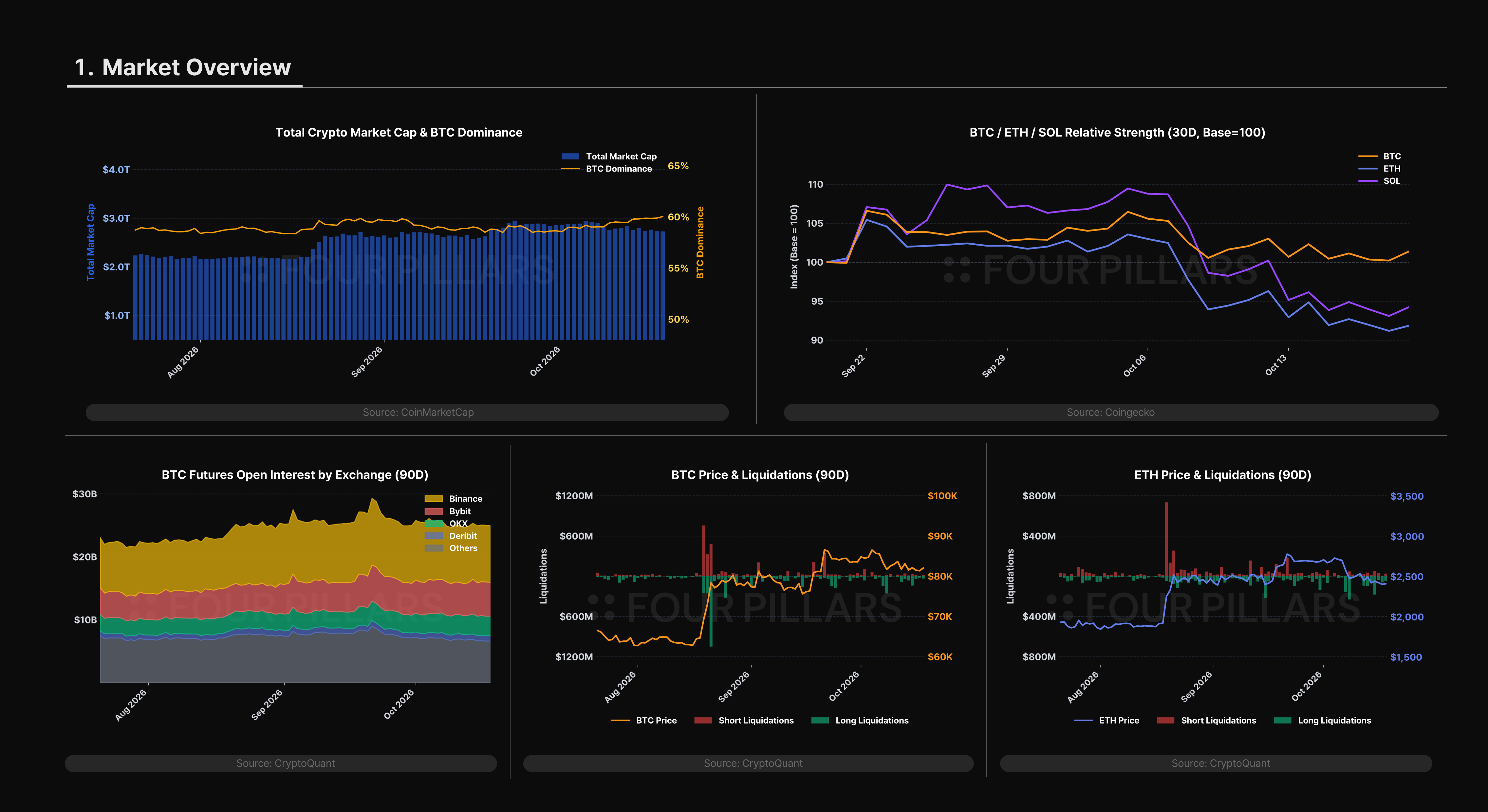
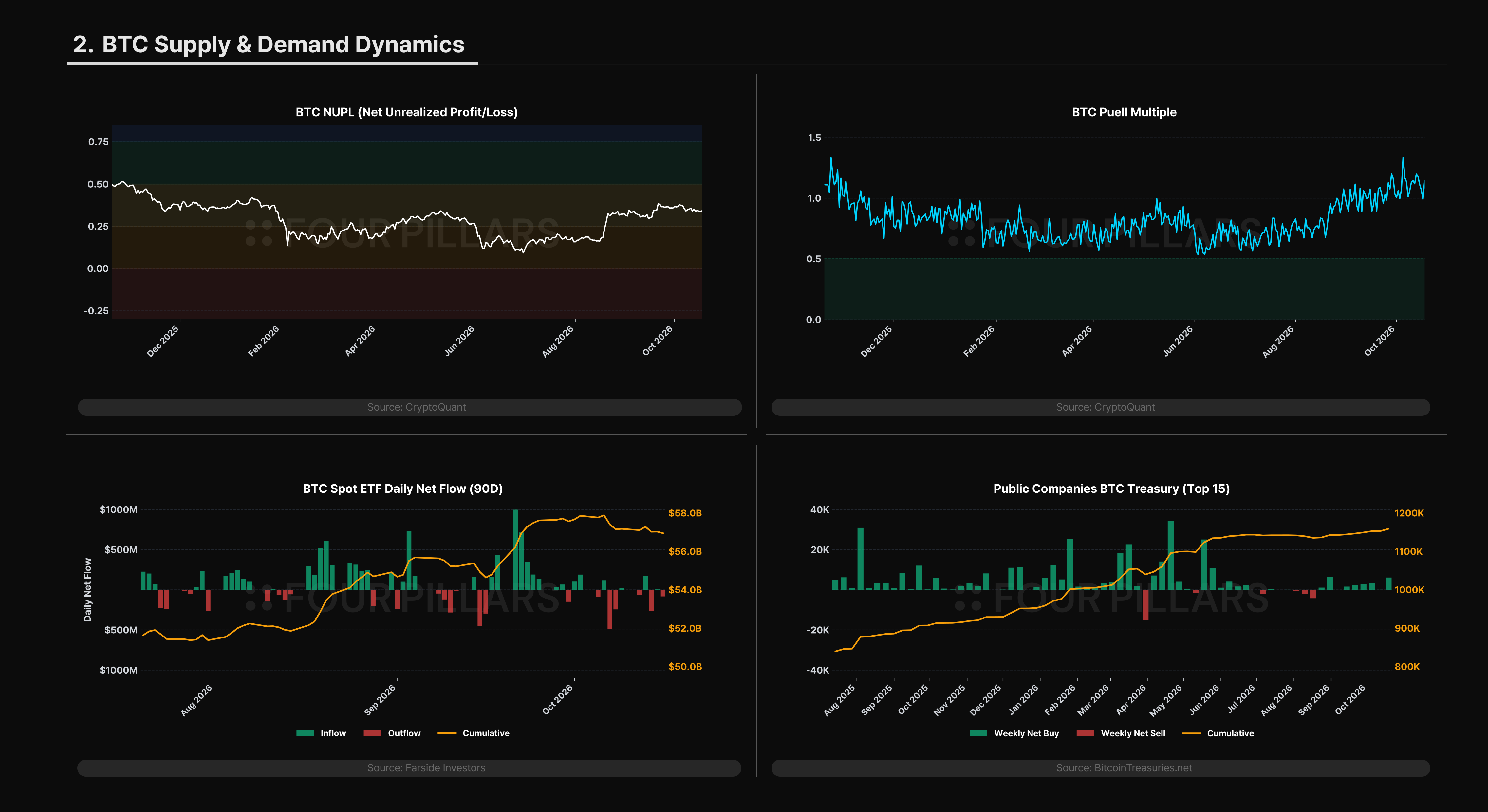
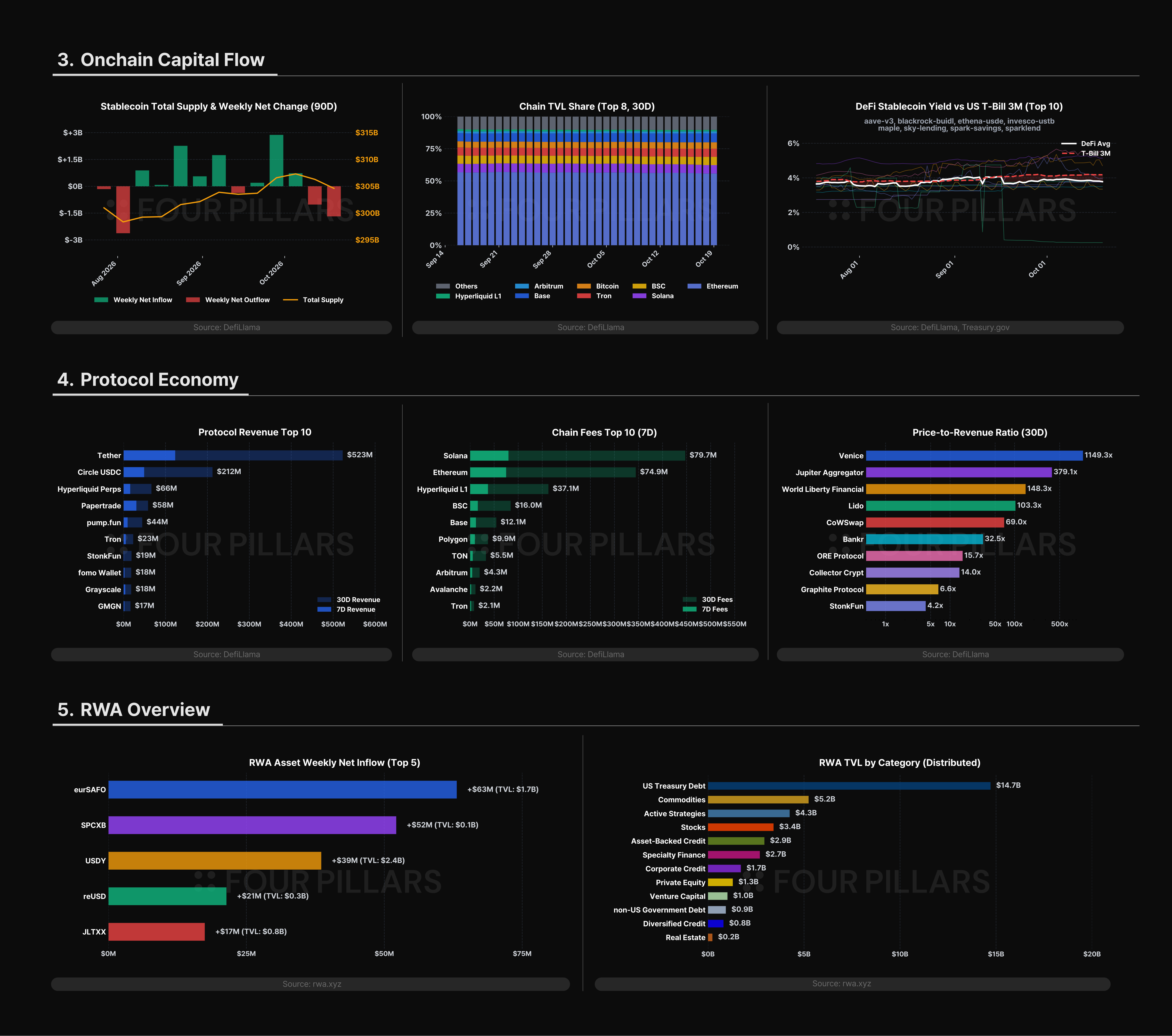
Some of the charts below are powered by CryptoQuant. For those interested in exploring the underlying data in greater detail, CryptoQuant provides access to a comprehensive suite of onchain and market analytics used by institutional participants.
The author of this report may have personal holdings or financial interests in assets or tokens discussed herein. However, the author affirms that no transactions have conducted using material non-public information obtained in the course of research or drafting. This report is intended solely for general information purposes and does not constitute legal, business, investment, or tax advice. It should not be used as a basis for making any investment decisions or as guidance for accounting, legal, or tax matters. Any references to specific assets or securities are made for informational purposes only and should not be construed as an offer, solicitation, or recommendation to invest. The opinions expressed herein are those of the author and may not reflect the views of any affiliated institutions, organizations, or individuals. The opinions and analyses expressed herein are subject to change without prior notice. In addition, beyond the individual disclosures included in each report, Four Pillars, may hold existing or prospective investments in some of the assets or protocols discussed herein. Furthermore, FP Validated, a division of Four Pillars, may already be operating as a node in certain networks or protocols discussed herein or may do so in the future. Please see below links in the footer for FP Validated's participating network disclosures and for broader disclosure details.


