

![Crypto Rebounds: Is Spring Finally Here? [FP Weekly 35]](/_next/image?url=https%3A%2F%2Fkrotgrfjzckvumudxopj.supabase.co%2Fstorage%2Fv1%2Fobject%2Fpublic%2Fassets%2Fimg%2Fcontent%2Farticle%2Fnotion-import%2Ftcohxdmt6wn2o2.png&w=3840&q=75)
Table of Contents
- 1. Major News
- [Institution] SEC Proposes First Crypto-Specific Offering Rule, "Regulation Crypto Assets"
- [Crypto] Crypto Market Posts Largest Gain in Two Months on Treasury Buybacks and Regulatory Tailwinds
- Others
- 2. Data Spotlight
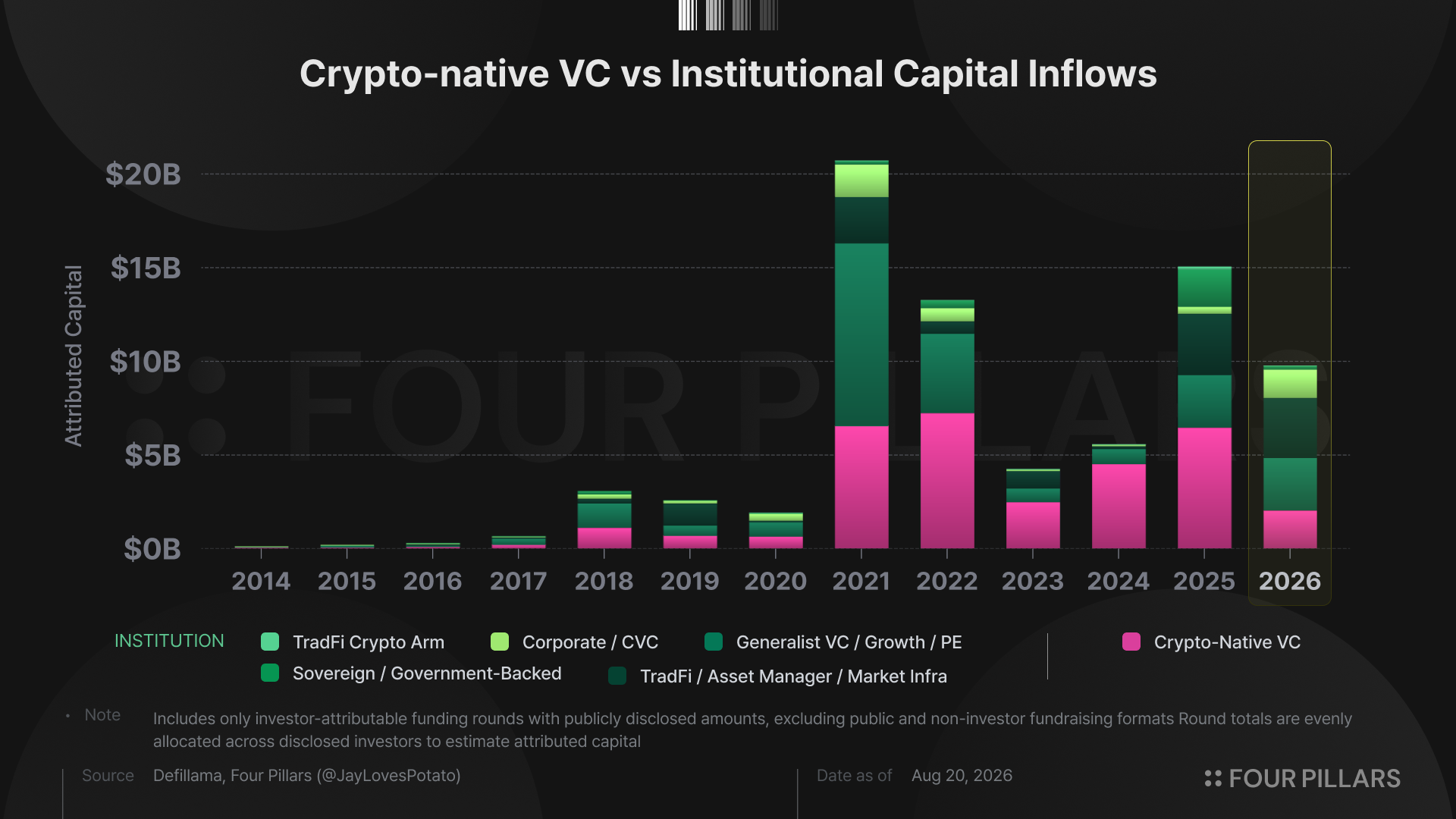
- Will Institutional Capital Reach the Rest of Crypto? (Link)
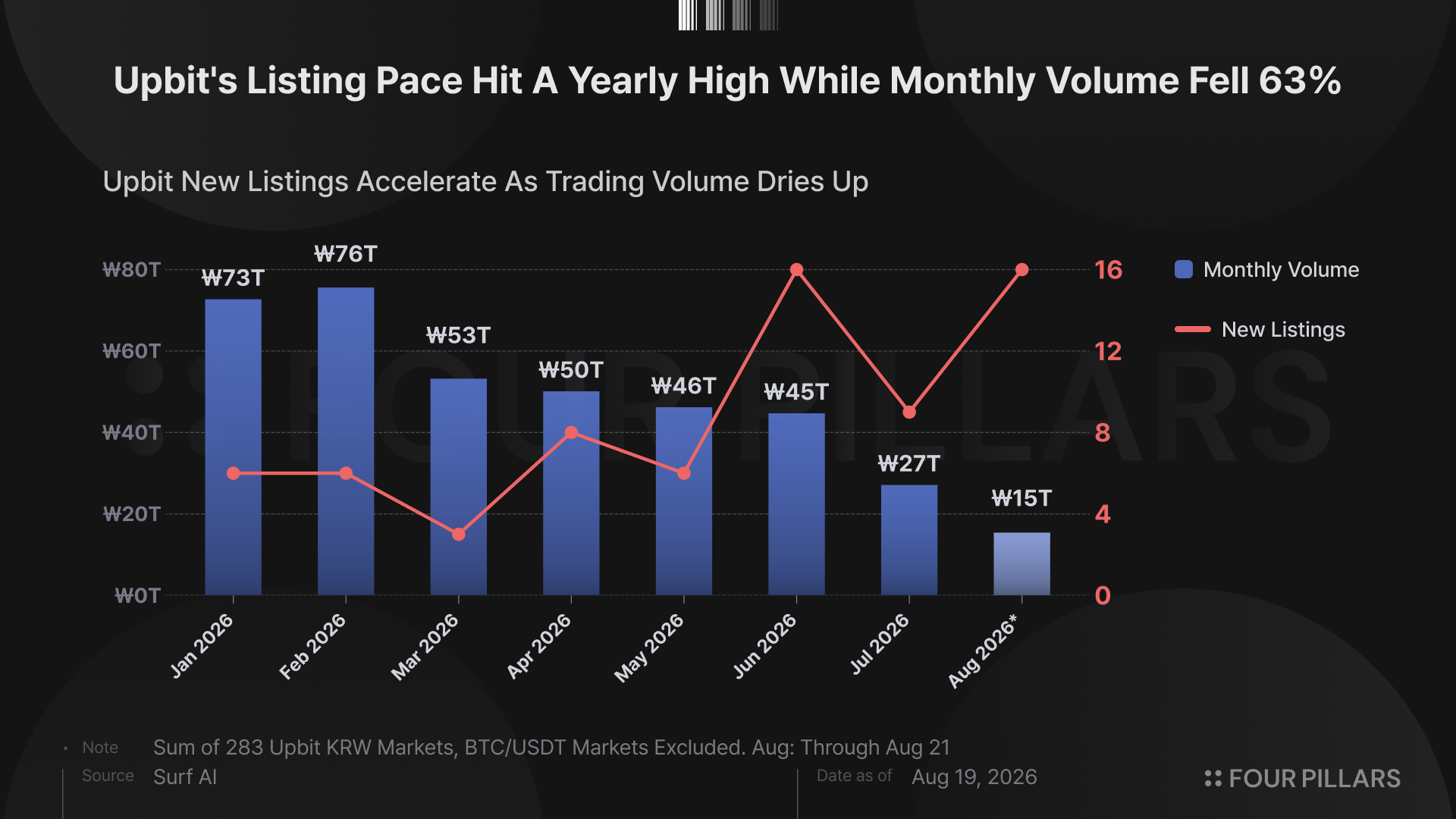
- Upbit in 2026: New Listings Propping Up the Volume (Link)
- 3. Four Pillars Weekly
- : : Optimum: Rethinking the Blockchain Network Layer (Link)
- : : Tempo: Where Specialized Blockchains Are Headed (Link)
- Comments
- 4. Macro & Onchain Metrics
Researcher

1. Major News
[Institution] SEC Proposes First Crypto-Specific Offering Rule, "Regulation Crypto Assets"
What Happened?
On August 18, the U.S. Securities and Exchange Commission (SEC) released a 402-page rule proposal, "Regulation Crypto Assets," that establishes a regulatory framework for investment contracts involving crypto assets. After nearly a decade of governing crypto through informal guidance and enforcement, the SEC has created its first crypto-specific offering regime. It is a follow-up measure that codifies into rules the crypto asset classification interpretation the SEC released this past March.
The proposal is organized into five subparts, with the core being a safe harbor for two registration exemptions. On the exemptions, the startup exemption permits up to $5 million in offerings over a four-year period, and the fundraising exemption permits up to $75 million in offerings per twelve-month period. The latter carries obligations to file financial statements and to provide ongoing disclosure.
Both exemptions commonly require principles-based narrative disclosure. Issuers must disclose, in narrative form, the project and code, the function of the crypto asset, the managerial efforts the issuer has promised, token distribution and lockups, and risk factors. The scope of disclosure applies differently by size. The $5 million startup exemption is narrative disclosure, while the $75 million fundraising exemption bears the obligation to file financial statements and to provide ongoing disclosure after issuance.
The "investment contract safe harbor" is a mechanism that treats a crypto asset as having left the status of an investment contract under securities law once the issuer has completed or permanently ceased the managerial efforts it promised. The issuer confirms this by filing a Form TR transition report within four years of the notice of reliance. This translates into a rule the interpretation that a crypto asset may be sold as part of an investment contract but may no longer be an investment contract once reliance on managerial efforts disappears.
After the rule proposal was released, opinions varied. SEC Chairman Paul Atkins criticized the prior regime as "regulation by enforcement" that forced crypto into rules made in the 1930s, while Commissioner Hester Peirce confirmed that the prohibitions on fraud and manipulation apply in full under both exemptions as well. The comment period is 60 days after publication in the Federal Register.
Researcher's Comment
This proposal matters most in that the way the SEC governs crypto has shifted from enforcement to rules. For the past decade, U.S. crypto issuers could not know in advance which tokens were securities. It was always a matter of responding to arbitrary SEC lawsuits, and Coinbase, Ripple, and Uniswap all went through this process. Advance rules thus create an environment in which issuers can resolve the uncertainty around issuing tokens.
The notable point is the separation concept embedded in the safe harbor. The logic is that even if a crypto asset is initially sold as an investment contract, it leaves securities status once the network becomes sufficiently decentralized and reliance on managerial efforts disappears. This is a framework the industry has long demanded, and it is the result of Commissioner Peirce's 2020 safe harbor proposal taking shape as a draft rule six years later. A legal path for a token to start as a security and graduate into a commodity has been set down in writing.
However, many variables remain to be resolved before the rule is finalized. A 60-day comment period remains, and if the market-structure law, the CLARITY Act, passes Congress during that time, there will be proposal content that must be adjusted. In particular, the CLARITY Act is legislation that defines the distinction between securities and commodities in law, so there are many points where it intersects with the SEC rule. If the two regulatory frameworks diverge, issuers will be placed back into confusion. Whether the $5 million and $75 million offering caps match actual fundraising demand, and whether the narrative disclosure obligation becomes an excessive regulatory cost for small teams, will also take shape during the comment period.
This rule proposal also carries a policy intent to draw crypto asset issuance that has already moved offshore back into the United States. Until now, many projects established entities abroad and issued tokens to avoid securities-law uncertainty. One of the goals the SEC explicitly stated is to reduce the incentive for issuers to go overseas. If the rule is finalized and the safe harbor functions, it could become a turning point at which token issuance and secondary-market trading within the U.S. come into the regulated sphere. Conversely, if it fails to secure consistency with the CLARITY Act, or if the fundraising caps and disclosure burden do not match reality, there is also the possibility it remains an institution on paper.
[Crypto] Crypto Market Posts Largest Gain in Two Months on Treasury Buybacks and Regulatory Tailwinds
What Happened?
Amid a prolonged bear market, a tailwind swept across the crypto market. Bitcoin rose more than 8% in a single day on August 19, its largest single-day gain since March. After recovering $69,000 for the first time in two months, it surpassed $72,000 on the 20th. Ethereum reclaimed $2,000 for the first time since May, rising 10% in a day, and major altcoins including Solana and XRP also gained more than 5%.
One of the backdrops to the rally was the Treasury market. On August 18, the U.S. Treasury announced it would double its long-dated bond buyback size from up to $2 billion to $4 billion per operation, with the program taking effect on September 9. As the 30-year Treasury yield, which had risen to 5.337%, fell immediately, an environment favorable to risk assets took shape. It was the result of the market reading the news as effectively a supply of liquidity.
Regulatory and policy signals helped at the same time. The SEC proposed its first crypto-specific offering rule on August 18, and on August 19 President Trump gathered crypto and traditional-finance executives from Coinbase, Ripple, and Nasdaq at the White House to urge Congress to pass the CLARITY Act. At that event, Trump directly named Hyperliquid, which has blocked U.S. access, and noted that the CFTC chairman is working to bring Hyperliquid into the United States legally. The HYPE token surged about 11% immediately after the remark.
As several factors overlapped, short positions that had bet on declines for six weeks were liquidated en masse. Liquidations on August 19 came to about $1.74 billion in a single day, of which 92% were short positions. This was the second-largest short liquidation on record since October 2025, and as prices rose, forced buybacks occurred and those buybacks pushed prices higher again, leading to a short squeeze. Before this rally, the crypto market had fallen for three consecutive quarters, enduring its longest slump since the 2022 bear market, and investment capital had also been leaving the crypto market and moving to AI-related assets.
Researcher's Comment
The market is still withholding judgment on whether this rally is a short-squeeze rally or the start of new capital inflows. That 92% of total liquidations were short positions shows that forced buybacks drove the rally. After the rally, more than 44,300 BTC flowed into exchanges, showing profit-taking moves by some holders, and on the second day of the gain short liquidations plunged 60%. It means the force that drove the short squeeze was quickly exhausted.
The short-term surge phase created by the short squeeze thus appears to have run its course. The medium- to long-term uptrend depends on spot buying and ETF capital inflows. Short liquidation is a one-time purchase in which positions that bet on declines are forced to buy back, so once the liquidation volume is exhausted, the upward force disappears as well. Spot and ETF buying, by contrast, is capital with a higher purchase cost and a relatively longer investment horizon, so it does not easily exit even when a correction comes and supports the price floor. In fact, the backdrop that allowed Bitcoin to maintain a firm trend after the spot ETF launch in 2024 was also the continued inflow of this kind of long-term capital.
On another note, the point worth attention is that protocols that generated actual revenue throughout the bear market responded first, and sharply. Pump.fun overtook Hyperliquid at one point with about $41.5 million in monthly revenue in mid-August, and together with a structure that channels half of its revenue into automated buybacks and burns, the PUMP token rose more than 100% over 30 days. Hyperliquid also overtook Pump.fun again on a daily fee basis during this rally, and as Trump's onshore remark overlapped, the HYPE token surpassed $82 on August 22 to record an all-time high. Businesses that converted trading demand into real cash flow even in the bear market survived, and once market supply and demand recovered, they were the first to be repriced.
The judgment going forward depends on the catalysts clustered in September.
- Treasury bond buyback takes effect (September 9): The bond buyback program, with its per-operation purchase size expanded to $4 billion, actually begins operating. Since the 30-year Treasury yield fell immediately after the announcement, whether actual implementation leads to sustained liquidity improvement is the key. Since the Treasury's liquidity supply was the first catalyst of this rally, if yields rise again after implementation, the environment that propped up the gain could be shaken.
- CLARITY Act Senate vote (September 15): The market-structure law that defines the boundary between securities and commodities in law goes to a Senate vote. Intertwined with the SEC's Regulation Crypto Assets, if the bill passes, some regulatory uncertainty would be resolved and it could become an institutional catalyst that creates sustainable capital inflows.
- Federal Open Market Committee (FOMC) meeting (September 16): The probability of a rate hike, which approached 100% at the end of July, has now fallen to about one-third, but many members signaled they could move to raise rates if inflation does not subside. A rate hike directly undermines the liquidity logic that propped up this rally. Conversely, a hold, intertwined with the progress of the Treasury bond buyback and the CLARITY Act, could underpin the upward trend.
As such, policy events are clustered in the near term, and each could affect liquidity conditions. If this flow continues, spot buying replaces forced buybacks and the gain moves into a structural phase, while if inflows are weak, this surge remains a squeeze that failed to find new buying.
Others
Crypto
- MANTRA Chain mainnet halted for approximately 30 hours following an exploit of a vulnerability in a Cosmos-EVM module
- Term Finance suffers an estimated $8.5 million loss in a vault governance attack
- The Sandbox’s SAND cross-chain bridge vulnerability exploited to mint unbacked tokens
- Maya Protocol suffers an estimated $1.7 million loss in a flash loan attack
Institution
- U.S. Treasury releases draft GENIUS Act stablecoin rules requiring issuers to obtain licenses starting in 2027
- Financial Accounting Standards Board proposes a three-step evaluation framework for stablecoin accounting
- U.S. Commodity Futures Trading Commission holds the inaugural meeting of its Innovation Advisory Committee, covering crypto, AI, and prediction markets
- Franklin Templeton secures SEC no-action relief allowing existing ETFs and mutual funds to hold tokenized money market funds
- Goldman Sachs expands its active income ETF lineup through the acquisition of NEOS Investments
Tech
- Bitcoin Core v32 enters feature freeze on August 20, with its official release scheduled for October 10 following bug fixes
- Solana reduces its mainnet target slot time from 400ms to 350ms, with plans to gradually shorten it to 200ms
- Ethereum’s Glamsterdam upgrade targets the second half of 2026, aiming to improve L1 execution capacity and block production efficiency
- Ethereum reviews 66 candidate proposals for inclusion in its 2027 Hegotá upgrade
Investment
- Ripple Prime issues $275 million in senior unsecured notes to institutional investors
- SharpLink begins staking approximately $200 million worth of ETH through Lido, with the resulting wstETH held in custody by Anchorage Digital
Asia
- Japan’s Financial Services Agency establishes an independent supervisory division dedicated to digital assets and stablecoins
- Japan lays the legal groundwork to bring digital assets under the Financial Instruments and Exchange Act and lower the tax rate from as high as 55% to 20%
- Nomura-backed Laser Digital Japan completes its registration as a crypto-asset exchange service provider in Japan
2. Data Spotlight
Will Institutional Capital Reach the Rest of Crypto? (Link)
Upbit in 2026: New Listings Propping Up the Volume (Link)
3. Four Pillars Weekly
: : Optimum: Rethinking the Blockchain Network Layer (Link)

- Discussions around Ethereum's scalability have largely centered on two domains: the execution layer and the consensus layer. The networking layer, or the gossip protocol that determines how data propagates between validators, has received relatively little attention, and Optimum is a project that targets exactly this area.
- Optimum's flagship product, mump2p, is a data propagation protocol built on RLNC (Random Linear Network Coding), a protocol co-invented by Optimum's CEO and MIT professor Muriel Médard. It is designed to replace GossipSub, Ethereum's existing gossip protocol. Early test results shows that Optimum records an average block propagation speed 2.42x faster than the GossipSub baseline (2.50x faster on a median basis). while propagation variance ran approximately 7.88x lower than libp2p (2.81x lower on a std-dev basis), meaning both faster and far more consistent delivery.
- From a validator's perspective, an additional 50 to 150ms of slot time raises the average MEV bid value by 13 to 16 percent and can lift the network-wide head vote accuracy from 98.6 percent to between 98.8 and 99.1 percent. According to Optimum's analysis, major validator operators accounting for 36 percent of Ethereum's total stake could see their staking rewards rise by roughly 0.66 to 1.97 percent, about 6 to 19 extra ETH per year on a 32,000 ETH stake.
- Optimum runs in parallel with existing consensus clients as a sidecar without requiring any consensus changes, which keeps adoption friction low. The more fundamental implication, however, lies in what this means for Ethereum's future roadmap. Scaling scenarios such as shorter slot times, larger blobs, and accommodating a greater number of validators all presuppose the throughput limits of the networking layer.
: : Tempo: Where Specialized Blockchains Are Headed (Link)

- Institutional blockchain adoption is starting with payments. For these institutions, a blockchain is not simply a network to deploy products on. It is treated as part of the product itself.
- Instead of building on a finished framework, Tempo picks consensus, data dissemination, and cryptography as individual parts from a parts box called Commonware. The result is a payments-focused L1 that assembles an EVM execution layer and a Threshold Simplex consensus layer into a single binary.
- Tempo builds the requirements of payments into the protocol itself rather than the application layer. Deterministic half-second settlement with no reorgs, blockspace and fees that stay guaranteed regardless of congestion, and issuer policy enforcement and privacy all live inside the consensus rules and the token standard.
- A blockchain reassembled for a specialized purpose gains performance and control optimized for that purpose, but it trades away many of the values of a traditional blockchain. Decentralized networks and specialized networks are complements rather than substitutes, and Tempo is a concrete example of the technical direction specialized chains are taking.
Comments
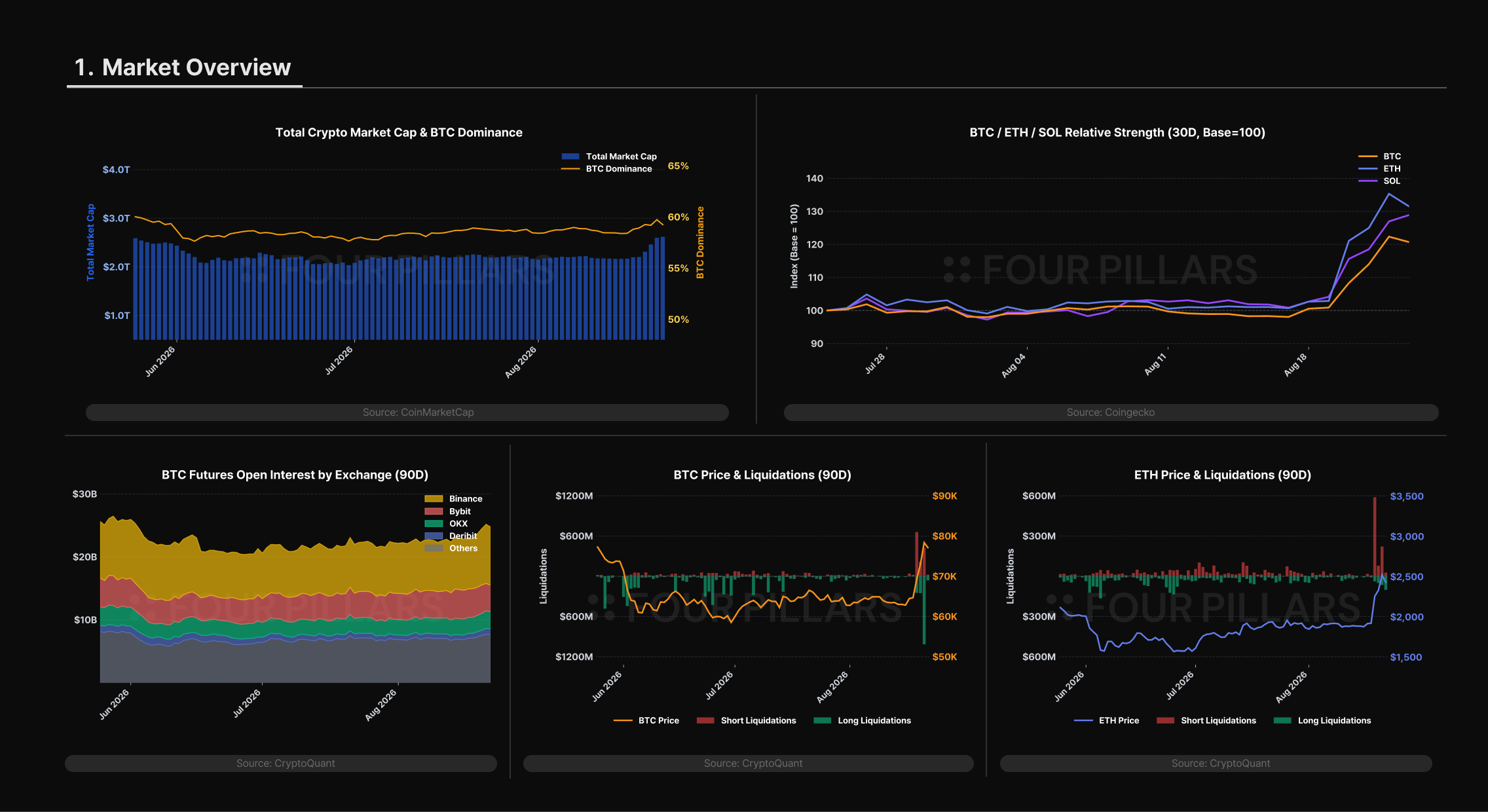
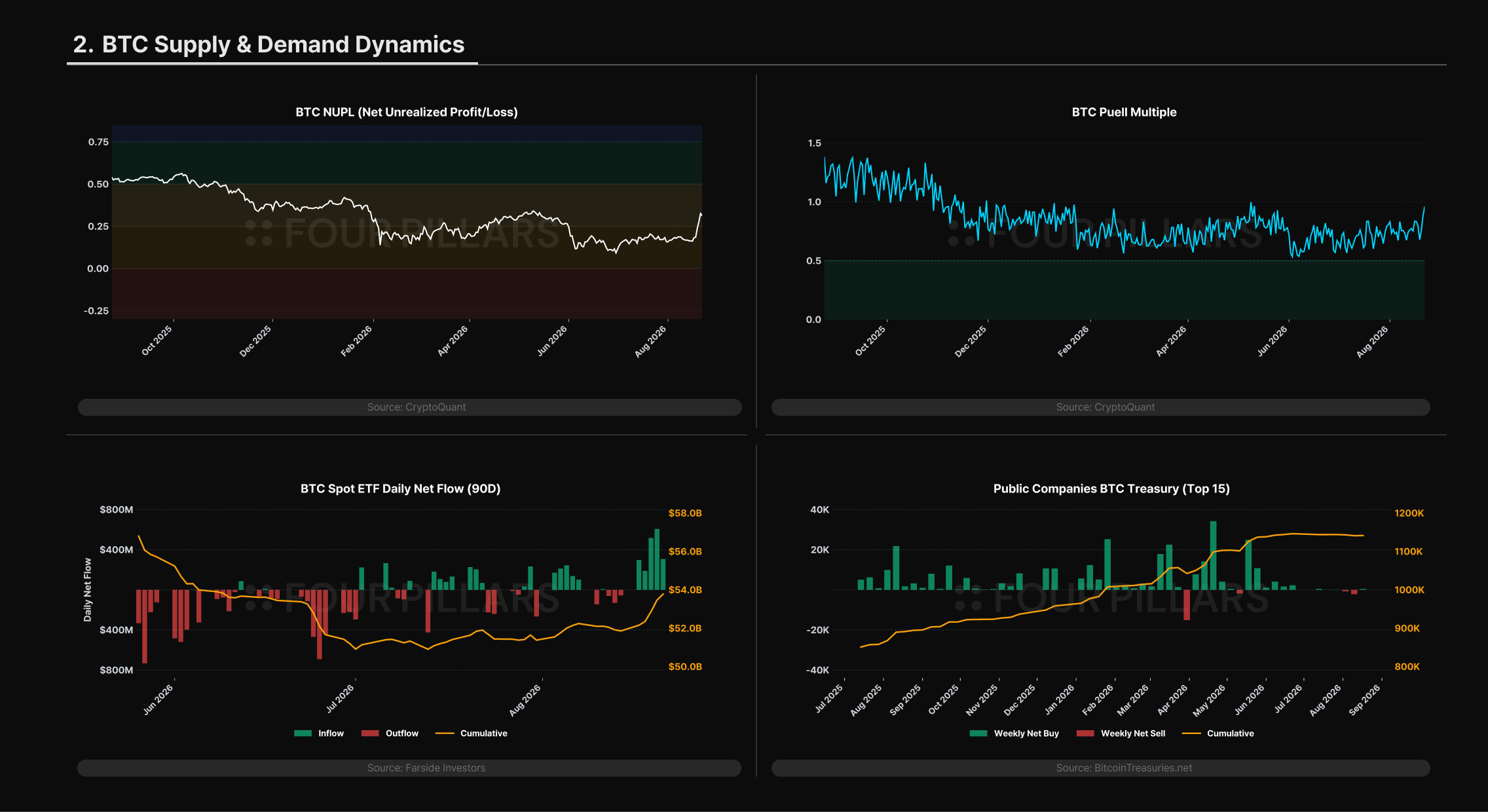
4. Macro & Onchain Metrics
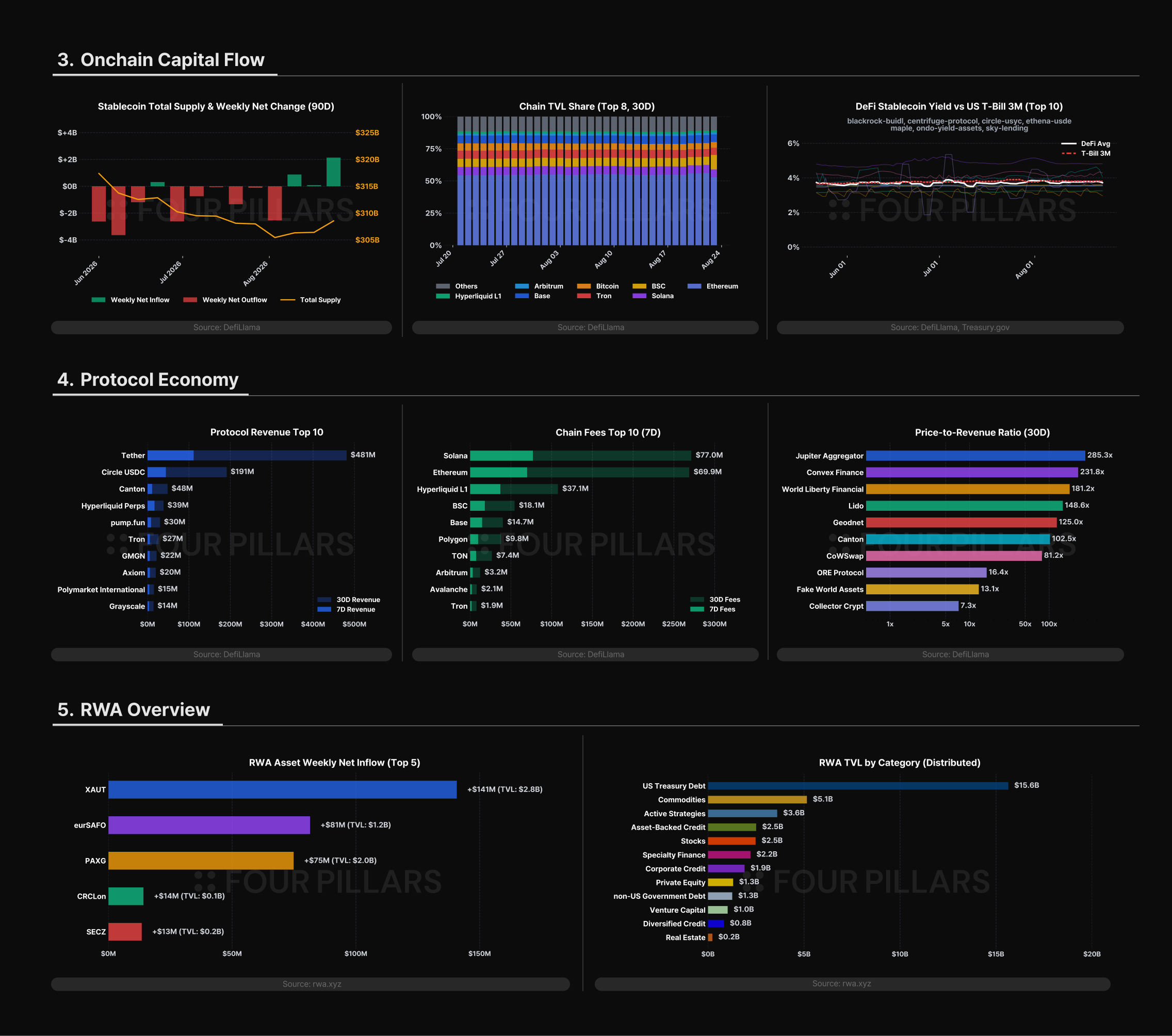
Some of the charts below are powered by CryptoQuant. For those interested in exploring the underlying data in greater detail, CryptoQuant provides access to a comprehensive suite of onchain and market analytics used by institutional participants.
The author of this report may have personal holdings or financial interests in assets or tokens discussed herein. However, the author affirms that no transactions have conducted using material non-public information obtained in the course of research or drafting. This report is intended solely for general information purposes and does not constitute legal, business, investment, or tax advice. It should not be used as a basis for making any investment decisions or as guidance for accounting, legal, or tax matters. Any references to specific assets or securities are made for informational purposes only and should not be construed as an offer, solicitation, or recommendation to invest. The opinions expressed herein are those of the author and may not reflect the views of any affiliated institutions, organizations, or individuals. The opinions and analyses expressed herein are subject to change without prior notice. In addition, beyond the individual disclosures included in each report, Four Pillars, may hold existing or prospective investments in some of the assets or protocols discussed herein. Furthermore, FP Validated, a division of Four Pillars, may already be operating as a node in certain networks or protocols discussed herein or may do so in the future. Please see below links in the footer for FP Validated's participating network disclosures and for broader disclosure details.
![CLARITY Act Fails, the SEC Steps In [FP Weekly 39]](/_next/image?url=https%3A%2F%2Fkrotgrfjzckvumudxopj.supabase.co%2Fstorage%2Fv1%2Fobject%2Fpublic%2Fassets%2Fimg%2Fcontent%2Farticle%2Fnotion-import%2Fmqlpp6muat2oq6.png&w=3840&q=75)

![CLARITY Act Faces the Senate, $LAPTOP Faces Reality [FP Weekly 38]](/_next/image?url=https%3A%2F%2Fkrotgrfjzckvumudxopj.supabase.co%2Fstorage%2Fv1%2Fobject%2Fpublic%2Fassets%2Fimg%2Fcontent%2Farticle%2Fnotion-import%2Fc3ygeemu0lqxb5.png&w=3840&q=75)

![Robinhood Takes Over Onchain
[FP Weekly 37]](/_next/image?url=https%3A%2F%2Fkrotgrfjzckvumudxopj.supabase.co%2Fstorage%2Fv1%2Fobject%2Fpublic%2Fassets%2Fimg%2Fissues%2Frobinhood-takes-over-onchain-fp-weekly-37.png%3Ft%3D1788765790150&w=3840&q=75)