

![CLARITY Act Faces the Senate, $LAPTOP Faces Reality [FP Weekly 38]](/_next/image?url=https%3A%2F%2Fkrotgrfjzckvumudxopj.supabase.co%2Fstorage%2Fv1%2Fobject%2Fpublic%2Fassets%2Fimg%2Fcontent%2Farticle%2Fnotion-import%2Fc3ygeemu0lqxb5.png&w=3840&q=75)
Table of Contents
- 1. Major News
- [Institution] CLARITY Act Faces Its Final Test Ahead of a Key Senate Vote on September 15
- [Crypto] Hunter Biden's $LAPTOP Falls 99% After Briefly Reaching a $110 Billion Market Cap
- Others
- 2. Data Spotlight
- Snapshot on Tokenized Asset Market: Issuers, Venues, and Assets (Link)
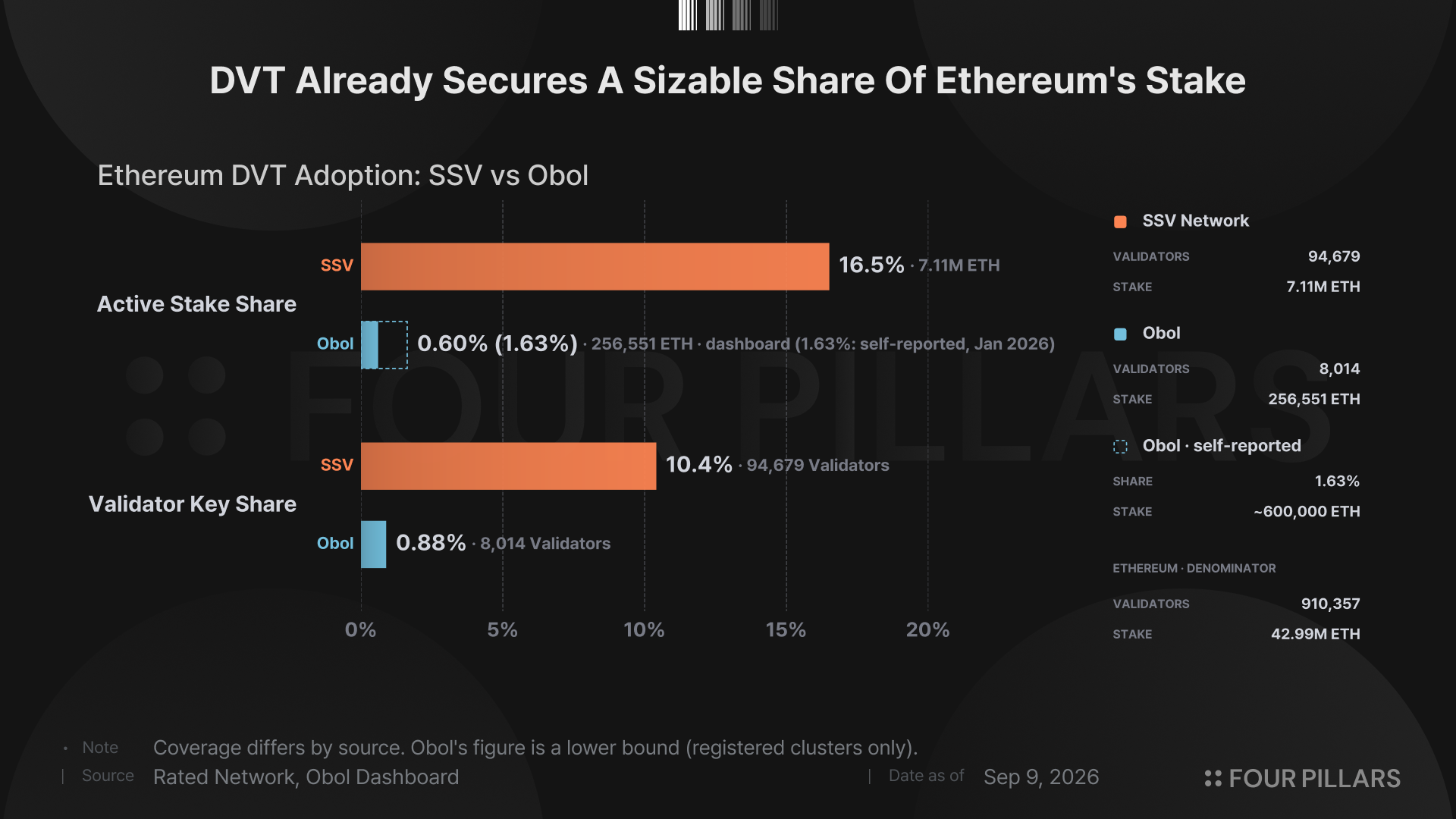
- Ethereum DVT: Are SSV and Obol Actually Being Used? (Link)
- 3. Four Pillars Weekly
- : : The Dawn of Public PnL (Link)
- : : Monthly EIP - Aug 2026 (ft. What Robinhood Chain's Success Reveals About L2 and Ethereum's Dilemma) (Link)
- : : Blockchain Abstraction: The Next Frontier (Link)
- 4. Macro & Onchain Metrics
Researcher

1. Major News
[Institution] CLARITY Act Faces Its Final Test Ahead of a Key Senate Vote on September 15
What Happened?
The CLARITY Act, a U.S. digital asset market structure bill, is set to face a key procedural vote in the Senate on September 15. This is not a final passage vote. Rather, it is a cloture vote that would allow the bill to move forward for debate and further consideration on the Senate floor. The bill needs the support of 60 senators to advance.
At the core of the CLARITY Act is an effort to more clearly divide regulatory authority over crypto assets in the United States. The bill aims to distinguish the respective oversight roles of the U.S. Securities and Exchange Commission and the Commodity Futures Trading Commission depending on the nature of a digital asset, while establishing registration and investor protection frameworks for crypto exchanges, brokers, and other intermediaries. The House has already passed the bill, and in May, the Senate Banking Committee advanced it to the full Senate in a bipartisan 15 to 9 vote.
However, there is still insufficient political consensus for passage on the Senate floor. Republicans currently hold 53 seats, meaning they need support from at least seven Democrats or independents. Some Democratic lawmakers argue that the bill lacks sufficient safeguards around conflicts of interest involving the president and senior government officials with crypto business interests, anti-money laundering requirements, and the legal liability of decentralized finance developers. The banking sector is also opposing parts of the bill, arguing that stablecoin reward structures could shift deposits out of banks and into the crypto market.
In response, Republicans released a revised version ahead of the September vote that incorporated more than 100 amendments proposed by Democrats, but the two sides have yet to reach agreement on several core issues. Both the crypto industry and banking sector conducted large-scale lobbying campaigns targeting key senators during the summer recess, making this vote a de facto turning point for the CLARITY Act's chances of becoming law this year.
Researcher’s Comment
What matters in this vote is not whether the CLARITY Act is already a fully finished piece of legislation, but whether the Senate is willing to continue negotiations even while several core issues remain unresolved. Patrick Witt, the White House's digital asset policy lead, and Treasury Secretary Scott Bessent have recently urged lawmakers to first move the bill onto the Senate floor and continue negotiations afterward. In that sense, the September 15 vote is less a final judgment on the substance of the bill and more a test of whether lawmakers are willing to preserve the political space needed to negotiate the remaining issues.
One of the most contentious issues is not actually crypto asset classification, but stablecoin rewards. Banks argue that if exchanges and other platforms are allowed to offer stablecoin holders rewards that effectively resemble interest, deposits could move out of the banking system and reduce banks' lending capacity. On September 10, the American Bankers Association and around 80 state banking associations sent a letter to the Senate calling for stronger provisions on this issue. From the crypto industry's perspective, however, an overly broad restriction could constrain the stablecoin-based business models of exchanges such as Coinbase. The CLARITY Act is therefore evolving from a debate over how to distinguish crypto from traditional finance into a competition over who captures the economic value generated by dollar-based financial products.
DeFi presents a similar issue. The revised draft released in September further clarified the regulatory perimeter by allowing trading protocols that appear decentralized but are effectively controlled by identifiable entities to become subject to CFTC registration and anti-money laundering obligations. This matters because the debate is no longer simply about whether DeFi should be regulated. It could establish the standard by which U.S. regulators determine what qualifies as genuine decentralization. The principle of protecting developers who do not directly control customer assets remains in place, but Democrats continue to argue that major regulatory gaps remain around decentralized mixers and illicit finance. Going forward, the key question is therefore likely to be less about the code itself and more about who has control, who captures the revenue, and who actually operates the protocol.
Politically, Trump's crypto businesses remain the bill's largest non-technical risk. Democrats continue to argue that they cannot support the legislation without strong ethics provisions restricting crypto-related profits for a sitting president and senior government officials, while Senate Banking Committee Democrats have criticized the current draft for failing to meaningfully prevent Trump from profiting from his crypto ventures. Even within the Republican Party, lawmakers such as Senator Thom Tillis have said the White House needs to engage more actively in reaching a bipartisan agreement on ethics. In other words, one of the biggest obstacles to the bill is no longer the legal definition of a security or commodity, but how to separate crypto-friendly regulation from the personal financial interests of the president.
This is why the margin of the September 15 vote matters almost as much as the outcome itself. Republicans hold 53 seats and therefore need at least seven additional votes, but if some Republicans defect, the number of Democratic votes required could be even higher. Senator Cynthia Lummis has warned that if lawmakers miss the current window, there may not be another realistic opportunity to pass a similar market structure bill until 2030.
[Crypto] Hunter Biden's $LAPTOP Falls 99% After Briefly Reaching a $110 Billion Market Cap
What Happened?
On September 9, Hunter Biden, the son of former U.S. President Joe Biden, launched his memecoin, $LAPTOP, on Base, the Ethereum Layer 2 network developed by Coinbase. The token's name was inspired by his laptop, which became one of the central controversies surrounding the 2020 U.S. presidential election.
Problems emerged almost immediately after trading began. $LAPTOP surged to between roughly $190 and more than $300 shortly after launch. Its fully diluted valuation briefly climbed to around $144 billion, but within just one hour, the token's price fell to around $3 to $5 before later dropping below $1. In effect, 98% to 99% of its value disappeared from the launch-day peak.
The main reason was the extremely limited amount of liquidity actually available in the market at launch. According to Arkham, when the fully diluted valuation reached approximately $144 billion, the liquidity pool contained only around $48,000. Even an hour later, when the displayed market capitalization was roughly $1.6 billion, liquidity in the pool was still only around $2.5 million.
According to the team, the initial pool opened at around $0.05 per token, but stronger-than-expected demand quickly arrived. So-called sniper bots, which automatically buy newly launched tokens immediately after trading begins, entered the market ahead of liquidity providers and pushed the price to abnormal levels. The team later said it would allocate an additional 4 million $LAPTOP tokens, equivalent to 0.4% of the total supply, as incentives to deepen liquidity on Aerodrome.
Much of the criticism focused on political hypocrisy. Hunter Biden had previously criticized Donald Trump's $TRUMP token as a "grift" and sought to differentiate his own token by airdropping a portion of the supply to investors who had lost money on $TRUMP. However, after $LAPTOP crashed by 95% to 99% almost immediately after launch, critics argued that he had effectively done the same thing as the political memecoin he had previously condemned.
Based on publicly available information so far, there is not enough evidence to conclude that the incident was a conventional rug pull in which Hunter Biden or his team dumped their holdings at the top. It has been disclosed that 30% of the supply allocated to founders is locked. However, there were token transfers from project-linked wallets to market makers and other wallets before launch, while on-chain analysis showed that the initial circulating supply was concentrated among a relatively small number of wallets. These factors continue to raise questions about the token's distribution structure and liquidity management.
Researcher’s Comment
The most interesting aspect of $LAPTOP is not the 99% crash itself, but how a "market capitalization of $110 billion" could have appeared in the first place. At first glance, the episode looks like a token briefly reached a valuation comparable to some of the world's largest crypto assets before collapsing. In reality, however, the amount of liquidity available in the market was only in the tens of thousands to low millions of dollars. In other words, the $110 billion figure did not mean that the market had genuinely valued Hunter Biden's memecoin at $110 billion. It was closer to a mathematical output produced from a tiny amount of liquidity before normal price discovery had taken place.
At the same time, $LAPTOP suggests that the memecoin premium attached purely to the names of politicians and celebrities may be changing. When $TRUMP first launched, the fact that a sitting U.S. president had directly issued a token was itself unprecedented. Since then, however, a growing number of politicians and celebrities have launched memecoins, making political token launches far less novel. $LAPTOP instead faced strong community fatigue and backlash even before trading began. This suggests that the period in which a celebrity name alone could consistently attract sustained attention and capital may gradually be coming to an end.
Others
Crypto
- Consensys splits MetaMask from institutional and Ethereum infrastructure businesses
- Uniswap launches 'StablePair Hook' to help LPs capture more stablecoin trading value
- Ethena Brings USDe and sUSDe to TRON, Expanding Digital Dollar Access Across Its Stablecoin Ecosystem
Institution
- MoneyGram launches first stablecoin-backed Visa card in Colombia
- Senate Republicans unveil revised crypto bill ahead of key Clarity Act vote next week
Investment
- DeFi Development closes Strategy-style $11 million CHAD offering to grow Solana treasury
- Tether, Fasanara launch $400 million fund for stablecoin-enabled private credit
- Hunter Biden's LAPTOP team cites sniper bots, thin liquidity for 99% crash on launch day
- Bitwise shuts down Dogecoin ETF less than a year after launch
- 'DeFi's federal bank': Standard Chartered sees SKY token rising fivefold by end-2028
Asia
2. Data Spotlight
Snapshot on Tokenized Asset Market: Issuers, Venues, and Assets (Link)

Ethereum DVT: Are SSV and Obol Actually Being Used? (Link)
3. Four Pillars Weekly
: : The Dawn of Public PnL (Link)

- Trading has turned into a spectator business, with every trade on apps like FOMO posting to a public feed with its profit attached, and FOMO's daily traders growing from 1,100 to +90,000 in a year.
- Platforms now pay traders the way media companies pay talent, with pump.fun handing creators $483 million and offering top traders $30,000 a month to trade nowhere else.
- Clans, a feature both apps added in August that pools members' positions under one scoreboard, are the early sign of followers organizing into trading groups that recruit on trade history rather than follower counts.
- Public PnL shows who is winning but not what following them pays, since only 6% of 292,531 FOMO wallets finished a 90-day stretch ahead, the median lost $120, and the top accounts' gains are mostly unrealized.
: : Monthly EIP - Aug 2026 (ft. What Robinhood Chain's Success Reveals About L2 and Ethereum's Dilemma) (Link)
- August saw fewer new EIPs, but existing Core EIPs made notable progress. At the Core layer, discussions became more concrete around distributing the costs and burdens of state preservation, block production, data propagation, and execution verification. On the ERC side, proposals focused on standardizing functions that applications had previously implemented on their own, including module composition, fund management, and policy validation.
- Also, the EF began moving key priorities toward real-world testing and deployment readiness. It tested major Glamsterdam changes on public testnets and against historical mainnet data, supported the migration of existing applications, and expanded its efforts into frontend security and AI-assisted post-quantum research.
- Meanwhile, Robinhood Chain’s success showed that major financial institutions can use Ethereum technology to bring existing assets and users onchain. At the same time, it revealed that when transactions and revenue remain within enterprise-run L2s, L2 growth does not necessarily translate into Ethereum’s growth, raising the question of how Ethereum can strengthen the value that only it can provide.
: : Blockchain Abstraction: The Next Frontier (Link)

- Wallet and authentication abstraction, account and transaction abstraction, and chain abstraction have reduced the steps users once had to handle themselves to use blockchain. Banks and Web2 platforms can connect these capabilities to existing accounts and services, offering digital asset features within familiar user journeys.
- The complexity that abstraction removes from the screen becomes the operational responsibility of platforms and infrastructure providers. Systems for managing account recovery, transaction approvals, fee payments, and settlement status are prerequisites for offering blockchain capabilities as everyday services.
- Ramp has integrated wallets and payments into existing finance workflows. TON Wallet in Telegram has simplified incoming transfers from other chains through chain abstraction, while Naver Pay has used wallet and authentication abstraction to connect asset ownership with community access. The value of abstraction is becoming concrete within the workflows and user journeys of existing platforms.
- Connecting wallet and payment infrastructure to the customer bases of existing platforms is accelerating the integration of Web2 and Web3. Practical applications could expand to overseas vendor payments and creator payouts, tickets and memberships used across partner services, and automated purchases delegated within defined permissions and budgets.
- This article examines how abstraction reduces friction in the user experience, focusing on Privy, ERC-4337, Across, and Circle's CCTP. It then analyzes adoption by Ramp, Telegram, and Naver Pay, and explores the possibilities that emerge when these wallet architectures are integrated into Web2 services.
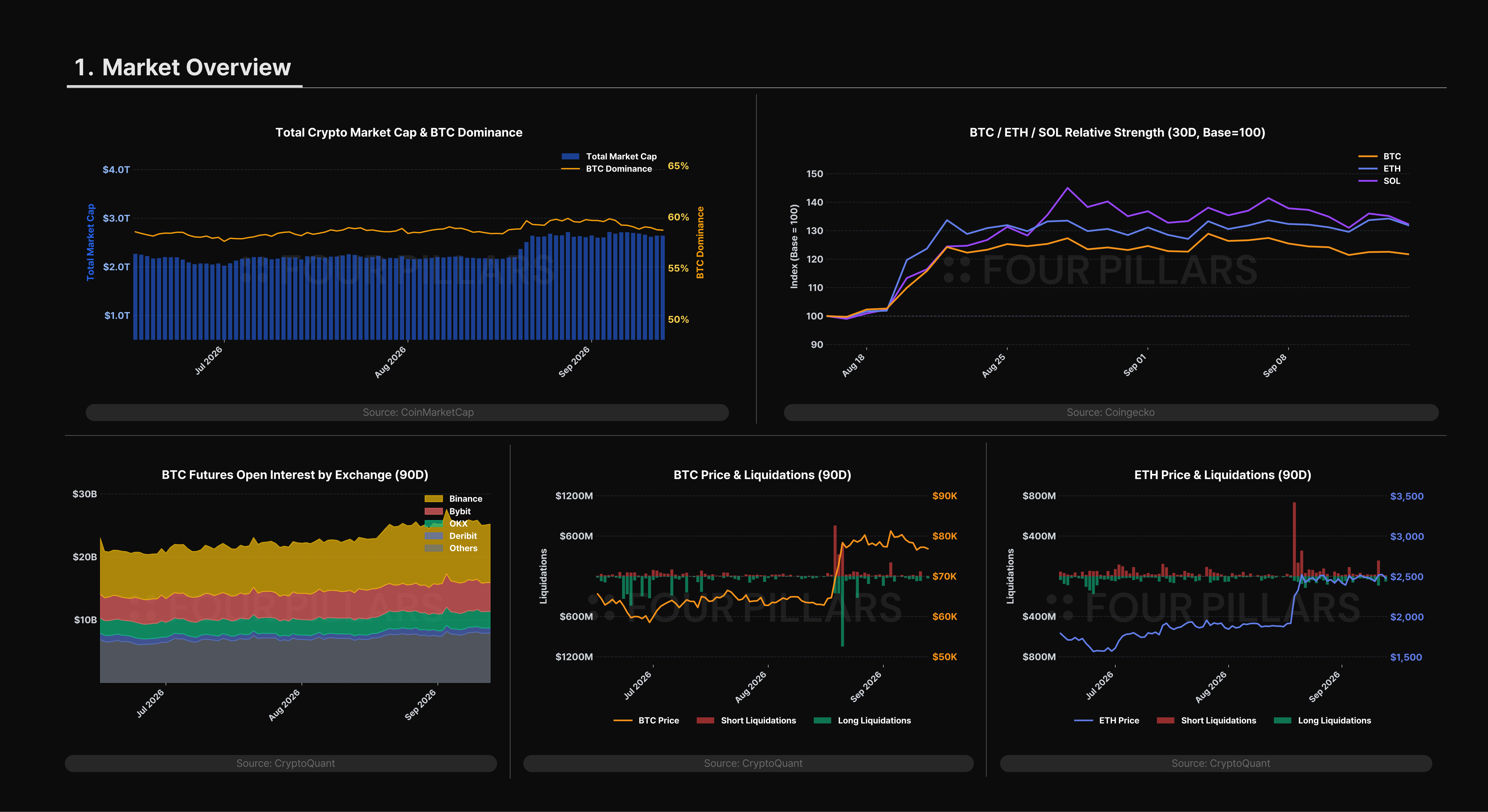
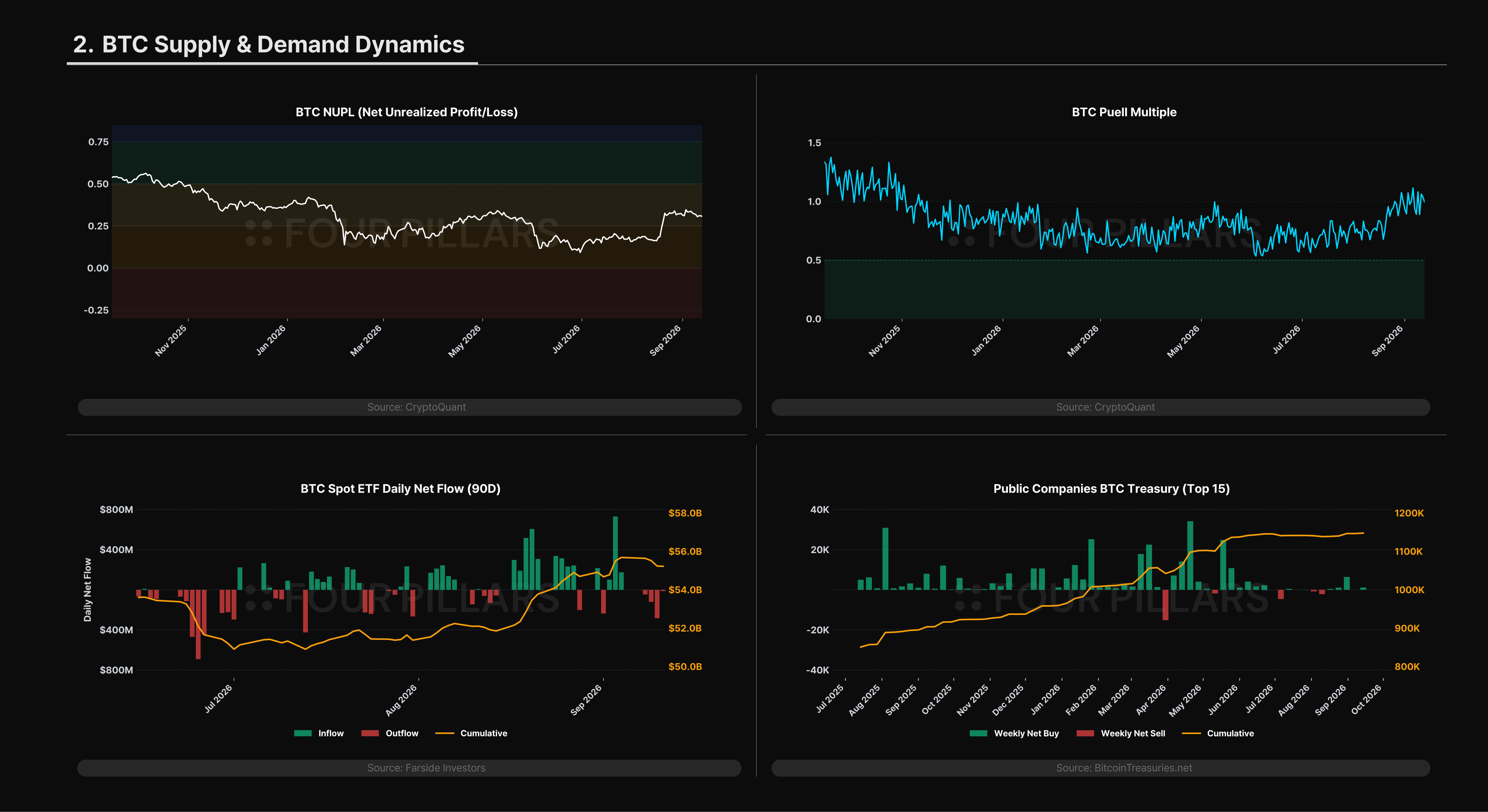
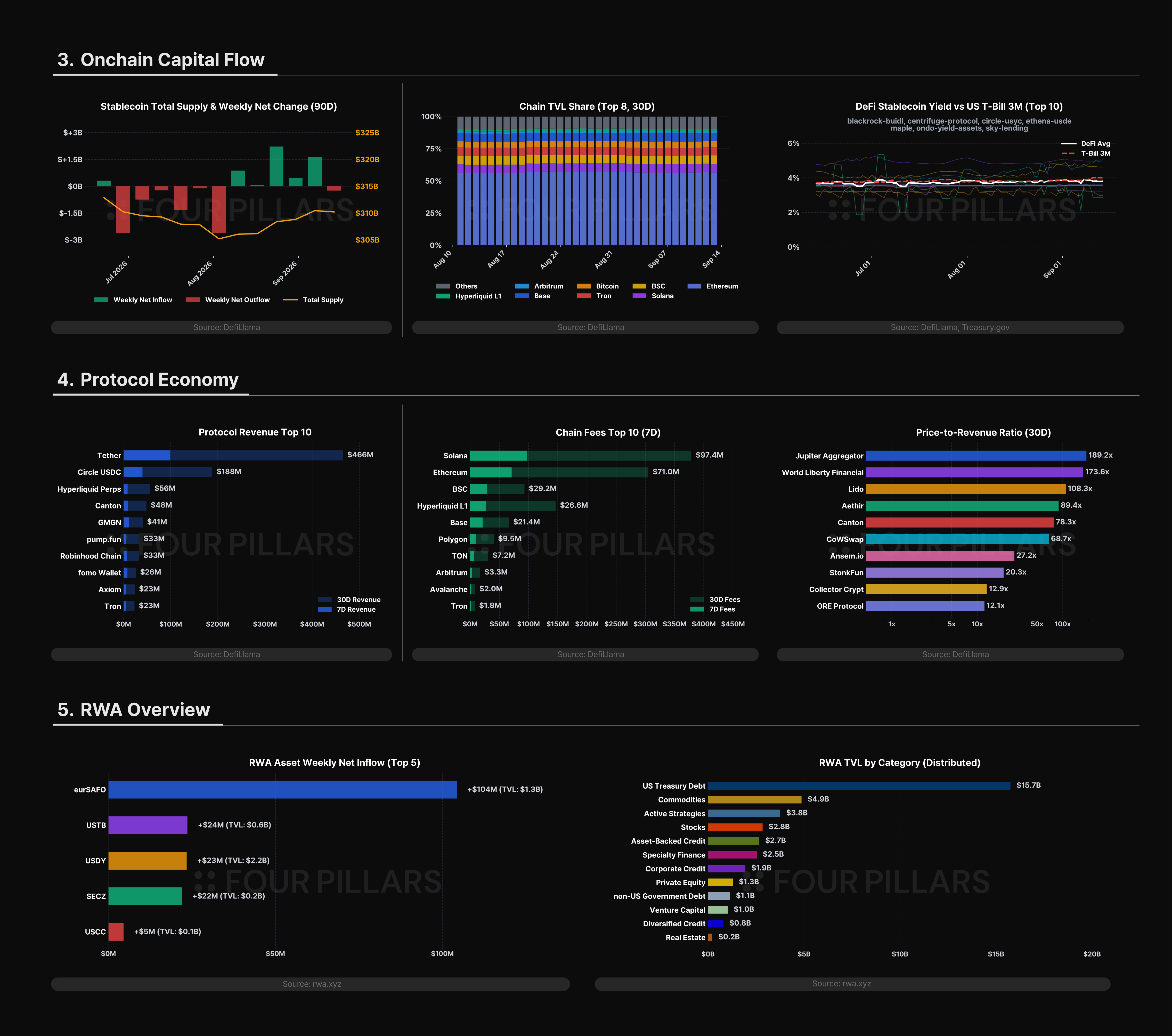
4. Macro & Onchain Metrics
Some of the charts below are powered by CryptoQuant. For those interested in exploring the underlying data in greater detail, CryptoQuant provides access to a comprehensive suite of onchain and market analytics used by institutional participants.
The author of this report may have personal holdings or financial interests in assets or tokens discussed herein. However, the author affirms that no transactions have conducted using material non-public information obtained in the course of research or drafting. This report is intended solely for general information purposes and does not constitute legal, business, investment, or tax advice. It should not be used as a basis for making any investment decisions or as guidance for accounting, legal, or tax matters. Any references to specific assets or securities are made for informational purposes only and should not be construed as an offer, solicitation, or recommendation to invest. The opinions expressed herein are those of the author and may not reflect the views of any affiliated institutions, organizations, or individuals. The opinions and analyses expressed herein are subject to change without prior notice. In addition, beyond the individual disclosures included in each report, Four Pillars, may hold existing or prospective investments in some of the assets or protocols discussed herein. Furthermore, FP Validated, a division of Four Pillars, may already be operating as a node in certain networks or protocols discussed herein or may do so in the future. Please see below links in the footer for FP Validated's participating network disclosures and for broader disclosure details.
![Robinhood Takes Over Onchain
[FP Weekly 37]](/_next/image?url=https%3A%2F%2Fkrotgrfjzckvumudxopj.supabase.co%2Fstorage%2Fv1%2Fobject%2Fpublic%2Fassets%2Fimg%2Fissues%2Frobinhood-takes-over-onchain-fp-weekly-37.png%3Ft%3D1788765790150&w=3840&q=75)

![ATLAS & Entropy [FP Weekly 36]](/_next/image?url=https%3A%2F%2Fkrotgrfjzckvumudxopj.supabase.co%2Fstorage%2Fv1%2Fobject%2Fpublic%2Fassets%2Fimg%2Fissues%2Fatlas-entropy-fp-weekly-36.png%3Ft%3D1788163807734&w=3840&q=75)

![Crypto Rebounds: Is Spring Finally Here? [FP Weekly 35]](/_next/image?url=https%3A%2F%2Fkrotgrfjzckvumudxopj.supabase.co%2Fstorage%2Fv1%2Fobject%2Fpublic%2Fassets%2Fimg%2Fcontent%2Farticle%2Fnotion-import%2Ftcohxdmt6wn2o2.png&w=3840&q=75)