

![CLARITY Act Fails, the SEC Steps In [FP Weekly 39]](/_next/image?url=https%3A%2F%2Fkrotgrfjzckvumudxopj.supabase.co%2Fstorage%2Fv1%2Fobject%2Fpublic%2Fassets%2Fimg%2Fcontent%2Farticle%2Fnotion-import%2Fmqlpp6muat2oq6.png&w=3840&q=75)
Table of Contents
- 1. Main News
- [Institution] SEC Announces "Innovation Exemption" Opening Onchain Trading of Tokenized Stocks
- [Institution] CLARITY Act Fails Senate Procedural Vote, Denting Its Odds of Passing This Year
- Others
- 2. Four Pillars Weekly
- : : Why Crypto Businesses All Look the Same Now (Link)
- : : All about x402 (Link)
- : : Beyond the Dollar: The Conditions for Sovereign Debt Tokenization, andWhy Korea Is the First Clean Test (Link)
- Comments
- 3. Macro & Onchain Metrics
Researcher

1. Main News
[Institution] SEC Announces "Innovation Exemption" Opening Onchain Trading of Tokenized Stocks
What Happened?
On September 17, the U.S. Securities and Exchange Commission (SEC) announced a temporary, conditional "Innovation Exemption" that allows onchain trading of tokenized NMS stock. The measure exempts qualifying Tokenized Securities Venues (TSVs) from the definition of "exchange" under the Securities Exchange Act of 1934, letting them trade tokenized stocks through permissioned AMMs and liquidity pools without registering as a traditional exchange. The exemption lasts five years after publication in the Federal Register, and the SEC opened a comment period on possible modifications and next steps. Chairman Paul Atkins described it as a step forward in bringing America's capital markets into the digital age.
The exemption applies along two lines. Alongside the "exchange" registration exemption for TSVs, a conditional exemption from the "dealer" registration requirement is granted to liquidity providers that supply tokenized stock liquidity to AMM pools using proprietary capital. This exemption holds even when the provider engages in activities that could be deemed dealing, such as quoting prices to customers or committing to supply capital.
Several conditions are required for application. Tokenized stocks traded under the exemption must provide holders with the same rights and privileges as the equivalent traditional shares, including voting rights. For a TSV to tokenize shares of a company it does not control, it must give the issuer prior written notice and wait 30 days, and if the issuer objects during that period, listing of the token is barred. Smart contracts must be deployed on a public, permissionless distributed ledger in an auditable and public form. If the underlying stock is halted on its primary listing exchange, the TSV must also halt trading of the token, and limits apply to symbols and volume as well.
This exemption came two days after the crypto market-structure bill, the CLARITY Act, failed to clear a Senate procedural vote on September 15. On the same day, the CFTC also submitted its own crypto framework to the White House. This measure, together with the Regulation Crypto Assets the SEC proposed earlier, is seen as part of a trend of filling the regulatory vacuum created by legislative delay through administrative action.
Researcher's Comment
The market is receiving this announcement as a green light for tokenized stocks broadly and is watching which operators will benefit from the administrative action. However, the actual scope of the exemption is narrower than this expectation. Operating a TSV carries several conditions such as the 30-day prior notice and smart contract disclosure, but the crux is what rights the traded token carries.
The SEC requires the token to provide rights equivalent to the same class of traditional shares. Because existing rights including voting and dividend rights must be preserved, 1:1 backing or redeemability alone is not sufficient. The structure must have the issuer record the shares onchain directly, or represent the investor's rights to third-party-custodied shares as a token while preserving existing voting and dividend rights.
The furthest from this standard is the synthetic-tracking type. It is a structure in which a third party issues a separate debt instrument or derivative that tracks the price of Apple or Nvidia. Robinhood's Classic Stock Tokens, which are derivatives against Robinhood Europe and do not grant ownership of the underlying shares, fall here.
Meanwhile, even a structure that holds actual shares as collateral requires closer scrutiny of shareholder rights. If, like xStocks, shares are backed 1:1 but the instrument is legally a bearer debt instrument or tracker certificate, the mere fact of backing does not carry shareholder rights along with it.
The expectations surrounding Backpack, which have drawn much attention in the market, also need to be examined by this standard. Direct benefit can be expected in that the stock token is redeemable 1:1 for the actual share, but Backpack distinguishes between traditional securities and onchain tokens. A holding in a traditional securities account is a security entitlement under UCC Article 8, and when withdrawn to Solana it converts into a separate tokenized security. Depositing the token again can revert it to the traditional securities holding.
This redemption structure of Backpack's has significance in that it strengthens the link between the onchain token and the traditional security. However, what the SEC requires is whether equivalent rights are guaranteed at the token-holding stage, beyond redeemability. From the information Backpack has shared, it is hard to confirm that the onchain token itself is a security entitlement under UCC Article 8 or provides shareholder rights equivalent to traditional shares. This is why it is hard to conclude that the current product meets the exemption requirements.
By contrast, Superstate and Securitize, which have issuer-led tokenization and shareholder-registry infrastructure, Figure, which handles registered shares onchain, and DTCC, which is pursuing tokenization that preserves the legal rights of existing securities, fit within the scope of the exemption.
This measure has significance in that, in a situation where the rights and legal structure required of tokenized stocks had been unclear, it concretized that standard through a temporary exemption. However, institutional requirements being set and being chosen by the market for wide use are separate matters. Whether 1:1 backed tokenization (xStocks, Ondo, Backpack), whose strengths are flexible trading and issuance, keeps expanding its footing in the market, or the presence of issuer-led tokenization, whose legal structure becomes clearer, grows, is an important point to watch going forward.
[Institution] CLARITY Act Fails Senate Procedural Vote, Denting Its Odds of Passing This Year
What Happened?
The U.S. Senate recorded 49 votes in favor and 50 against on the cloture (end-of-debate) vote for the crypto market-structure bill, the CLARITY Act, on September 15, failing to meet the threshold for passage. This vote is a procedure to end a filibuster and move the bill to floor debate, requiring 60 votes, but it fell short of even a majority. The bill passed the House 294 to 134 last year and cleared the Senate Banking Committee 15 to 9 this May, but stopped at the floor threshold.
The direct cause of the failure was the defection of Democrats who had been expected to fill the votes. To surpass 60 votes, at least seven Democratic yes votes were needed on top of all 53 Republican seats, but the Democratic senators who had negotiated the bill's text for months all voted no. Four Republicans also defected. Tillis switched from yes to no to secure eligibility to file a motion to reconsider later.
The issue was not the market-structure framework but the ethics provisions. Democrats held that the bill lacked sufficient means to govern the profits President Trump and his family gained from crypto businesses. Republicans countered that the final draft contained more than 100 revisions reflecting Democratic demands, strengthened ethics rules, and enforcement authority for state attorneys general, but they could not turn the votes.
Right after the vote, Bitcoin fell about 3%, and Coinbase and Circle shares dropped 8% and 10% respectively. A motion to reconsider was filed but no new vote was scheduled, and this failure is seen as effectively ending the Senate's market-structure legislative work for 2026.
Researcher's Comment
This vote shows that Trump's pro-crypto stance is also acting as a burden on the industry's legislative push. The administration's support accelerated institutionalization, but with the president's family directly earning profits from crypto businesses, even the legitimacy of deregulation has become a subject of dispute.
Looking more closely, at the center of the controversy are WLFI (World Liberty Financial), the USD1 stablecoin, and the Trump meme coin. Elizabeth Warren, citing the case of WLFI, in which the Trump family holds a stake, receiving preliminary approval for a federal bank charter, pointed to a conflict of interest in which the president exercises influence even over the agency that supervises his own business. She also raised the concern that foreign capital could provide economic benefit by purchasing tokens or stablecoins tied to the president.
Republicans took the position that they had already made considerable concessions. Cynthia Lummis stated that the final draft reflected 126 substantive revisions Democrats requested and most of the ethics provisions Tillis and Gallego negotiated. The explanation is that it applied investment restrictions to senior officials including the president and their spouses, and also gave state attorneys general an enforcement role. Republicans argued that since Trump himself accepted the ethics restrictions, blocking the bill would delay the introduction of both mechanisms to govern conflicts of interest and investor protections.
Democrats, however, took issue with actual enforceability rather than the existence of the provisions. Warren criticized that enforcement against the president rests with the federal attorney general, that state attorneys general cannot directly sue the president, and that there is room to avoid enforcement through an Office of Government Ethics opinion. She also pointed to the loophole that profits could continue to be earned by maintaining or restructuring existing businesses. On top of this, opposition remained regarding illicit-fund blocking and securities investor protection. Therefore it is hard to view this failure solely as "a case that was scrapped over politics despite agreement on the regulatory content." The regulatory content and trust in the administration that would enforce it became issues together.
Institutionalization is likely to proceed for the time being centered on the administrative actions of the SEC and CFTC rather than congressional legislation. Tim Scott, chair of the Senate Banking Committee, also stated right after the vote that the two agencies should craft digital-asset rules until Congress legislates. However, while administrative action can reduce immediate business uncertainty, it is hard for it to fully substitute for the work of fixing jurisdiction and authority in law. The industry has come to keep bearing the uncertainty that policy can change with a change of administration and legal disputes, even as it expands business under regulators' support.
Others
Crypto
- Circle launches Arc mainnet, using USDC for gas, with 100+ apps including Aave, Morpho, and Uniswap
- World launches World Money, a self-custody app combining stablecoin payments with investment and yield
- Balancer proposes winding down operations and distributing its remaining treasury to BAL holders
- ZetaChain votes 99.4% to shut its L1 and move ZETA to Solana, with timing set by a later vote
- CoinEx to shut down its exchange amid a market slump and rising regulatory costs
Institution
- CFTC issues a no-action position on conditional broker registration for software linking users to regulated derivatives
- CFTC sends its crypto market rulemaking to the White House, pressing ahead after the CLARITY Act's failure
- House Ways and Means passes a digital-asset tax bill exempting network and transaction fees of $10 or less
- Deutsche Bank to launch BTC, ETH, and stablecoin custody for European clients this year, pending approvals
- Crypto.com's Nadex completes SEC registration for single-stock futures, eyeing U.S. stock perps next
Tech
- Ethereum sets October 6 for the Glamsterdam upgrade on the Sepolia testnet
- Solana raises max transaction size from 1,232 to 4,096 bytes with Transaction V1 on mainnet
- RippleX adds Stripe and Tempo's Machine Payments Protocol to XRPL AI Starter Kit v1.1
Investment
- S&P Global signs a deal to acquire smart-contract security firm OpenZeppelin
- Kaiko extends its Series B to $110M in an S&P Global-led round, with BNP Paribas, Nasdaq Ventures, and Coinbase Ventures
Asia
- Singapore's dtcpay closes a $25M Series A with strategic investment from Japan's SBI Group
- Korean police reportedly book 26 Polymarket users on gambling charges, referring 18 to prosecutors
- Korea's petition to delay crypto tax two years hits the 50,000 signatures for parliamentary review; authorities hold to 2027
2. Four Pillars Weekly
: : Why Crypto Businesses All Look the Same Now (Link)
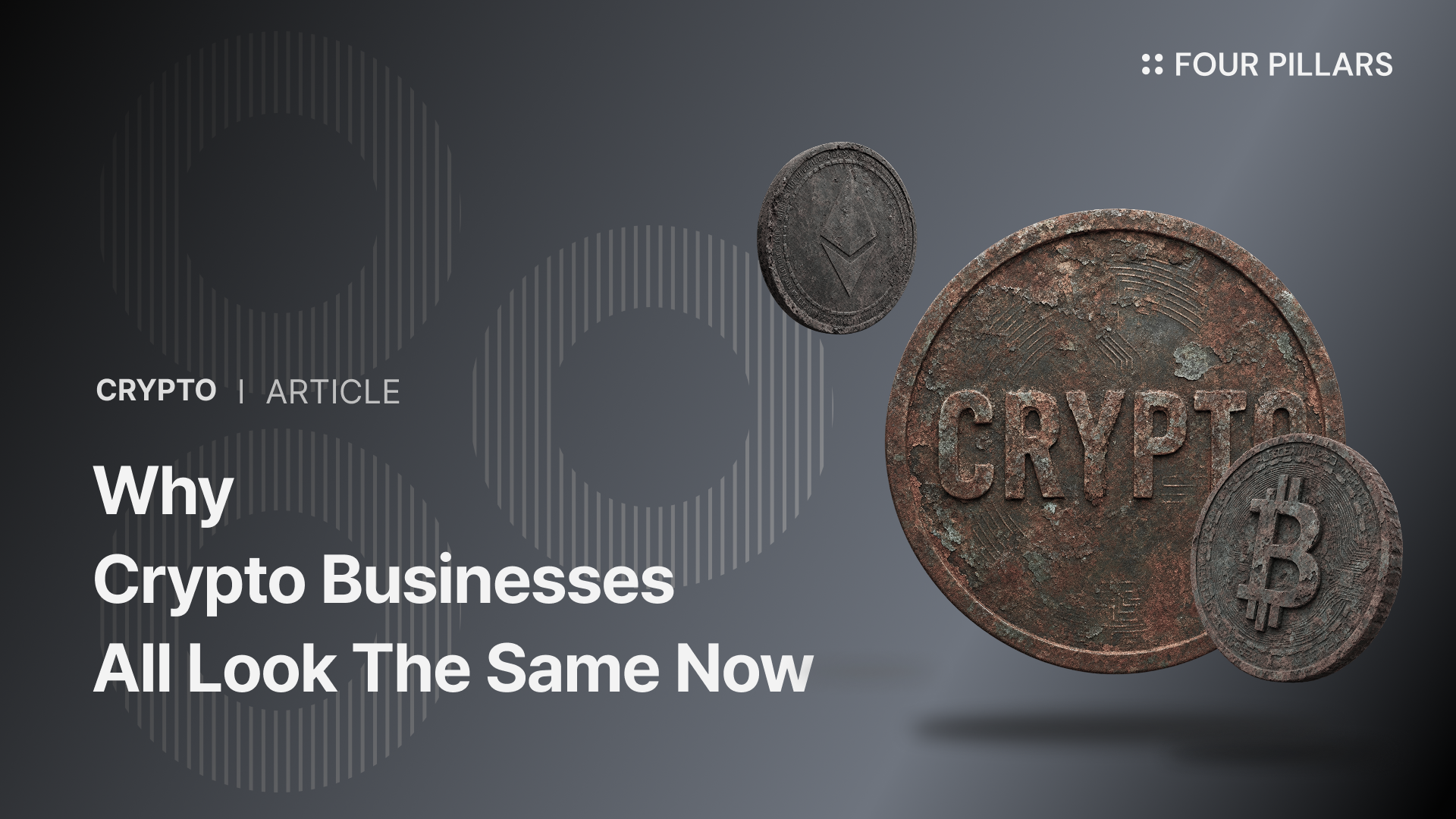
- Many of crypto’s onchain experiments are shutting down or pivoting without ever proving PMF, and that trend has become even clearer in 2026.
- The onchain market is increasingly polarizing between areas that absorb speculative demand, such as memecoins, perpetual futures, and prediction markets, and areas connected to the real economy, such as stablecoins, RWAs, and vaults.
- As the number of viable markets narrows to a handful of categories, companies that started from very different positions, including Coinbase, Robinhood, MetaMask, and Kalshi, are converging on the same product stack: perpetual futures, prediction markets, memecoins, stablecoins, and RWAs.
- This does not mean the end of onchain-native businesses. Just as a few sectors have matured and proven independent product-market fit, new categories can still emerge through experimentation and develop into sustainable markets.
: : All about x402 (Link)
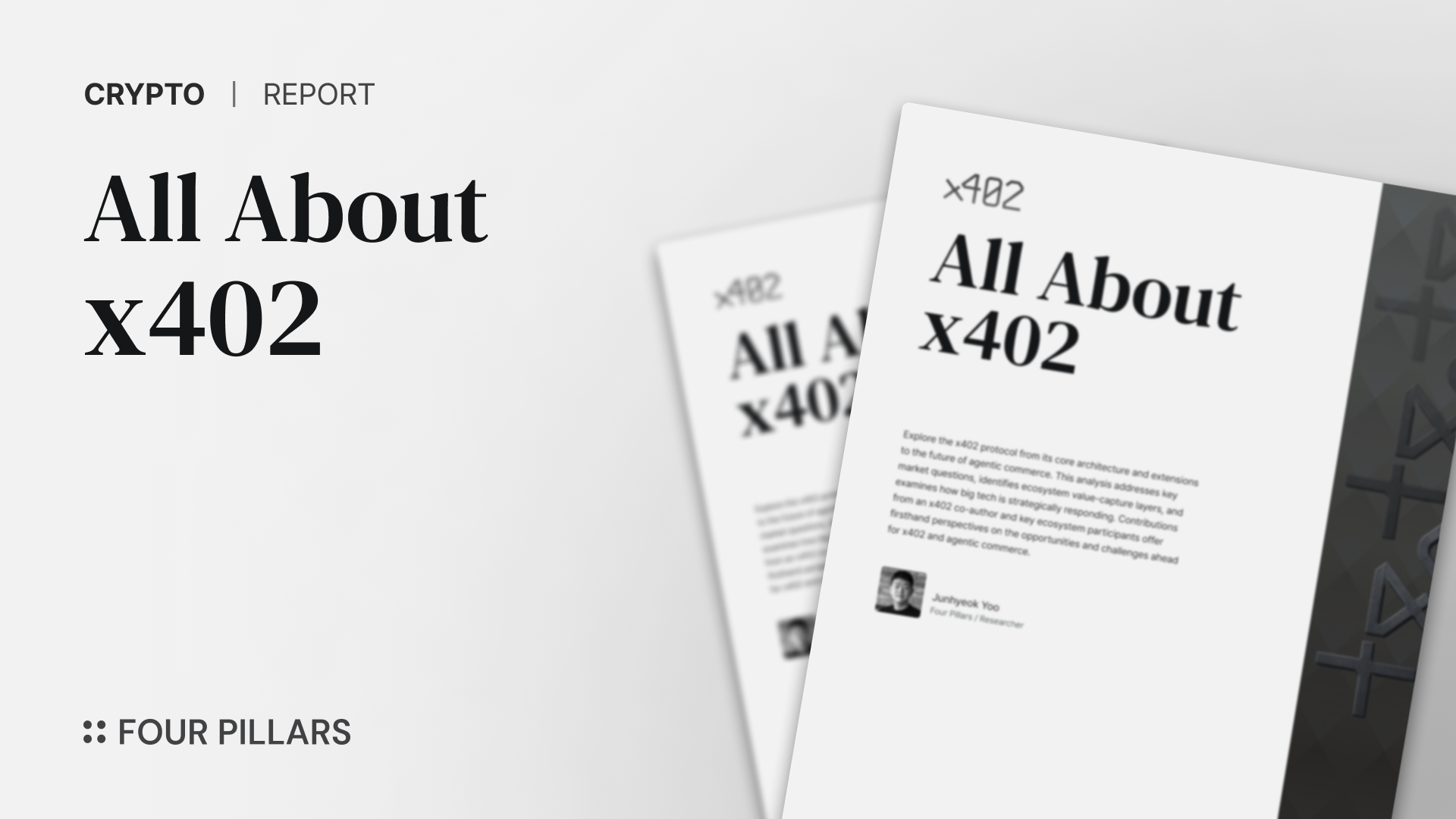
- x402 is an open payment specification that enables agents to discover prices and pay for resources on the web. It connects the presentation of payment terms with authorization, verification, and settlement, while separating transport, payment schemes, and networks to support different environments. Coinbase released the protocol in 2025, and its transfer to the Linux Foundation and the launch of the x402 Foundation were announced on April 2, 2026.
- The initial opportunity lies in the T3 market, where agents directly purchase the APIs, data, and computing resources needed to achieve their goals. As T1, where people give final approval, and T2, where agents select and execute purchases based on users’ preferences and purchase conditions, expand, the benefits of greater autonomy may first be demonstrated in low-value, high-frequency transactions for digital resources. The author’s scenarios for AI-mediated B2B commerce in 2028 yield annual x402 payment volumes of approximately $0.19 trillion to $1.92 trillion, with T3 accounting for roughly 96% under the assumed payment shares.
- The revenue opportunities created by x402 adoption differ across layers. Stablecoin issuers can earn revenue from net increases in circulating balances, blockchains from settlement transactions, and facilitators from paid processing volume. Wallets can capture value by managing fund and settlement routes, while discovery and routing services can do so through supplier selection and order allocation.
- The open-source community and existing platforms can reinforce one another’s development. The community advances shared specifications and capabilities, while Cloudflare, AWS, Google, and Fastly integrate them into their existing customers’ workflows. Further ecosystem development requires more services that generate repeat purchases, alongside a more refined operating framework that clearly allocates authority and responsibility for failure costs among wallets, sellers, and facilitators.
- Contributors: Kevin Leffew (x402 Co-author, Coinbase), Richard Widmann (Global Head of Strategy, Web3 and Digital Assets, Google), Raj Parekh (Head of Payments and AI, Monad Foundation), Shafu (Agentic Commerce, Circle), Jing Yi Tan (a.k.a. Cookies, AI Ecosystem, Monad Foundation), Michael Blau (Founder, dripstack.com), Rish (AI, Solana), Jay Yu, Jesse Chung(Co-Founnder Seal).
: : Beyond the Dollar: The Conditions for Sovereign Debt Tokenization, andWhy Korea Is the First Clean Test (Link)
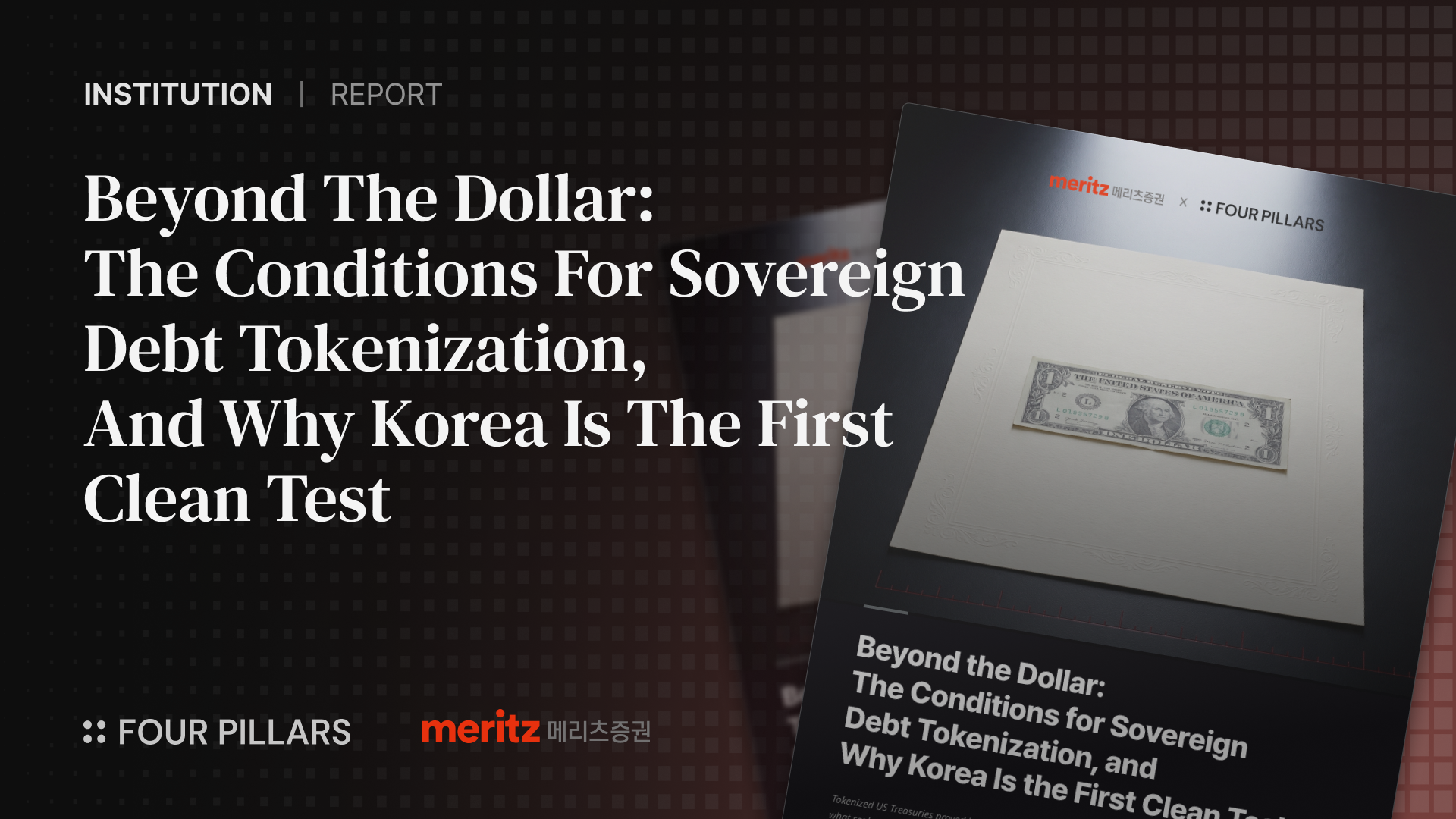
- Tokenized US Treasuries reached about 15.9 billion dollars in July 2026, and technology was only part of it. The dollar market had supplied a fund structure institutions were allowed to hold, demand that existed before the first token, and recurring fee income.
- Token standards, custody, and settlement are now available off the shelf, so infrastructure is no longer the constraint. Products outside the dollar are still under a tenth of tokenized government debt, and that number measures what has been built rather than what investors want.
- Demand starts with stablecoin reserves, because a coin wants its backing in its own currency and onchain. Only a tokenized government bond in that currency is both, which makes reserves the only demand proven so far, while collateral and diversification have not appeared yet.
- Korea has most of what that demand sequence needs in one market, and foreign investors can already buy its bonds. Bond sourcing and won conversion run through domestic infrastructure, and a won stablecoin already holds a tokenized Korean government bond in reserve, though only at symbolic size.
- The whole argument rests on one bet, that what is missing is the product, not the appetite. The strongest objection is that onchain capital structurally prefers the dollar, and the report sets out the evidence that would settle it stage by stage.
Comments
- Price Volatility and Sustainable Decentralization: Lessons from Aptos
- Who Is Directly Aligned with the SEC’s Innovation Exemption?
3. Macro & Onchain Metrics
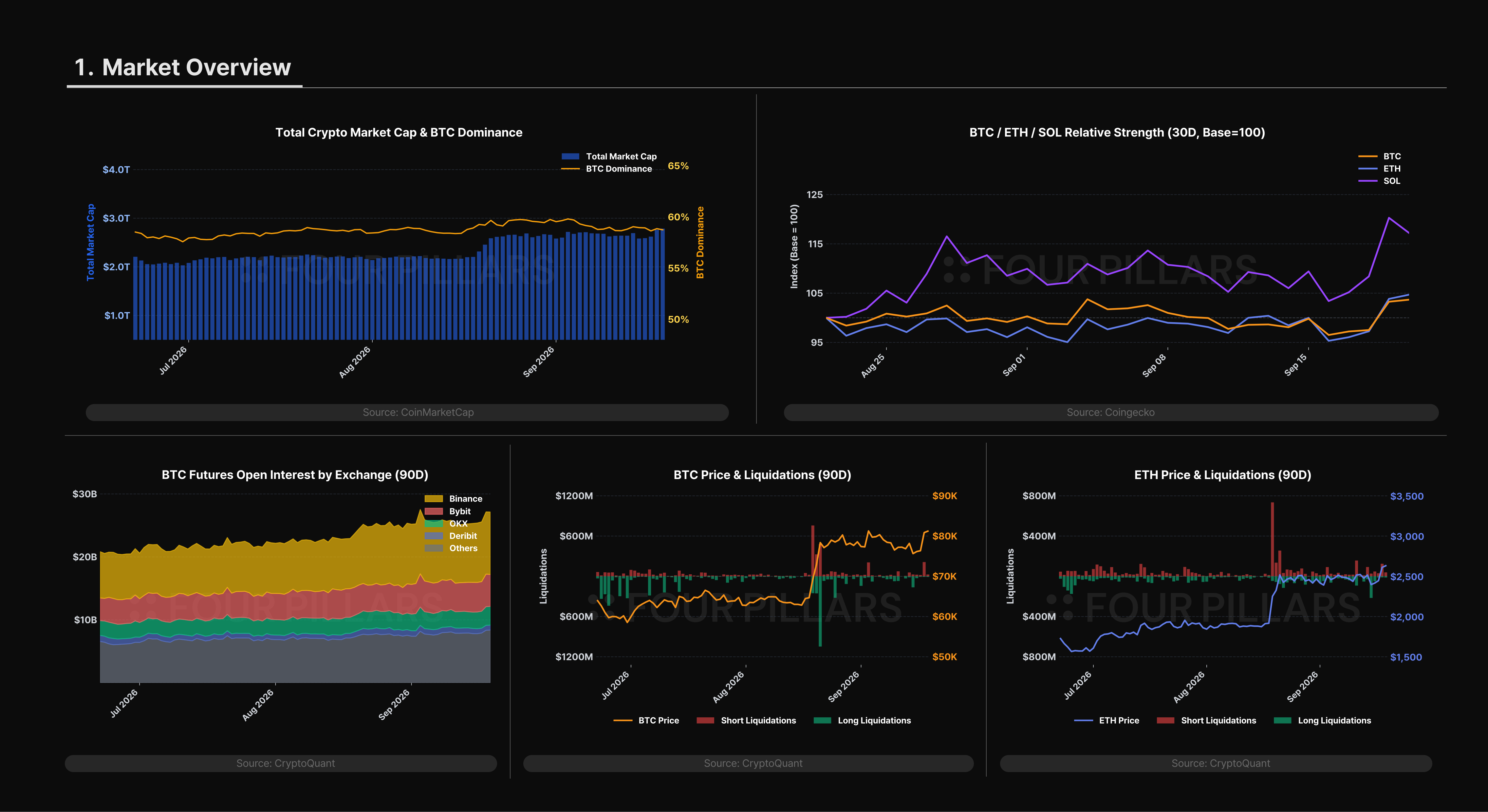
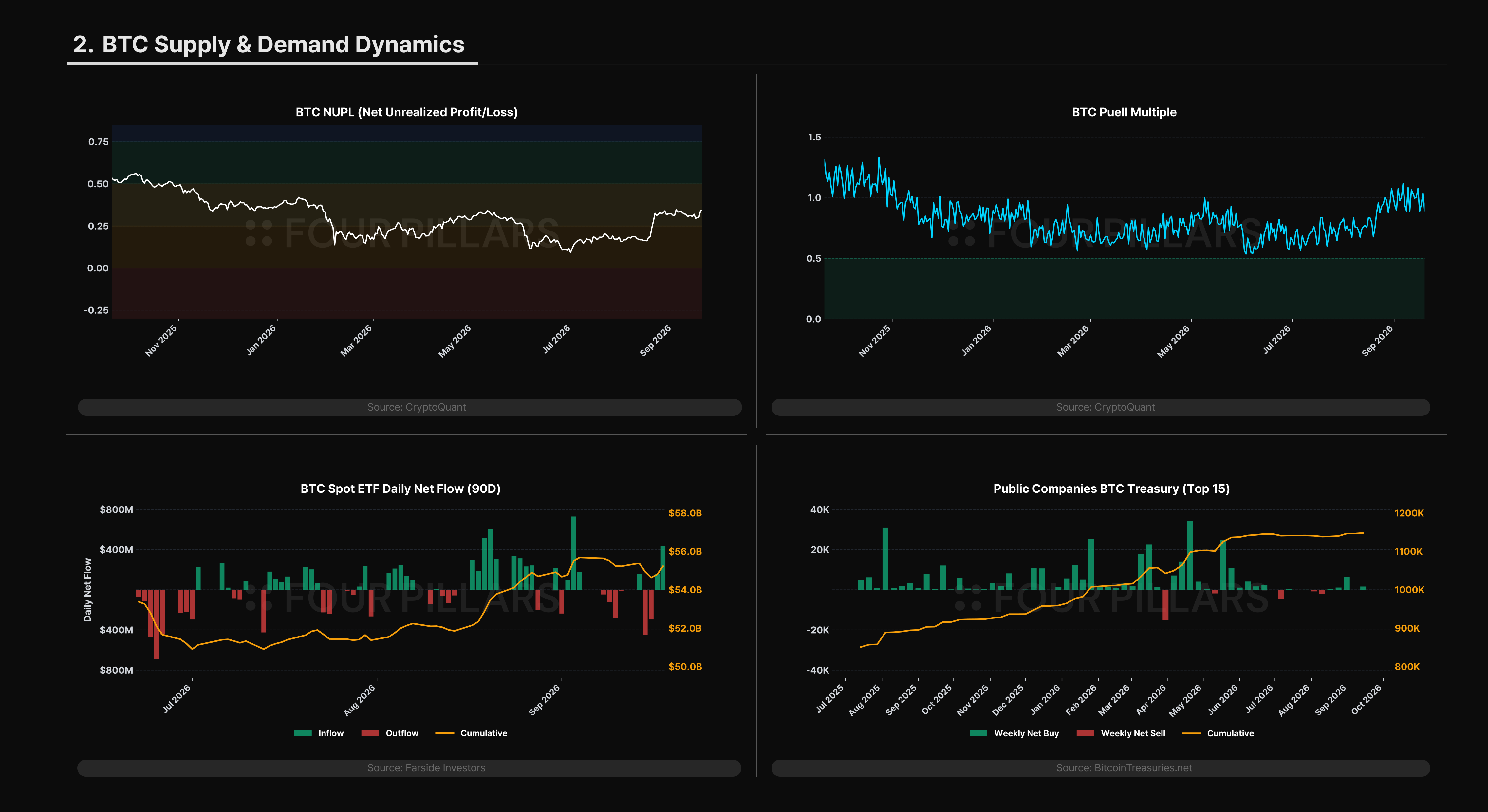
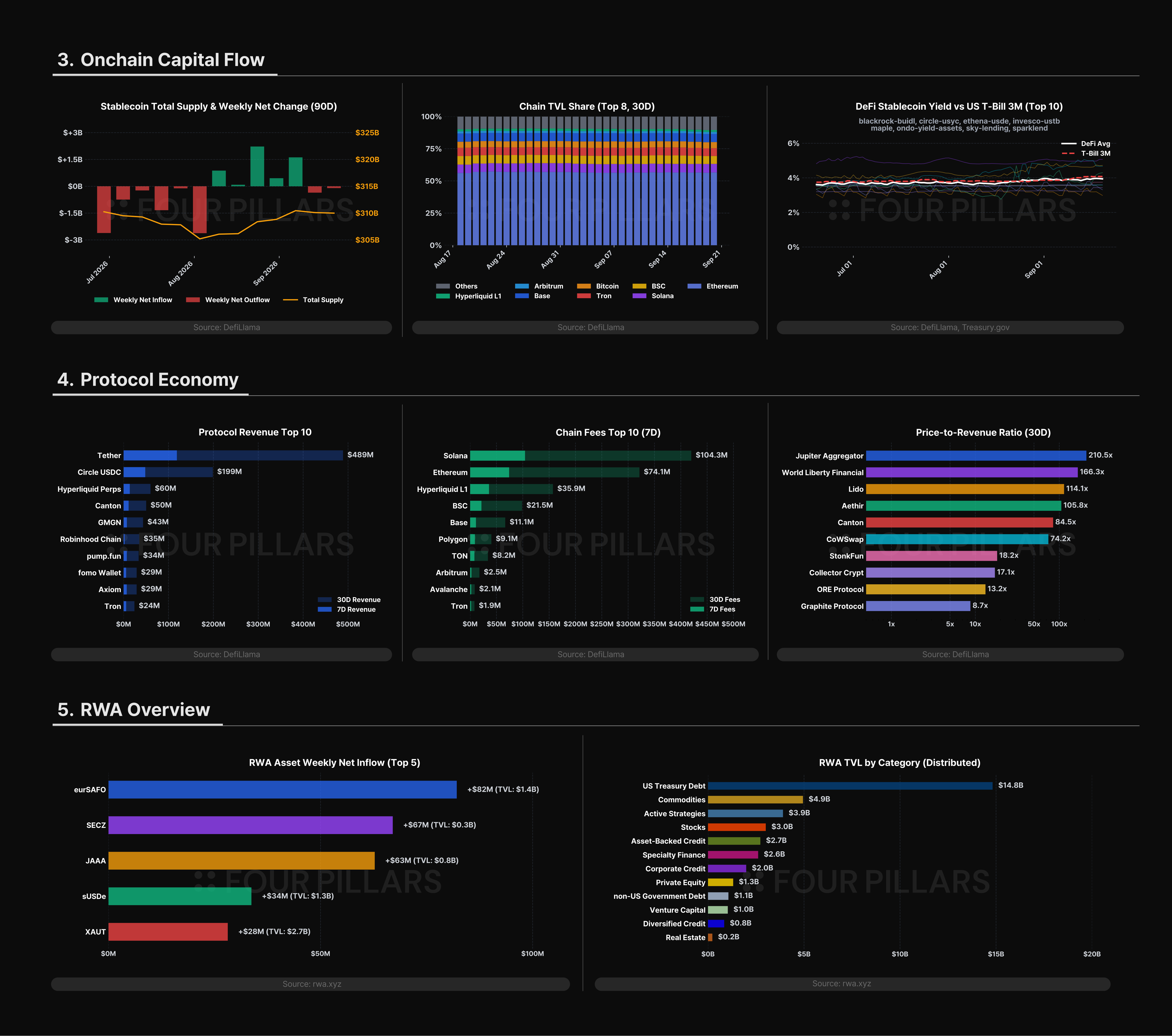
Some of the charts below are powered by CryptoQuant. For those interested in exploring the underlying data in greater detail, CryptoQuant provides access to a comprehensive suite of onchain and market analytics used by institutional participants.
The author of this report may have personal holdings or financial interests in assets or tokens discussed herein. However, the author affirms that no transactions have conducted using material non-public information obtained in the course of research or drafting. This report is intended solely for general information purposes and does not constitute legal, business, investment, or tax advice. It should not be used as a basis for making any investment decisions or as guidance for accounting, legal, or tax matters. Any references to specific assets or securities are made for informational purposes only and should not be construed as an offer, solicitation, or recommendation to invest. The opinions expressed herein are those of the author and may not reflect the views of any affiliated institutions, organizations, or individuals. The opinions and analyses expressed herein are subject to change without prior notice. In addition, beyond the individual disclosures included in each report, Four Pillars, may hold existing or prospective investments in some of the assets or protocols discussed herein. Furthermore, FP Validated, a division of Four Pillars, may already be operating as a node in certain networks or protocols discussed herein or may do so in the future. Please see below links in the footer for FP Validated's participating network disclosures and for broader disclosure details.
![CLARITY Act Faces the Senate, $LAPTOP Faces Reality [FP Weekly 38]](/_next/image?url=https%3A%2F%2Fkrotgrfjzckvumudxopj.supabase.co%2Fstorage%2Fv1%2Fobject%2Fpublic%2Fassets%2Fimg%2Fcontent%2Farticle%2Fnotion-import%2Fc3ygeemu0lqxb5.png&w=3840&q=75)

![Robinhood Takes Over Onchain
[FP Weekly 37]](/_next/image?url=https%3A%2F%2Fkrotgrfjzckvumudxopj.supabase.co%2Fstorage%2Fv1%2Fobject%2Fpublic%2Fassets%2Fimg%2Fissues%2Frobinhood-takes-over-onchain-fp-weekly-37.png%3Ft%3D1788765790150&w=3840&q=75)

![ATLAS & Entropy [FP Weekly 36]](/_next/image?url=https%3A%2F%2Fkrotgrfjzckvumudxopj.supabase.co%2Fstorage%2Fv1%2Fobject%2Fpublic%2Fassets%2Fimg%2Fissues%2Fatlas-entropy-fp-weekly-36.png%3Ft%3D1788163807734&w=3840&q=75)