


Table of Contents
- 1. Korea Narrows Won Stablecoins Around Banks While Corporate Remittances Move First
- 1.1 [News] Bank of Korea Reaffirms Bank Consortium Model, Hyundai Card and KT Expand Pilots
- 1.2 [Commentary] Issuance to Banks, Use Cases to Corporates
- 2. Japan Enters Dollar Stablecoin Competition Through Sony Bank’s U.S. Trust Bank
- 2.1 [News] OCC Conditional Approval, Connectia Trust Established, Commercialization Planned for 2027
- 2.2 [Commentary] Dollar Issuance by a Japanese Bank Opens First Outside the Domestic Framework
- 3. Taiwan Sees Bank and Corporate Payment Competition Begin Even Before Stablecoin Rules Take Effect
- 3.1 [News] After Virtual Asset Services Act Passes, Banks, Accounting Firms, and Fintechs Prepare in Advance
- 3.2 [Commentary] After the Law Passes, the Competition Is About Implementation Capacity, Not Issuers
- 4. Other News
- 4.1 Theme 1. Expanding Pilots for Tokenized Securities and Funds
- 4.2 Theme 2. Linking Payments and On-Chain Financial Infrastructure
- 4.3 Theme 3. Improving Institutionalization, Taxation, and Enforcement Infrastructure
Researcher

[ASA News] is a biweekly newsletter that summarizes major stablecoin-related news across Asia and shares views from industry participants. (2026.07.06~07.12)
1. Korea Narrows Won Stablecoins Around Banks While Corporate Remittances Move First
1.1 [News] Bank of Korea Reaffirms Bank Consortium Model, Hyundai Card and KT Expand Pilots
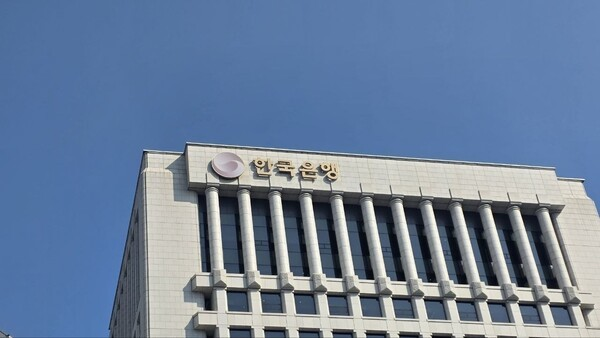
Source: BOK: "Won Stablecoins Should First Be Issued by a Bank-Centered Consortium"
On July 9, in materials submitted to the National Assembly’s Planning and Finance Committee, the Bank of Korea reaffirmed its position that won-denominated stablecoins should first be issued by a consortium centered on the banking sector. The BOK said that legislation for won stablecoins should include bank-centered issuance and the creation of a statutory policy body among relevant agencies. This is in line with the position it had already presented in discussions on the Digital Asset Basic Act.
On the same day, Bank of Korea Governor Hyun Song Shin also reiterated that institutionalizing won stablecoins is urgent. He explained that stablecoins and deposit tokens each have specialized use cases and are both competitive and complementary. The BOK also announced plans to expand its deposit token pilot program.
Meanwhile, private-sector use is already moving ahead. Hyundai Card and Hyundai Motor completed a technology verification for stablecoin-based overseas remittances between their U.S. and Mexican entities, and plan to pursue a second PoC for European entities later this month. KT said it is preparing a stablecoin-based digital finance platform with BC Card and Kbank, covering issuance, custody, payments, settlement, and network transfers.
1.2 [Commentary] Issuance to Banks, Use Cases to Corporates
The key point in Korea this week is that the debate over issuers and the development of use cases are moving at different speeds. The Bank of Korea wants to narrow the first issuance of won stablecoins to a bank-centered consortium. By contrast, Hyundai Card, Hyundai Motor, KT, BC Card, and Kbank are already testing stablecoin use cases in corporate remittances, payments, and settlement platforms. This is not merely a regulatory debate; it is a moment where the center of gravity is shifting from issuance to usage at the same time.
Structurally, the BOK’s position prioritizes monetary singleness and financial stability. It means treating stablecoins not as private tokens that anyone can issue, but as an extension of bank liabilities and payment infrastructure. At the same time, Hyundai Motor’s overseas affiliate remittance case shows that stablecoins may be used first in corporate treasury and intra-group fund transfers before consumer payments. For companies, the more direct variables are actual settlement time, cost, accounting treatment, and regulatory responsibility, rather than who the issuer is.
The differences become clear when comparing Korea, Japan, and Hong Kong. Japan has individual players such as JPYC, SBI, Sony Bank, and MUFG preparing issuance and infrastructure in parallel, alongside a shift under the Financial Instruments and Exchange Act. Hong Kong is closer to a model that first controls issuers by limiting the number of licenses granted. Korea has not yet passed legislation, but the central bank has already proposed a bank consortium structure, while private companies are testing usage possibilities outside that framework.
If this trend becomes entrenched, Korea’s won stablecoin market may settle into a dual structure in which banks issue and companies create the use cases. However, if bank-centered issuance is delayed too long, companies may first connect dollar stablecoins and overseas infrastructure to their operations. The key question to watch is whether the won issuance framework can keep pace with corporate remittance demand.
2. Japan Enters Dollar Stablecoin Competition Through Sony Bank’s U.S. Trust Bank
2.1 [News] OCC Conditional Approval, Connectia Trust Established, Commercialization Planned for 2027

Source: Sony Bank Moves to Establish U.S. Trust Subsidiary, Obtains OCC Conditional Approval
On July 6, Sony Financial Group’s board approved the establishment of a U.S. trust subsidiary by its affiliate Sony Bank. The new entity will be named Connectia Trust, National Association, with capital set at $40 million. The company is scheduled to be established in July 2026.
Sony Bank received conditional approval from the U.S. Office of the Comptroller of the Currency to establish a national trust bank. However, it said it will not conduct business, including stablecoin issuance, until final licensing is complete. The establishment was described as a preparatory step for commercializing a U.S. dollar-pegged stablecoin business.
In Japan, discussions in the same week also highlighted the potential approval of digital asset ETFs and a separate 20% tax rate. Satsuki Katayama, Minister of Finance and Financial Services, said that digital asset ETF trading is expanding overseas and that Japan will also consider moving toward approval. Amendments to the Financial Instruments and Exchange Act are under deliberation in the House of Councillors, with possible passage before the end of the session being discussed.
2.2 [Commentary] Dollar Issuance by a Japanese Bank Opens First Outside the Domestic Framework
Sony Bank’s establishment of a U.S. trust bank should be read not simply as overseas expansion, but as a move by a Japanese financial group to build dollar stablecoin issuance infrastructure first within the U.S. regulatory system. Yen stablecoins alone cannot fully cover demand for global payments, content, gaming, and platform payments. Through the form of a U.S. trust bank, Sony appears to be seeking issuance credibility, reserve asset management, and a supervisory framework at the same time. This is an approach that treats stablecoins not as technology products, but as bank-license-based monetary infrastructure.
Structurally, Japan is building two rails at once. One is the investment product rail, including the domestic shift under the Financial Instruments and Exchange Act, ETF approval, and a separate 20% tax rate. The other is the stablecoin and on-chain financial infrastructure rail being prepared by Sony Bank, SBI, and MUFG. If these two are combined, Japan could package issuance, custody, trading, investment products, and payments into a single model for expanding the financial sector.
Compared with Korea, Japan’s pace is closer to execution. Korea is first discussing the issuer structure and policy body for won stablecoins, while Japanese financial groups are securing both U.S. dollar rails and domestic yen rails at the same time. Hong Kong controls the number of licenses and selects stablecoin issuers, while Japan combines overseas and domestic licensing at the level of each financial group. Even within bank-centered models, Hong Kong is regulator-led, while Japan is financial group-led.
This difference could change the benchmark for stablecoin competition in Asia. If Japanese companies issue dollar stablecoins within the U.S. system while preparing yen-based payments and ETFs domestically, they can target both global use cases and domestic institutional investment demand. Sony Bank’s move shows that dollar stablecoin competition is not only an issue for U.S. companies, but is expanding into an overseas licensing strategy for Asian financial groups.
3. Taiwan Sees Bank and Corporate Payment Competition Begin Even Before Stablecoin Rules Take Effect
3.1 [News] After Virtual Asset Services Act Passes, Banks, Accounting Firms, and Fintechs Prepare in Advance
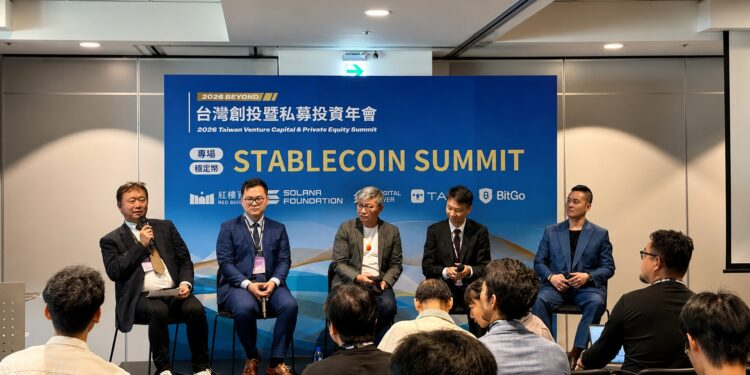
In Taiwan, the passage of the Virtual Asset Services Act through its third reading prompted assessments that the implementation of a stablecoin issuance regime is drawing closer. In response, major banks, accounting firms, and fintech companies gathered to begin discussing preparations for the regulatory shift. Participants included CTBC, National Taiwan University, Deloitte, and O-Bank.
Financial Bureau Director-General Tung Cheng-chang explained the supervisory direction and institutional design for stablecoins under the Virtual Asset Services Act. He emphasized that regulation must not only be stable, but also implementable in real-world settings. This shows that, after the law’s passage, the process is moving into a stage where detailed implementation and supervisory capacity matter more.
In the same week, BitoGroup launched its enterprise virtual asset brand Bito.Enterprise and introduced Bito.ONE, an enterprise-grade stablecoin payment service for financial institutions. The company said it would recruit 10 companies to participate in the first pilot. In effect, the race to secure corporate payment use cases has begun even before the regime takes effect.
3.2 [Commentary] After the Law Passes, the Competition Is About Implementation Capacity, Not Issuers
Taiwan’s latest developments show stablecoin policy moving from legal text to execution capability. Once the Virtual Asset Services Act passed, banks, accounting firms, universities, and fintechs immediately began asking the next question. What matters more now is not who will issue, but what supervisory standards will support actual corporate payments. Bito.ONE’s recruitment of pilot companies shows this transition from the market side.
Structurally, Taiwan’s model is focused on corporate payments from the beginning. The fact that banks and accounting firms are discussing the issue together means reserves, audits, internal controls, AML, payment, and settlement are being treated as one package. This is closer to designing stablecoins as controlled financial infrastructure embedded in corporate treasury processes, rather than as simple payment tokens. Recruiting pilot companies even before the regime is implemented is also a signal that the market is moving from exploration to execution.
Compared with Korea, Japan, and Hong Kong, Taiwan is closer to an intermediate model. Korea’s central bank is first setting the principle of bank-centered issuance, while Japan’s financial groups are simultaneously pursuing overseas trust banks and domestic regulatory reforms. Hong Kong focuses on license-based issuer control. Taiwan’s model is one in which the regulator emphasizes implementability after the law’s passage, while private payment providers organize corporate pilots.
The success of this model depends on how quickly actual corporate payments turn into repeated use after the regime takes effect. More important than the fact that the law has passed is the speed at which payments, audits, redemptions, and reserve asset management connect to companies’ internal systems. Taiwan’s case shows that the next stage of stablecoin competition is not issuance approval, but an operating model that can actually be implemented.
4. Other News
This section organizes additional news from the period related to Asian RWA, stablecoins, and tokenization by theme.
4.1 Theme 1. Expanding Pilots for Tokenized Securities and Funds
4.1.1 Sumitomo Mitsui Trust Bank Begins MMF Tokenization Pilot, First Among Domestic Trust Banks
- Began a pilot to tokenize beneficial interests in an MMF based in the Cayman Islands on a public blockchain
- The tokenized beneficial interests will be treated as digital securities under the Financial Instruments and Exchange Act, with issuance targeted during fiscal year 2026
- The structure is designed with long-term potential for instant stablecoin settlement, automated payments, and 24-hour cross-border transactions
- SBI Securities and Daiwa Securities are reviewing a digital securities structure for overseas investors investing in Japan
- They have already demonstrated infrastructure for direct transactions with Singapore and are discussing a 2027 trading launch
- Dollar stablecoins are being considered for settlement, with yen stablecoin adoption also under consideration over the long term
- An official from the FSC’s Capital Markets Division said private-sector and Korea Securities Depository cooperation is needed to design infrastructure for tokenizing standardized securities
- After discussions in the token securities consultative body, the direction of gradually pursuing standardized securities tokenization was reaffirmed
- The key point to watch is whether Korea’s STO market can move from fractional investment toward tokenization of standardized financial assets
4.1.4 Pegadaian’s Role Behind Gold Tokenization That Passed the OJK Sandbox
- Pegadaian’s role drew attention in a gold tokenization case that passed Indonesia’s OJK sandbox
- A structure tokenizing gold as a real-world collateral asset was verified within the regulatory sandbox
- This signals that Southeast Asia’s tokenization market is expanding beyond real estate and securities into real commodity-backed assets
4.2 Theme 2. Linking Payments and On-Chain Financial Infrastructure
4.2.1 Datachain Begins Technical Advisory Work for Mitsubishi UFJ Bank’s Stablecoin Infrastructure
- Datachain is providing technical advisory services for Mitsubishi UFJ Bank’s construction of on-chain financial infrastructure, including stablecoins
- Based on its experience in stablecoin and tokenized deposit businesses, Datachain will support the design of bank infrastructure
- This is a more concrete example of major Japanese banks preparing their own on-chain financial foundations
4.2.2 Kbank Begins Verification of Off-Ramp for Digital Asset-to-Fiat Conversion
- Kbank is working with Lambda256 and KSNET to verify an off-ramp operating system that converts digital assets into won
- The project examines the feasibility of digital asset-based settlement and connection to actual financial networks in a banking environment
- This is a stage for confirming whether stablecoin and digital asset use can extend beyond payments into fiat settlement
- BitoGroup launched its enterprise brand Bito.Enterprise and introduced Bito.ONE, an enterprise-grade stablecoin payment service
- It is recruiting 10 companies for the first pilot and placing payment infrastructure for financial institutions at the forefront
- This is a move to preempt corporate payment use cases before Taiwan’s stablecoin regime takes effect
4.2.4 SBI Leads Investment as Crypto Exchange EDX Raises More Than 12 Billion Yen in Series C
- Institutional digital asset exchange EDX Markets raised $76 million in a Series C round
- SBI Holdings led the round and was reported to have become an equity-method affiliate with a 20% stake
- This can be read as SBI broadening its strategy across JPYSC, RLUSD, USDC partnerships, and institutional trading infrastructure
4.3 Theme 3. Improving Institutionalization, Taxation, and Enforcement Infrastructure
4.3.1 Japan Moves to Legalize Digital Asset ETFs... Taxes Also to Be Lowered to 20%
- The Japanese government is pursuing the legalization of digital asset ETFs and a shift in financial product classification
- After legal amendments, ETF investment through ordinary securities accounts is expected to become possible, with the tax rate also lowered to around 20%
- Japan’s path for moving digital assets from separate speculative assets into institutional investment products is becoming more concrete
- Bills to abolish digital asset taxation and raise the deduction limit are both pending in Korea’s National Assembly Finance Committee
- The second-half policy materials specify tax retention, abolition, and deduction-limit adjustment as key issues
- If the direction of taxation is not finalized, uncertainty may remain for digital asset institutionalization and investment product design
- The Supreme Court pre-announced amendments to the Civil Execution Rules covering digital asset enforcement and liquidation procedures
- The rules define procedures for seizure, prohibition of disposal, and sale of digital asset transfer claims and digital assets themselves
- This is a step toward incorporating digital assets into the category of property that can be liquidated within the civil enforcement system
- Dunamu was selected as the top preferred bidder for the National Police Agency’s seized digital asset custody and management business
- It received a combined technical and price evaluation score of 94.73, ahead of Korea Digital Asset Custody and Hecto Wallet One
- The custody of assets seized by investigative agencies is being connected to private exchange infrastructure, shaping standards for the public custody market
The author of this report may have personal holdings or financial interests in assets or tokens discussed herein. However, the author affirms that no transactions have conducted using material non-public information obtained in the course of research or drafting. This report is intended solely for general information purposes and does not constitute legal, business, investment, or tax advice. It should not be used as a basis for making any investment decisions or as guidance for accounting, legal, or tax matters. Any references to specific assets or securities are made for informational purposes only and should not be construed as an offer, solicitation, or recommendation to invest. The opinions expressed herein are those of the author and may not reflect the views of any affiliated institutions, organizations, or individuals. The opinions and analyses expressed herein are subject to change without prior notice. In addition, beyond the individual disclosures included in each report, Four Pillars, may hold existing or prospective investments in some of the assets or protocols discussed herein. Furthermore, FP Validated, a division of Four Pillars, may already be operating as a node in certain networks or protocols discussed herein or may do so in the future. Please see here for FP Validated’s participating network disclosures and here for broader disclosure details.


