


Table of Contents
- Key Takeaways
- 1. Introduction: Has India’s Crypto Market Really Gone Quiet?
- 1.1 The Glory Days Of India’s Crypto Market
- 1.2 Has India’s Crypto Market Gone Quiet?
- 2. India’s Crypto Market Remains Hot
- 3. India’s Crypto Market Has Not Gone Quiet. It Has Matured
- 3.1 Entering The Series B Stage
- 3.2 A Maturing Developer Ecosystem
- 3.3 Stablecoins In The Indian Market
- 4. Remaining Challenges: Regulation, Taxes, And The Bottleneck Of Institutionalization
- 4.1 Taxes: A Tool Meant To Track The Market Is Pushing The Market Offshore
- 4.2 AML-Centered Regulation: FIU Has Become The De Facto Gatekeeper
Researcher


A special thanks to Juve, Noveleader(Castle Labs), Sakshi(A1 Research), Siddharth(Decentralised.co) for thoughtful feedback.
Key Takeaways
- During the 2020 to 2021 bull market, India emerged as a key global crypto market as retail adoption, DeFi, NFTs, and the developer ecosystem grew at the same time. Since 2022, tax and regulatory burdens have significantly reduced the visible exchange-driven momentum, but this does not necessarily mean that market demand has disappeared. The Indian market is now at an inflection point where both interpretations, “maturation” and “stagnation,” remain plausible.
- India remains one of the strongest crypto adoption markets in the world. According to Chainalysis, India ranked first in the Global Crypto Adoption Index from 2023 to 2025, with strong indicators across centralized exchanges, retail activity, DeFi, and institutional transactions. However, because these rankings are influenced by PPP-adjusted GDP per capita and population size, India’s crypto market should be evaluated by distinguishing between absolute usage and per-capita penetration.
- The positive shift in India’s crypto market is that it is expanding beyond exchange-driven speculative demand into developers, startups, infrastructure, and payment and settlement use cases. Series B and later-stage funding rounds are reappearing, and India has grown into a major developer hub, accounting for around 15.2% of global Web3 developers. At the same time, however, the value created by these developers and founders does not necessarily accrue to Indian entities, Indian employment, or Indian IP. Many projects are choosing overseas jurisdictions in search of clearer regulatory environments and more favorable investment structures.
- Stablecoins, cross-border payments, and tokenization could become important growth pillars for the Indian market, but they are also among its most sensitive regulatory challenges. Companies are experimenting with remittance, settlement, and on/off-ramp infrastructure, but Indian authorities prefer CBDC and UPI-centered institutional digital payment infrastructure over private stablecoins, citing monetary sovereignty, financial stability, and capital control concerns. As a result, India is a market with strong stablecoin demand, but the role private stablecoins will play within the domestic financial system remains uncertain.
- The biggest question for India’s crypto market is not whether demand exists, but whether that demand and talent can be kept within a transparent and regulated domestic market. High transaction taxes, AML-focused but limited regulation, exchange security incidents, withdrawal restrictions, and regulatory uncertainty could weaken the competitiveness of the onshore market and push users and founders overseas. Conversely, if India adjusts its tax structure, establishes user protection standards, and provides clear rules for stablecoins, DeFi, and tokenization, its strong adoption and developer base could translate into real financial infrastructure innovation.
1. Introduction: Has India’s Crypto Market Really Gone Quiet?
1.1 The Glory Days Of India’s Crypto Market
Looking back at the 2020 to 2021 crypto bull market, India was not just another “emerging market.” If the defining keywords of that cycle were retail inflows, altcoins, DeFi, NFTs, and the global spread of developers, India was a market where all of those trends could be observed at once.
According to Chainalysis, India’s crypto market grew by 641% from July 2020 to June 2021. Among transactions originating from India-based addresses, DeFi platforms accounted for 59%, a higher share than in Vietnam and Pakistan. In addition, large institutional-sized transactions of more than $10M made up 42% of India-based transactions, showing that the Indian market was already more than a simple retail speculation market and had a more mature trading structure at the time.
There were also many notable examples. India-based exchange WazirX surpassed 10M users in 2021, and during that year, sign-ups from smaller cities and semi-urban areas grew by more than 700%. Around the same period, CoinSwitch Kuber raised $260M in a round co-led by a16z and Coinbase Ventures, reaching a valuation of $1.9B. CoinDCX also became a unicorn in 2021.
With the rise of global infrastructure projects founded by Indian entrepreneurs, such as Polygon, India began to be recognized not only as a country that used crypto heavily, but also as a country that built crypto. Polygon began as Matic Network in 2017, with the goal of improving scalability on Ethereum, and later grew into one of the leading projects in Ethereum scaling infrastructure.
Following Polygon’s successful emergence, a wide range of protocols and companies appeared either from India or with Indian founders, including EigenLayer, Avail, Sentient, Stader Labs, Biconomy, OpenFX, FalconX, and Instadapp.
1.2 Has India’s Crypto Market Gone Quiet?
Today, however, India’s crypto market does not feel as loud as it once did. There are several reasons for this.
The year 2022 deserves particular attention. After 2022, the global crypto market entered a downturn, and at the same time, the Indian government introduced a 30% tax rate on income from transfers of Virtual Digital Assets, or VDAs. It also introduced a 1% TDS on VDA transfers from July 2022, which weakened activity on exchanges. In fact, Indian policy think tank Esya Centre analyzed that after the introduction of the 1% TDS, Indian users moved to offshore exchanges and channels that are harder to track. It also estimated that more than 90% of VDA trading by Indians took place on offshore platforms between July 2022 and July 2023.
That regulatory pressure has continued since then. In 2025, Indian tax authorities intensified scrutiny of crypto users, with the CBDT sending 44,057 communications to taxpayers who had traded or invested in virtual digital assets but had not reported them in Schedule VDA of their income tax returns. By contrast, users trading through offshore platforms can remain relatively harder to reach. In practice, this has created a structure where strict regulation ends up weighing more heavily on domestic exchanges and users who try to stay compliant, while also pushing more activity offshore.
But interpreting this as meaning that “India’s crypto market has cooled off” would miss the point. Instead, the Indian market has been changing into something quieter, but deeper. According to Chainalysis, India ranked first in the Global Crypto Adoption Index in 2023, 2024, and 2025. In other words, India disappeared from the headlines, but usage and demand did not disappear.
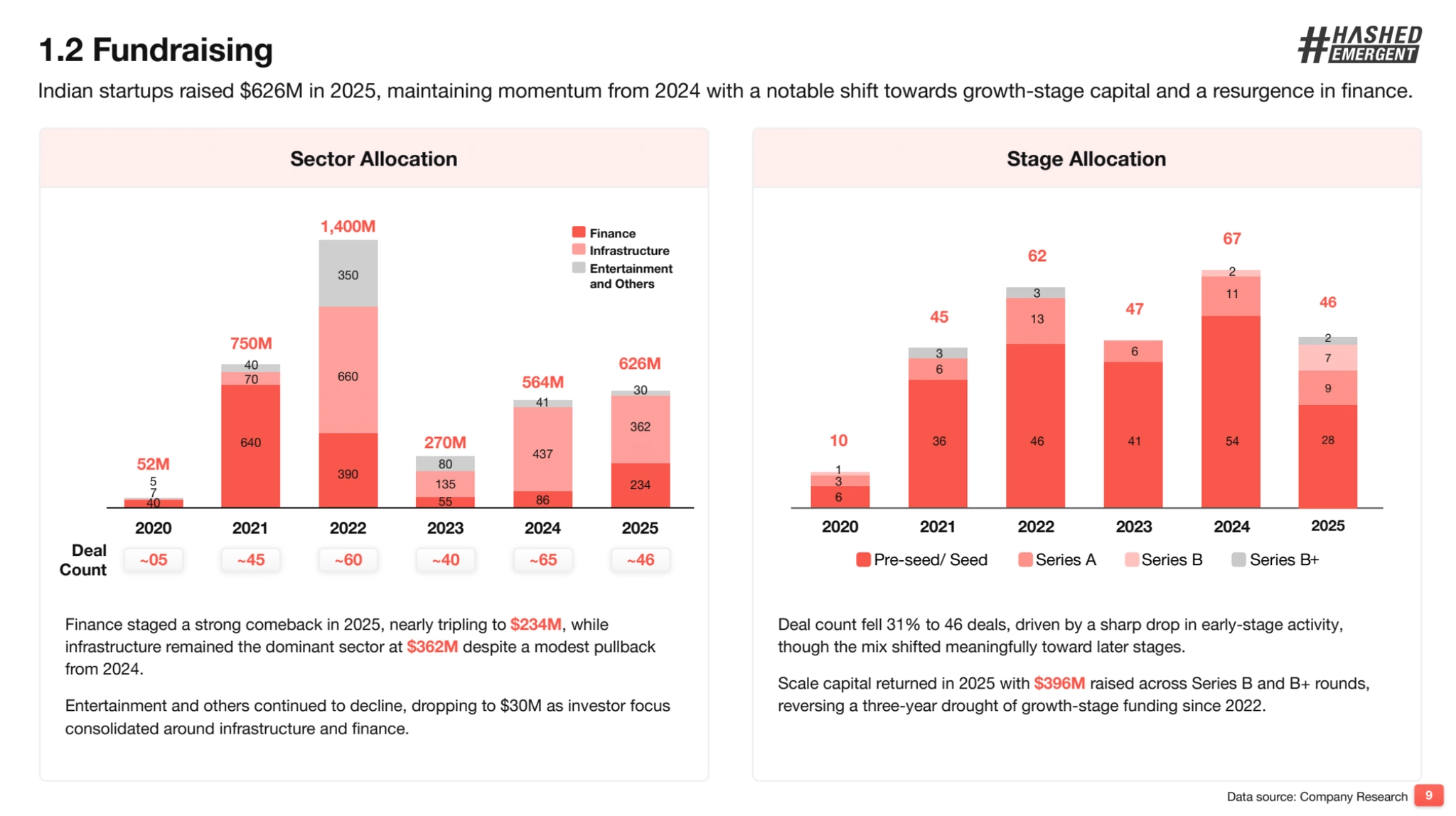
The more important change is the nature of the market. If India’s crypto market in the past drew attention for “massive retail inflows,” today’s India is closer to a market where developers, startups, infrastructure, and institutional use cases are growing together. According to Hashed Emergent, India’s Web3 startup ecosystem has grown to more than 1,250 startups and has raised over $3.5B in cumulative funding since 2020. In 2025 alone, Indian founders raised $626M, and growth-stage funding of Series B and above, which had been nearly absent for three years, returned with $396M in funding. India is also the second-largest developer market, accounting for around 15.2% of Web3 developers worldwide. In 2025, its on-chain value received reached $338B, roughly doubling from the previous year.
So the starting point of this article is simple. Has India’s crypto market really gone quiet? On the surface, yes. Local exchange volumes have been affected by taxes and regulation, and retail excitement is no longer as visible as it once was. But if we look deeper, India remains one of the strongest crypto adoption markets in the world, while also moving toward a market where developers, startups, public infrastructure, and enterprise adoption are accumulating together. In other words, India’s crypto market is not dead. It has moved beyond the noise of the bull market and entered a stage of maturity.
2. India’s Crypto Market Remains Hot
Source: Chainalysis
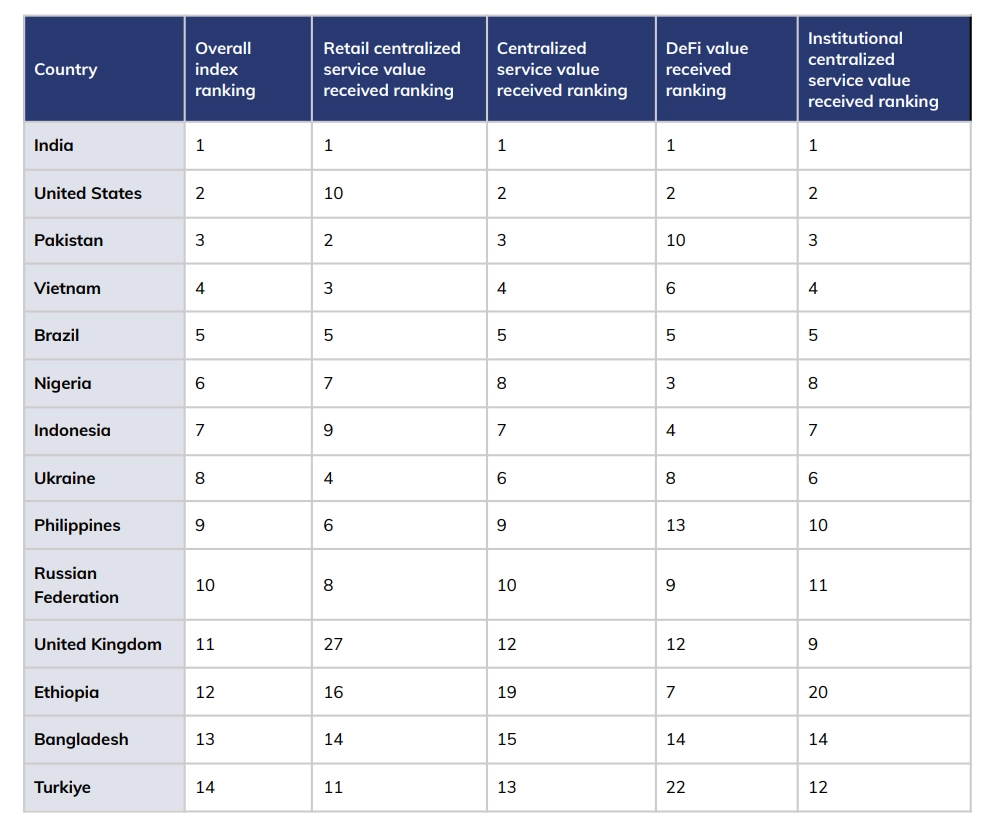
Chainalysis’s 2025 Global Crypto Adoption Index ranks 151 countries by comparing their usage of centralized services, retail centralized services, DeFi, and institutional centralized services. India ranked first overall, and it also ranked first across all four sub-indicators. Even today, India is one of the rare markets where CEXs, retail activity, DeFi, and institutional transactions all show strong activity.
The details of the evaluation metrics are as follows:
- Retail Centralized Service Value Received Ranking: This ranking counts only retail-sized transactions under $10,000 among transactions that took place through centralized services. It is designed to measure usage intensity among non-professional individual users and is adjusted by GDP per capita based on purchasing power parity, or PPP-adjusted GDP per capita.
- Centralized Service Value Received Ranking: This ranking is based on the total value of crypto that users in each country received on-chain from centralized services such as CEXs. It is not based simply on total volume, but is adjusted by PPP-adjusted GDP per capita. If two countries receive the same amount, the country with lower per-capita purchasing power receives a higher ranking.
- DeFi Value Received Ranking: This ranking is based on transaction volume through DeFi protocols in each country, meaning the value of crypto received on-chain through DeFi. This metric also gives relatively more weight to countries with lower PPP-adjusted GDP per capita.
- Institutional Centralized Service Value Received Ranking: This ranking counts only institutional-sized transactions above $1M among transactions that took place through centralized services. It is designed to reflect activity by large players such as professional investors, hedge funds, and custodians, and is adjusted by PPP-adjusted GDP per capita.
One reason India performed strongly in the ranking is the country’s structural demand for stablecoins. India has one of the world’s largest remittance markets, with millions of households and workers regularly moving money across borders. In this context, stablecoins can serve a practical role: they offer faster settlement, easier access to dollar-linked value, and a way to reduce friction in cross-border payments, especially for users who face high fees, slow bank transfers, or limited access to traditional dollar accounts.
Stablecoin demand is also supported by macroeconomic factors. As the rupee has weakened against the U.S. dollar, some users may view dollar-linked digital assets less as speculative crypto products and more as a tool for preserving purchasing power or managing currency exposure. For freelancers, exporters, overseas workers, and families receiving remittances, stablecoins can provide a convenient bridge between local currency needs and global dollar-denominated payments.
There are still regulatory and compliance concerns around informal payment channels, especially where cash, bank transfers, and crypto overlap outside fully transparent systems. However, the broader picture is not simply one of regulatory arbitrage. India’s stablecoin demand appears to be driven primarily by real financial use cases: cross-border remittances, dollar access, faster settlement, and protection against currency volatility. These practical needs help explain why stablecoins have become an important part of crypto activity in India despite strict taxation and regulatory uncertainty.
Of course, rather than taking Chainalysis’s evaluation at face value, we need to look at it critically. There are two reasons India may have received a high score in this assessment. First, most of the categories are adjusted by PPP-adjusted GDP per capita. Compared with the scale of its national economy, India’s PPP-adjusted GDP per capita is fairly low, at around $11,160 as of 2025. Second, India’s population is extremely large. According to Chainalysis’s analysis, when the evaluation is adjusted by population, India does not rank within the top 20.
Even so, when viewed at the national level, the scale of India’s crypto market in terms of trading and transfers is undeniably massive.
Source: Hashed Emergent, CoinSwitch
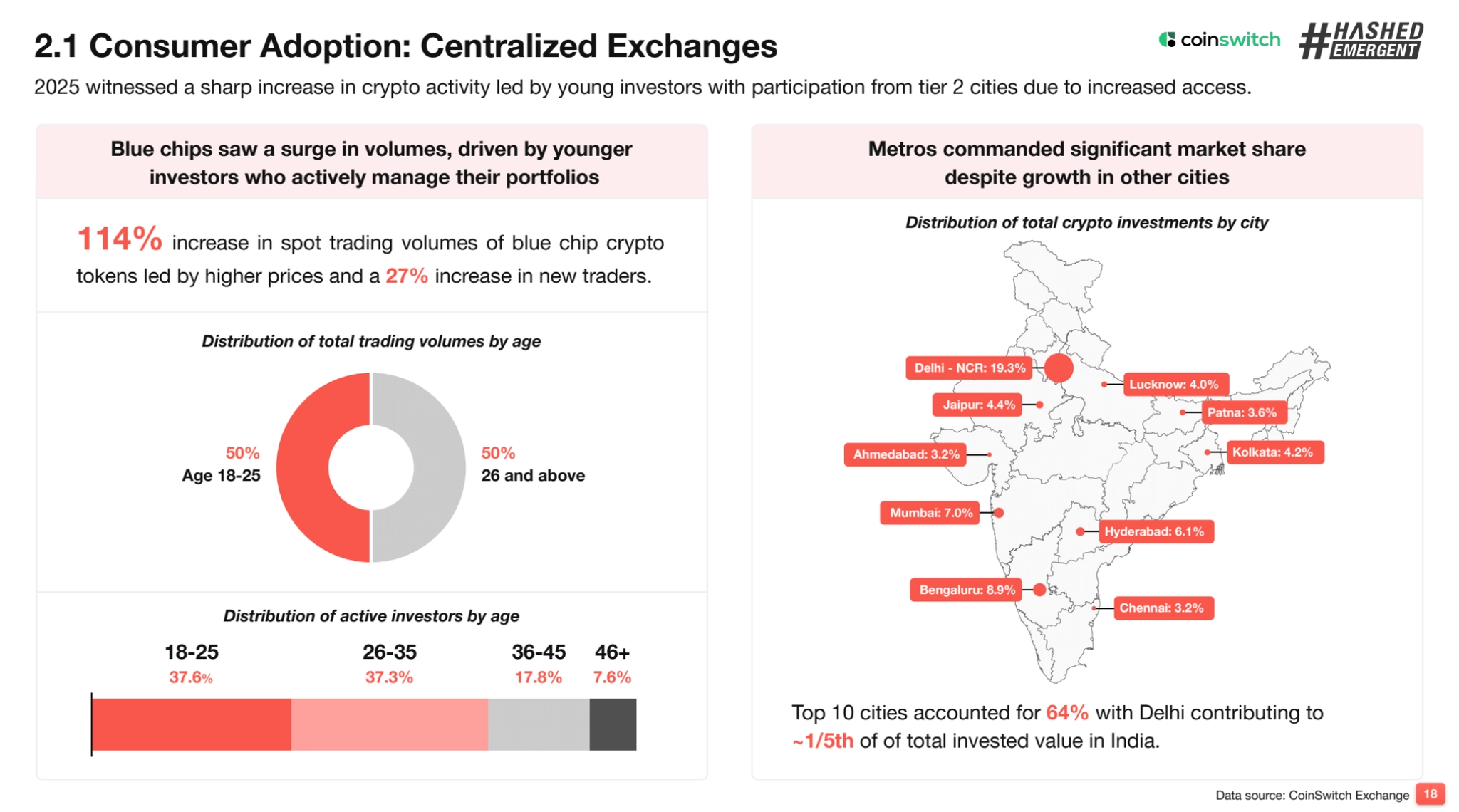
Retail exchange indicators also suggest that some activity is returning to local centralized exchanges after a large share of Indian crypto volume moved offshore following the introduction of the TDS rule in 2022–2023. According to CoinSwitch data, spot trading volume for blue-chip crypto tokens in India increased by 114% in 2025, while the number of new traders rose by 27%. Half of total trading volume came from investors aged 18 to 25. Among active investors, those aged 18 to 25 accounted for 37.6%, while those aged 26 to 35 accounted for 37.3%. This means that younger generations remain the core demand group in India’s crypto market.
Source: Hashed Emergent, Pi42
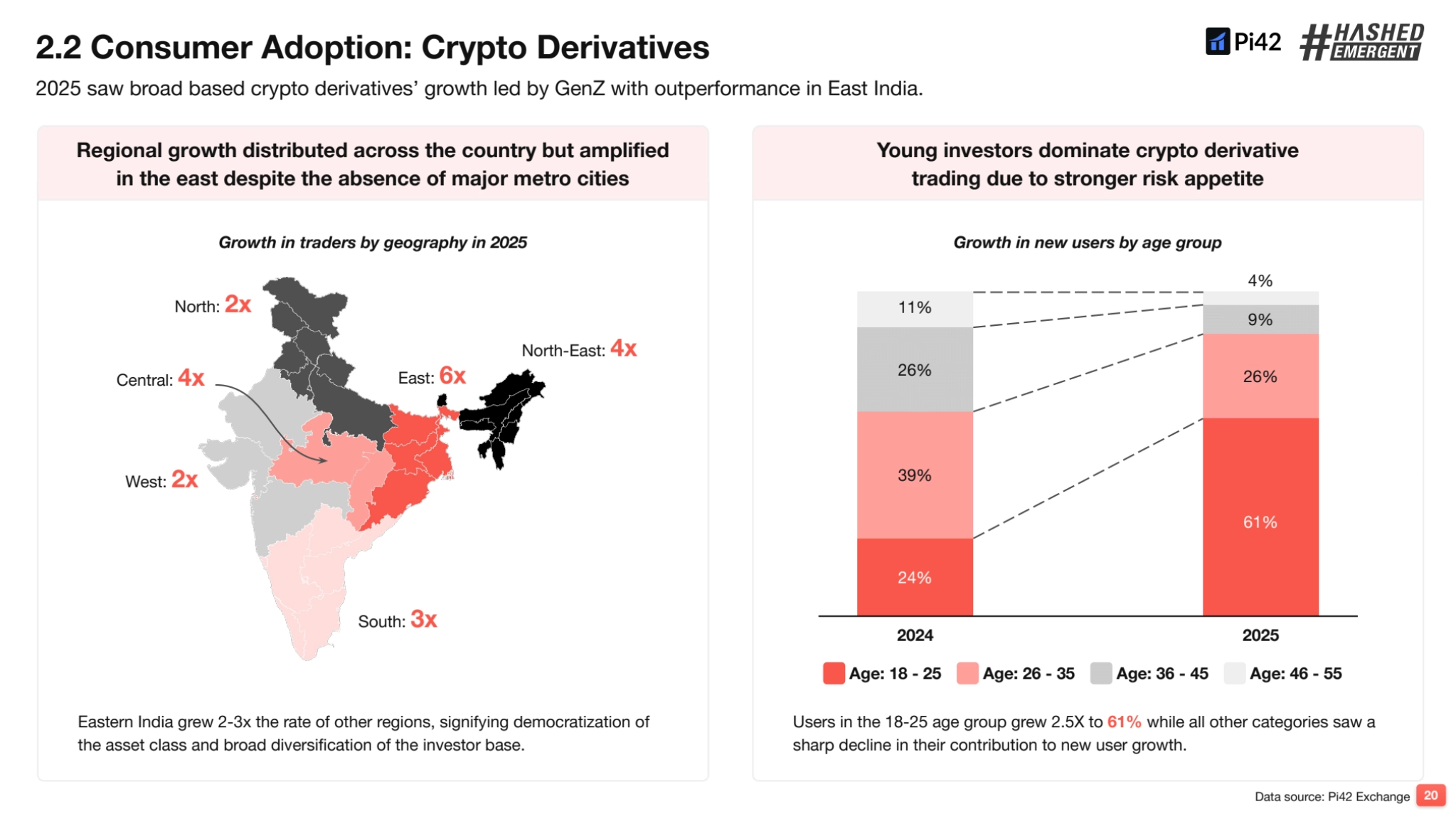
The derivatives market is even more interesting. According to Pi42 data, in India’s crypto derivatives market, the share of new users aged 18 to 25 jumped from 24% in 2024 to 61% in 2025. By region, eastern India grew sixfold, while northeastern and central India each grew fourfold. This shows that crypto derivatives are no longer limited to traditional major metropolitan areas such as Mumbai, Bengaluru, and Delhi, but are spreading geographically. A major reason of why this shift is happening from tier 1 to tier 2 cities is because of local language crypto youtube channels gaining popularity (Hindi, Tamil, Telugu, Bengali).
The growth of the derivatives market is not just about rising sign-ups. Average trade size almost doubled from $1,051 in 2024 to $1,960 in 2025, while the share of traders who trade daily rose from 45% to 60%. Derivatives are, of course, a high-risk market. Even so, this data suggests that Indian users are moving beyond simple holding and becoming more active traders. This behavior also reflects India’s broader derivatives culture: with one of the world’s largest options markets by notional volume, India already has a large base of retail traders familiar with high-frequency, high-risk products, and some of that activity may be spilling over into crypto derivatives.
3. India’s Crypto Market Has Not Gone Quiet. It Has Matured
Looking at recent trends in the global crypto market, some say the market has gone quiet because the pace at which new concepts emerge has slowed, and altcoins have not performed well in price terms. Others, however, say the market has matured, pointing to stablecoin adoption and the strong interest global financial institutions are showing in on-chain finance.
The same applies to India. The Indian market is maturing.
3.1 Entering The Series B Stage
Source: Hashed Emergent
The first piece of evidence that the Indian market is maturing is the growing number of startups entering the Series B stage. Although overall fundraising by Indian crypto startups has declined compared with 2021 to 2022, the number of Series B or later-stage investments has increased significantly compared with that period.
Major companies that are India-based or have Indian founders and have moved into the Series B stage include the following:
- Aspora: Aspora is an India-focused financial app for overseas Indians. In 2025, it raised Series B funding from Sequoia, Greylock, Y Combinator, and others. In its early stage, it focused on India remittances based on stablecoin rails. It is now expanding into a wider range of financial services, including bill payments, savings, investments, and lending.
- Tazapay: Tazapay was founded by Rahul Shinghal, Saroj Mishra, and Arul Kumaravel. In 2026, it raised Series B funding from Circle Ventures, CMT Digital, Coinbase Ventures, and others. Tazapay is a B2B cross-border payment infrastructure company and has recently been expanding its stablecoin payment infrastructure, including stablecoin-to-fiat connectivity and on-ramp/off-ramp services.
- CoinSwitch: CoinSwitch is an India-based crypto trading platform company. In 2021, it raised Series C funding from a16z, Paradigm, Ribbit Capital, and others.
- CoinDCX: CoinDCX is an India-based crypto exchange company. In 2022, it raised Series D funding from Pantera Capital, Steadview, Coinbase Ventures, and others.
- EigenLabs: EigenLabs was founded by Sreeram Kannan, a professor at the University of Washington. In February 2024, it raised Series B funding from a16z crypto. EigenLabs is the developer of EigenCloud, whose core solutions include EigenDA, a data availability layer, EigenLayer, an Ethereum restaking protocol, and EigenCompute, a verification layer for off-chain computation.
- SuperGaming: SuperGaming is an India-based game development and publishing studio. In 2025, it raised Series B funding from Steadview, Bandai Namco, a16z Speedrun, and others. It originally operated as a traditional mobile game company, but has recently been actively expanding into Web3 and crypto.
- FalconX: FalconX is a US-based institutional digital asset prime brokerage company founded by Raghu Yarlagadda and Prabhakar Reddy. It raised Series D funding in 2022.
In addition, companies such as KGeN, a Web3 gaming network with around $43M in cumulative funding, and Sentient, a crypto AI project that raised $85M in seed round, also deserve attention.
3.2 A Maturing Developer Ecosystem
When judging whether India’s crypto market has matured, looking only at trading volume or fundraising tells only part of the story. The more important leading indicator is developers. In the crypto market, developers are not just labor. They are the supply-side growth engine that creates new protocols, apps, infrastructure, developer tools, and user experiences. If the developer pool is growing, that market can be seen as preparing to build the next cycle.
Source: Hashed Emergent, Devfolio
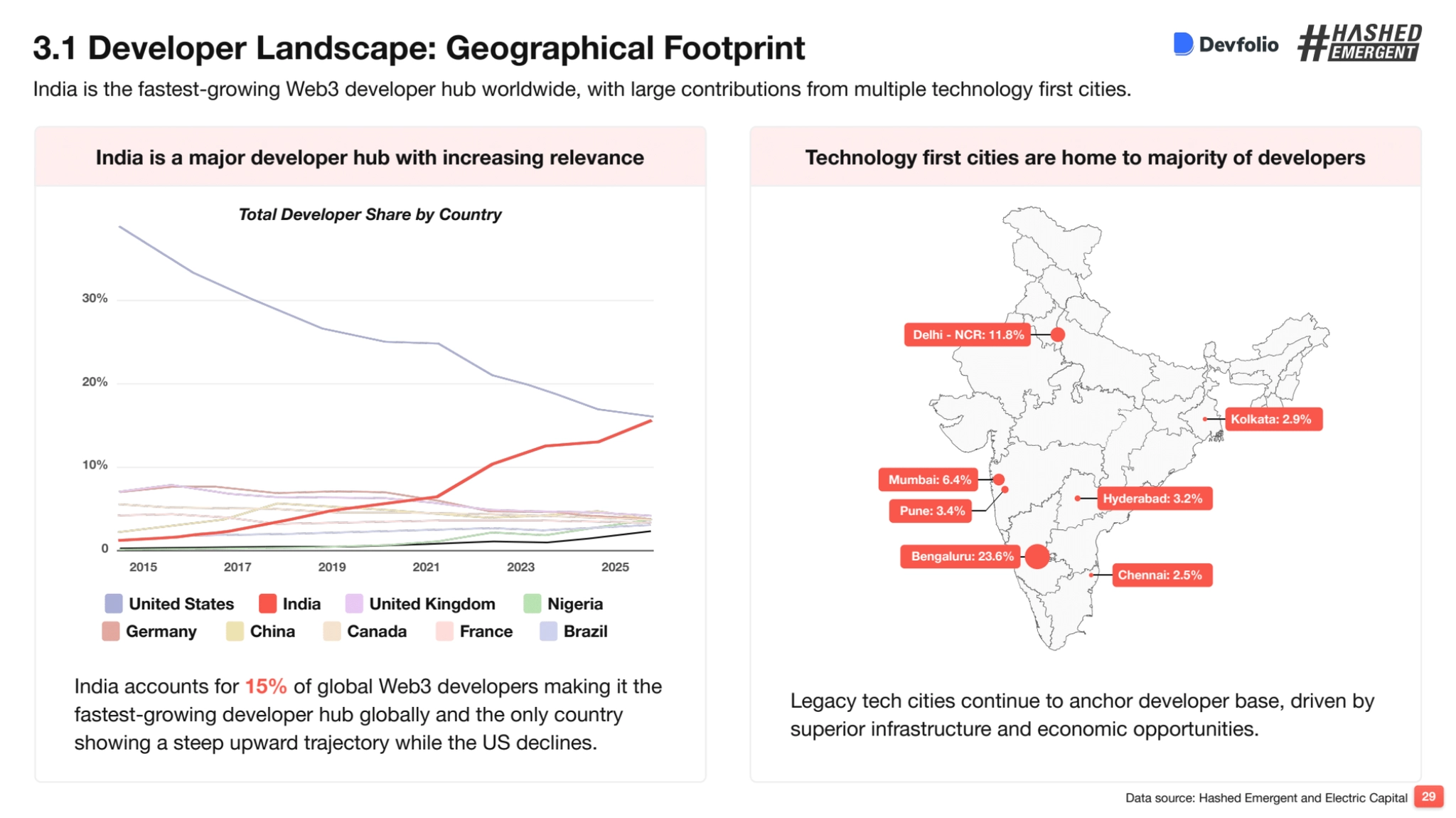
By this standard, India remains a key country in the global Web3 market. India accounts for around 15.2% of Web3 developers worldwide, up from 12% in 2024. India is the world’s second-largest developer market after the United States, and at the same time, it is the fastest-growing Web3 developer hub in the world. Electric Capital’s 2024 developer geography report shows the same trend. At the time, the United States accounted for 19% of global crypto developers, India for 12%, and the United Kingdom for 4%.
India is not just a country with a large number of developers. It appears to be almost the only major country whose share is rising sharply while the US developer share is declining. Regionally, Bengaluru is the largest developer hub with 23.6%, followed by Delhi-NCR with 11.8%, Mumbai with 6.4%, Pune with 3.4%, and Hyderabad with 3.2%. Bengaluru’s lead reflects both its long-standing role as India’s main IT and startup hub and the impact of Web3 ecosystem builders such as Superteam on Solana and Ethfolio, whose hackathons and community programs have helped onboard large numbers of developers into crypto.
Still, the presence of sizable developer communities across Delhi-NCR, Mumbai, Pune, Hyderabad, and other cities shows that India’s Web3 developer ecosystem is not confined to a single city, but is distributed across the country’s broader IT and startup hubs.
Source: Hashed Emergent, Devfolio
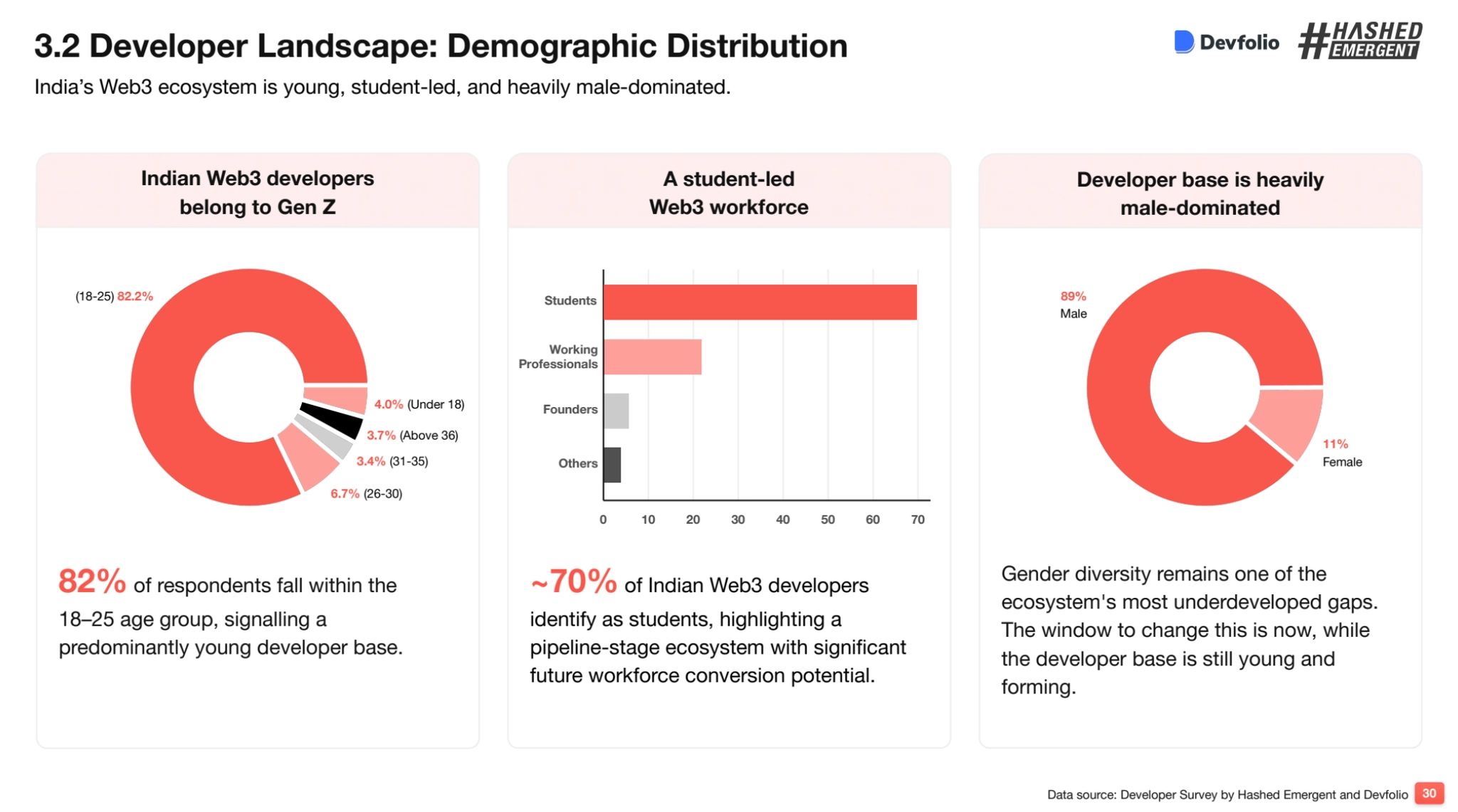
The defining feature of India’s developer ecosystem is its youth. According to a developer survey by Hashed Emergent and Devfolio, 82.2% of respondents were aged 18 to 25, and around 70% were students. This means that India’s Web3 ecosystem today is less like a fully formed labor market and more like a massive pipeline that will enter the market in earnest over the next several years.
Another point worth noting is that the developer base is no longer “entirely early-stage.” According to the survey, 42.6% of Indian Web3 developers have more than two years of experience, 33.2% have one to two years of experience, and 24.2% are new developers with less than one year of experience. The ecosystem can be seen as gradually maturing because new developers are still entering, while the share of developers who have survived for more than two years has also grown meaningfully.
Global collaboration indicators are also strong. Among Indian developers with less than one year of Web3 experience, 18.9% participate in global teams. Among developers with more than two years of experience, that share rises to 55.4%. As Indian developers gain experience, they become increasingly integrated into global Web3 teams.
This shows that India is not simply a developer pool for its domestic market. It is becoming an export-oriented developer hub that supplies talent to global Web3 projects. This trend is also reinforced by practical economic incentives. For many early-career developers and college graduates in India, domestic tech roles may offer limited starting compensation, especially in an environment of rising living costs. Global crypto companies, by contrast, can offer remote work, more flexible career paths, and access to higher compensation. As a result, Web3 is increasingly seen not only as a new technology sector, but also as a way for Indian developers to monetize their skills in the global labor market.
The direction these indicators point to is clear. India’s crypto market is not simply “a market with many users.” India is moving toward a market with both many users and many builders. If the crypto market had truly cooled off, developer inflows, hackathon conversion rates, global team participation, and protocol-level event investment would have declined. But India in 2025 shows the opposite. The surface-level heat of the market may have become quieter than before, but underneath it, the developer base that will build the next cycle continues to thicken.
3.3 Stablecoins In The Indian Market
Another indicator of the maturation of India’s crypto market is stablecoins. In the past, the keywords used to explain India’s crypto market were exchanges, retail inflows, and altcoin investment. More recently, however, the language has shifted toward more fundamental financial infrastructure, such as payments, settlement, remittances, and asset digitization. This signals that the market is moving beyond simple speculative demand and into a stage where it is considering how blockchain can be used as part of the actual financial system.
In India, this shift is first appearing at the startup level. A representative example is Saber Money. Saber is a B2B cross-border payment infrastructure product built by Mudrex, a crypto investment and trading platform. It aims to use stablecoins to process international transfers and settlements for businesses more quickly. In early 2026, Saber joined Circle Payments Network as a Beneficiary Financial Institution, enabling it to support Indian rupee payouts in global payments using stablecoins. Circle opened an India payout corridor through Saber and explained that NEFT usually supports payouts within two hours, while IMPS and RTGS support near-real-time payouts. This does not mean that stablecoins have become directly regulated payment instruments in India, but it is significant because India’s local payment networks and global stablecoin networks have begun to connect.
Web3 payment infrastructure companies founded by Indian entrepreneurs are also moving toward stablecoins. In 2025, Transak raised a $16M strategic investment led by Tether and IDG Capital and announced the expansion of its stablecoin payment stack. Another example is Speed, a Lightning Network-based payment infrastructure built by an India-based engineering team. It plans to combine the fast settlement of the Lightning Network with the price stability of stablecoins such as USDT for use in commerce, creator payouts, platform settlements, and cross-border payments.
However, when looking at India’s stablecoin market, we must also consider the regulatory paradox. Stablecoins have established global utility as low-cost, high-speed cross-border payment instruments, but in India, U.S. dollar-pegged stablecoins conflict with the government’s broader monetary and foreign-exchange priorities. Their classification under foreign exchange law remains unclear, while the RBI has taken a cautious stance toward private stablecoins, citing risks to macroeconomic stability, monetary sovereignty, financial stability, and payment-system integrity. This tension is particularly important because the RBI is actively managing rupee volatility and has intervened in the foreign-exchange market to defend the currency against dollar pressure. Against that backdrop, Indian authorities are unlikely to actively support the growth of a large private USD stablecoin market, which could make it easier for users to hold and move dollar-linked value outside the formal banking and FX system. Instead, the policy direction is more likely to favor CBDCs and regulated digital payment infrastructure, including the digital rupee. For stablecoin startups and investors, this means the challenge is not only regulatory uncertainty, but also a deeper policy headwind against dollar-linked private money.
This point also reveals the maturity of the Indian market. In immature markets, stablecoins are often used mainly for exchange deposits and withdrawals or speculation. In India, regulation around private stablecoins remains conservative, but companies are already building cross-border payment infrastructure, while the central bank is experimenting with controllable forms of digital money through CBDCs and tokenized deposits. In other words, India is not a market that fully permits stablecoins, but it is a market trying to absorb the problems stablecoins aim to solve, such as remittance costs, settlement speed, payment transparency, and global payment connectivity, through institutional channels.
Nevertheless, this does not necessarily mean that stablecoins will see broad adoption in India’s domestic payment market. The more realistic opportunity is likely to be in cross-border use cases, especially given India’s position as one of the world’s largest remittance recipients, with annual inflows exceeding $100 billion. Stablecoins can offer a compelling alternative for international transfers by reducing cost, improving settlement speed, and enabling easier access to dollar-linked value. Domestically, however, the adoption case is much weaker. India already has UPI, an instant, free, and deeply embedded payment network used at massive scale across consumers and merchants. As a result, stablecoins may struggle to compete as a day-to-day domestic payment instrument, even if they remain attractive for remittances, offshore value movement, and globally connected financial activity.
4. Remaining Challenges: Regulation, Taxes, And The Bottleneck Of Institutionalization
The paradox of India’s crypto market is clear. The country has a large user base, a fast-growing developer community, and rising adoption among startups and enterprises. Yet from a regulatory perspective, India is still neither a fully open market nor a fully banned one. There is no comprehensive crypto legislation or dedicated regulator, and the market is currently governed mainly through tax rules and AML requirements. It also remains unclear how stablecoins, token issuance, and tokenized assets should be treated in relation to VDAs.
This ambiguity becomes even clearer when looking at India’s regulatory history. In 2018, the Reserve Bank of India banned banks from servicing crypto businesses. In 2020, the Supreme Court struck down that ban in the IAMAI judgment, ruling that it was disproportionate. Since then, despite several attempts, no parliamentary legislation has been passed to formally ban crypto. In other words, crypto cannot realistically be banned in India without new legislation. At the same time, the government has little fiscal incentive to shut the market down completely. In FY 2024–25, it reportedly collected around $60-75M from the 1% TDS alone, separate from the 30% flat tax on gains. Giving up a revenue stream of that scale would make little fiscal sense.
As a result, India has settled into a kind of workaround model. Instead of regulating crypto through a clear sector-specific framework, the government governs a market it cannot easily ban through tax law, AML rules, and enforcement pressure. In 2024–2025, this approach became more aggressive, with authorities increasing surveillance of VDA transactions, using data analytics to track potential tax evasion, and taking action against non-compliant crypto platforms. This has made crypto participation more burdensome and risky for users, especially active traders, and has driven some participants away from formal crypto markets.
This may help the state maintain oversight and collect revenue in the short term, but it creates a serious bottleneck for long-term industry growth. India may rank among the world’s leading countries for crypto adoption, but founders, companies, and investors still lack clarity on what licenses they need, which products are permitted, which are restricted, and how rules apply to DeFi protocols or non-custodial services. India’s challenge, then, is not simply to tax or contain crypto, but to build a clear regulatory framework that allows the industry to grow domestically in a sustainable way.
4.1 Taxes: A Tool Meant To Track The Market Is Pushing The Market Offshore
The most practical bottleneck is taxation. India applies a 30% tax rate on income from VDA transfers and imposes a 1% TDS on qualifying VDA transfers above the applicable threshold. In practice, the TDS rule can be especially burdensome for active traders because 1% of the transaction value is withheld at the time of each taxable transfer and can remain unavailable until it is claimed through the tax filing process. This creates a significant drag on liquidity: for traders with high turnover, even one full-capital trade per day could result in a large share of their trading capital being tied up within a single quarter. As a result, India’s tax framework does not merely reduce after-tax returns; it can make frequent crypto trading economically impractical.
The problem is that this tax structure has had the effect of pushing trading activity out of the domestic market and overseas. Esya Centre analyzed that the 1% TDS was intended to curb speculation and improve traceability, but in practice, it caused Indian users to move to offshore VDA exchanges and harder-to-track channels. The same report estimated that the value of VDAs traded by Indians on offshore platforms from July 2022 to July 2023 reached more than $42B, and that 3M to 5M Indian users moved to offshore platforms after the TDS was announced.
This is not just a matter of exchange revenue. When trading moves to offshore platforms or P2P channels, the transaction tracking and taxation that the government intended also become more difficult. In a 2024 follow-up analysis, Esya Centre estimated that only 9.02% of assets held by Indians on global VDA exchanges were on domestic compliance platforms. It also argued that lowering TDS to 0.01% could increase the incentive to trade on domestic platforms and could even increase tax revenue.
Therefore, the tax issue in India’s crypto market goes beyond the simple complaint that “the tax rate is high.” The core issue is that taxation is becoming a cost structure that sends users overseas and into informal channels, rather than a mechanism that makes the domestic market more transparent. If the Indian government’s long-term goal is transparent market monitoring, it needs to reconsider whether maintaining a high TDS is really the best option.
4.2 AML-Centered Regulation: FIU Has Become The De Facto Gatekeeper
The clearest regulatory axis in India today is AML. Since March 2023, VDA service providers operating in India have been required to register with FIU-IND and comply with obligations such as customer due diligence, suspicious transaction reporting, appointing an AML officer, establishing AML policies, and the Travel Rule.
External materials also show that the FIU’s role continues to strengthen. In October 2025, FIU-IND, under India’s Ministry of Finance, issued notices related to PMLA violations to 25 offshore VDA service providers, including Huione, CEX.IO, and BingX. A government press release explained that these were non-compliance notices under Section 13 of the PMLA. In 2024, Binance was fined 188.2M rupees, around $2.25M, for operating without FIU registration, and the FIU requested that the Ministry of Electronics and Information Technology block non-compliant offshore exchanges.
At the same time, FIU registration has also become a pathway for global players to re-enter the Indian market. In March 2025, Coinbase announced that it had completed FIU registration and could provide crypto trading services in India. Reuters explained that VDA service providers in India must register with the FIU as reporting entities and comply with AML obligations.
In other words, India’s regulation is closer to “AML registration and monitoring” than to a “permission-based license.” This helps create a minimum level of market order, but from a business perspective, the scope of permitted products and the supervisory framework remain unclear. In particular, for structures without a clear intermediary, such as DeFi protocols, non-custodial wallets, and decentralized applications, it remains ambiguous who should fulfill AML obligations and how they should do so.
4.3 Stablecoins: Demand Exists, But The Policy Direction Prioritizes CBDCs
Stablecoins are both one of the most important opportunities and one of the most sensitive regulatory issues in the Indian market. India has a massive remittance market, demand from freelancers and B2B payments, a mobile wallet user base, and high on-chain activity. Hashed Emergent evaluates India as having strong potential demand for stablecoins due to its high mobile wallet usage, despite difficulties with on/off-ramps.
However, policymakers are very cautious. In India, the classification of stablecoins under foreign exchange law remains unclear, and the RBI prefers CBDCs over private stablecoins, citing macroeconomic stability, monetary sovereignty, financial stability, and the integrity of payment systems. RBI Deputy Governor T. Rabi Sankar also said in a 2025 speech that stablecoins pose significant risks related to illicit payments, the circumvention of capital controls, monetary stability, fiscal policy, bank intermediation, and system resilience.
For India, dollarization is an especially sensitive issue. Sankar pointed out that foreign currency-denominated stablecoins could reduce demand for domestic currencies in emerging markets and raise the risk of dollarization, while weakening capital flow management and the effectiveness of monetary policy. Indian government documents have also expressed concern that the spread of US dollar-based stablecoins could affect both advanced and emerging economies, and in India’s case, could weaken national payment systems such as UPI.
Therefore, stablecoins in India are an area where “user demand is clear, but institutional acceptance is limited.” Private startups are experimenting with USDC-based cross-border settlement, off-ramps, and B2B payment infrastructure, but the central bank and policymakers prefer CBDCs, UPI integration, and connections between fast payment networks over putting private stablecoins at the center of the payment system. If this gap does not narrow, India will find it difficult to provide a clear answer on how to use the global payment and settlement efficiency of stablecoins while connecting them to the domestic financial system.
4.4 Tokenization: The Potential Is Large, But The Legal Structure Is Complex
Tokenization is similar. Global financial institutions are expanding experiments to bring various real-world assets on-chain, including government bonds, funds, real estate, deposits, and carbon credits. India is also exploring the potential of tokenization through Finternet, the IFSCA sandbox, and capital market tokenization pilots. However, India still does not have a specific tokenization framework, and large-scale commercialization is being delayed because Web3 use cases must be fitted into traditional financial laws.
IFSCA’s 2025 consultation paper on real-world asset tokenization illustrates this issue well. IFSCA clearly stated that the document does not aim to regulate CBDCs, general cryptocurrencies, or NFTs, and is limited to real-world asset tokenization. At the same time, it sought market feedback on asset class selection, issuance structures, custody, trading, settlement, investor rights, and risk management. What the document itself shows is that Indian authorities are seriously examining the potential of tokenization, but also that this is still a stage with more questions than answers.
The difficulty of tokenization is not just technical. It involves many intertwined questions, such as how a token represents ownership of a real asset, whether token transfer is recognized as legal transfer of ownership, how token holders’ rights are protected if a custodian goes bankrupt, how foreign exchange regulations apply when foreign investors participate, and how profits from token trading are treated under tax law.
In other words, tokenization is both a direction that shows the maturity of the Indian market and a case that reveals how complex India’s regulatory system is. India has experience implementing digital public infrastructure at scale through UPI and Aadhaar, but tokenization touches far more legal rights and financial regulations than a simple payment network. For India to achieve meaningful results in tokenization, it will need not only technical pilots but also legal rights structures and investor protection mechanisms designed together.
4.5 The Paradox of India’s Developer Ecosystem
However, there is a paradox that needs to be considered when looking at India’s developer ecosystem. India has the second-largest Web3 developer base in the world after the United States, but the value created by these developers does not necessarily accumulate within India’s domestic corporate ecosystem. Many Indian developers do not work for local Indian companies. Instead, they work for global protocols, foreign-incorporated entities, or Indian-founder-led teams that are incorporated overseas.
This becomes clear when looking at the list of Series B and later-stage companies mentioned earlier. A significant number of major Web3 companies connected to Indian founders or India-based talent, such as EigenLabs, Avail, Biconomy, Instadapp, and FalconX, are not structured around Indian entities. Instead, they tend to build their corporate structures around overseas jurisdictions such as Singapore, Dubai, the BVI, or Delaware. Indian exchanges such as CoinSwitch and CoinDCX are notable exceptions because they are rooted in the domestic market, but among protocol and infrastructure companies, offshore incorporation is often the more common choice.
This is not simply a matter of founder preference. If the cost of registering and operating a crypto company in India is high, banking access is limited, regulatory status remains unclear, ESOP taxation is burdensome, and dollar-denominated fundraising is structurally easier through an offshore entity, then the path from developer to founder inevitably becomes narrower. As a result, many Indian builders are left with two rational choices: leave the country to start a company abroad, or remain in India while joining a global team remotely. The talent may remain Indian, but the companies often do not.
The consequences of this structure are significant. India provides developer hours and technical talent, but the equity value, intellectual property, and long-term corporate tax base created on top of that talent can move offshore. In this sense, the phrase “the world’s second-largest Web3 developer market” does not fully capture India’s industrial competitiveness on its own. If the developer pool does not translate into domestic company formation, employment, intellectual property, and tax revenue, then it is closer to a large talent pool supplying the global Web3 industry than a fully developed industrial base.
Therefore, the next challenge for India’s Web3 ecosystem is not simply to increase the number of developers. It is to create an institutional pathway that allows existing developers to start companies domestically, raise capital, and scale businesses for global markets from within India. For India to become a true Web3 hub, it needs not only a strong developer base, but also regulatory clarity, tax reform, banking access, and investment-friendly corporate structures that can retain the founding layer domestically.
5. Closing Thoughts
Ultimately, India’s crypto market has not gone quiet. It is maturing and growing in more diverse directions. In the past, the number of exchange users and the altcoin boom explained the Indian market. Today’s India is far more multidimensional. It shows global crypto adoption ranking first, $338B in on-chain value received, an almost twofold increase in average derivatives trade size, more Series B investment deals, one of the world’s highest levels of mobile wallet usage, 396M public blockchain verifications, and Web3 experiments by major corporations involving millions to hundreds of millions of users, all at the same time.
The remaining challenge for India’s crypto market is not a lack of demand. Usage, developers, startups, and on-chain indicators are already strong enough. The problem is that the institutional design needed to bring this demand into a transparent and regulated domestic market is still not sufficient.
High taxes push users toward offshore and P2P channels, while AML-centered regulation provides minimum gatekeeping but lacks product-level clarity. Stablecoins have strong demand in cross-border payments and dollar access, but the RBI prefers sovereign payment infrastructure centered on CBDCs and UPI. Tokenization could take India’s financial system to the next level, but it is still unclear how real asset rights and legal ownership should be connected to on-chain tokens.
Therefore, the next stage of India’s crypto market depends less on “whether more users will come in” and more on “what kind of institutional framework will contain the users and builders who already exist.” If India adjusts its tax structure, establishes clear rules for stablecoins, tokenization, and DeFi, and strikes a balance between consumer protection and innovation, its massive adoption rate could turn into real financial infrastructure innovation.
Readers who want a deeper understanding of the Indian market may want to read the “India Web3 Landscape Report 2025” published by Hashed Emergent.
6. Counterargument: India’s crypto market may be stagnating rather than maturing
While Hashed Emergent’s India report focuses on the maturation of India’s crypto market, there is also a reviewer perspective that sees the market in the opposite way. This section addresses that view.
Describing today’s Indian crypto market simply as “maturing” may be overly optimistic. As discussed above, India still performs strongly in global crypto adoption metrics, and its developer and startup base cannot be ignored. However, from another perspective, the Indian market may be closer to suffocating under regulatory uncertainty, excessive taxation, declining trust in exchanges, and founder migration than to maturing.
6.1 Declining trading activity
The most direct issue is the decline in trading activity. India applies a 30% tax rate to income from VDAs and, since July 2022, has imposed a 1% TDS on VDA transfers. The problem is that this 1% TDS is not just a tax. It is withheld every time a transaction occurs. This creates a much heavier burden for high-turnover traders and market makers than for long-term holders, and it can make low-margin, high-frequency trading strategies economically unviable.
Exchange trust issues further reinforce the negative view. Recent incidents involving India-based crypto trading platforms have included a hack of around $230 million, subsequent restrictions on withdrawals and trading, and controversy over user fund access and restructuring. In one case, users were told that only around 66% of INR balances would become available for phased withdrawals, which raised concerns about liquidity and the practical ability to access funds after a crisis. In 2025, another security incident involving around $44 million added to these concerns. Although customer assets were reportedly not affected in that case and the loss was expected to be covered by company reserves, the succession of large security incidents has weakened confidence in domestic exchanges and added another layer of pressure to a market already affected by strict taxation, compliance burdens, and the migration of trading activity to offshore platforms.
These incidents do not end as isolated exchange-specific risks. The competitiveness of India’s onshore exchanges has already been weakened by high taxes and regulatory uncertainty. When hacks, withdrawal restrictions, legal disputes, and uncertainty around user compensation are added on top, users have stronger incentives to choose overseas exchanges, P2P markets, informal brokers, or stablecoin-based workaround channels over domestic compliant platforms. In the long run, this also conflicts with the government’s intended goals of transparency, tax collection, and consumer protection.
6.2 Lack of innovation
A counterargument can also be made from the perspective of innovation. In the past, India produced globally relevant projects such as Polygon, Stader Labs, Instadapp, and Biconomy, and during 2020 to 2021 it was a dynamic market where exchanges, DeFi, NFTs, and infrastructure startups emerged at the same time. Recently, however, many of the more visible examples in the local Indian market appear concentrated in areas that are relatively easier to explain from a regulatory standpoint, such as remittance, payments, on/off-ramps, and stablecoin settlement. This can be seen as evidence of a market maturing around real-world use cases. But from the opposite angle, it may also suggest that it has become harder to attempt bold protocol experiments, token-based networks, or DeFi-native models within India.
6.3 Talent and entity migration
Founder and core talent migration deserves particular attention. India has one of the world’s largest Web3 developer pools, but the value created by this talent does not necessarily accumulate in Indian entities, Indian employment, or Indian IP. If the regulatory status is unclear, banking access is limited, token issuance and trading carry significant legal risks, and the tax burden is high, it becomes rational for founders to move their entities to Singapore, Dubai, the United States, the BVI, Delaware, or other jurisdictions. As a result, India may supply developer time and technical talent while equity value, intellectual property, and corporate tax bases flow overseas.
This issue becomes even more important as global regulatory competition intensifies. In 2025, the United States enacted the GENIUS Act to establish a regulatory framework for stablecoins, while the CLARITY Act also advanced in the House as a key bill to clarify the digital asset market structure. There is still debate around the direction of US regulation, but at a minimum, there is a clear effort to define which agencies regulate what. India, by contrast, manages the market through taxation and AML registration, but still lacks comprehensive rules for token issuance, DeFi, stablecoins, non-custodial services, and protocol governance. As this gap widens, Indian builders are more likely to move to jurisdictions with clearer rules rather than remain domestically and institutionalize their businesses in India.
6.4 RBI’s CBDC-first stance
RBI’s CBDC-first stance is another important variable for those who take a negative view of India’s crypto market. RBI continues to expand its digital rupee pilot, and as of April 2026, its FAQ states that e₹ is being piloted in both retail and wholesale segments. At the same time, RBI remains highly cautious toward private stablecoins. In 2025, RBI Deputy Governor T. Rabi Sankar warned that stablecoins could increase risks related to illicit payments, capital control circumvention, weakened monetary policy, disruption of financial intermediation, and dollarization. He also argued that CBDCs are the more appropriate alternative. This suggests that the Indian government is not rejecting digital money innovation itself, but that it prefers to absorb that innovation into central bank-controlled CBDC and UPI-centered infrastructure rather than into private stablecoins or public blockchains.
The problem is that CBDCs cannot fully replace the innovation demand of the crypto ecosystem. CBDCs may be useful for payment efficiency, programmable money, government disbursements, and interbank settlement, but they are different in nature from open DeFi, global liquidity, dollar stablecoin-based settlement, and permissionless financial applications. If India continues to strengthen CBDCs while taking a restrictive view of private stablecoins and public blockchains, the Indian market could become structurally strong in digital payments but weak in crypto innovation.
6.5 Neighboring countries moving ahead
A comparison with neighboring countries also raises uncomfortable questions for India. In 2025, Pakistan launched the Pakistan Crypto Council and appointed Binance founder CZ as a strategic advisor, sending a clear government-level message that it wants to bring blockchain and digital assets into the institutional sphere. Pakistan later pursued cooperation with World Liberty Financial to explore stablecoins, tokenization, and digital asset infrastructure. Of course, Pakistan’s approach comes with political risks, AML concerns, and questions around execution. Still, the important point is that neighboring countries are beginning to discuss crypto in the language of industrial strategy. If India remains focused on taxation, enforcement, and a CBDC-centered approach, it could find itself on the defensive in the regional competition for digital asset leadership in South Asia sooner than expected.
6.6 Has India’s crypto market gone quiet, or has it matured?
India’s current crypto market should therefore be evaluated through two competing interpretations. One interpretation, as discussed above, is that India remains one of the world’s largest markets in terms of users and developers, and that it is shifting from exchange-driven speculation toward infrastructure and real-world use cases. The other interpretation is that despite this strong demand and talent base, the Indian government’s tax, regulatory, and CBDC-centered approach is weakening the onshore market and pushing trading activity, founders, and innovation overseas.
The core of this counterargument is not that India lacks potential. On the contrary, the policy cost appears larger precisely because the market has so much potential. India already has users, developers, remittance demand, mobile payment infrastructure, and a global founder network. But for this foundation to accumulate into a domestic industry, India needs more than taxation and AML registration. It needs transaction tax reform, exchange security and user protection standards, clear rules for stablecoins and DeFi, and a legal path for founders to build companies inside India. Otherwise, India’s crypto market may remain a market with enormous demand and talent, but one that stagnates under regulatory uncertainty rather than maturing.
The author of this report may have personal holdings or financial interests in assets or tokens discussed herein. However, the author affirms that no transactions have conducted using material non-public information obtained in the course of research or drafting. This report is intended solely for general information purposes and does not constitute legal, business, investment, or tax advice. It should not be used as a basis for making any investment decisions or as guidance for accounting, legal, or tax matters. Any references to specific assets or securities are made for informational purposes only and should not be construed as an offer, solicitation, or recommendation to invest. The opinions expressed herein are those of the author and may not reflect the views of any affiliated institutions, organizations, or individuals. The opinions and analyses expressed herein are subject to change without prior notice. In addition, beyond the individual disclosures included in each report, Four Pillars, may hold existing or prospective investments in some of the assets or protocols discussed herein. Furthermore, FP Validated, a division of Four Pillars, may already be operating as a node in certain networks or protocols discussed herein or may do so in the future. Please see below links in the footer for FP Validated's participating network disclosures and for broader disclosure details.


