


Table of Contents
- 1. South Korea Passes Crypto FX Act Amendment, Concerns Mount Over Scope Reaching 'Substantially Similar' Transactions
- 1.1 [News] Virtual-Asset Transfer Business Registration Required, Criminal Penalties Added, but Core Rules Left to Presidential Decree
- 1.2 Commentary
- 2. Japan FSA Reclassifies Foreign Trust-Type Stablecoins as Payment Instruments, Absorbing Global Assets Through an 'Equivalence' Standard
- 2.1 [News] From FIEA 'Securities' to PSA 'Electronic Payment Instruments': From June 1, USDC and Other Foreign Assets Gain a Path Into Japan's Payment Rails
- 2.2 Commentary
- 3. Franklin Templeton and DigiFT Bring the BENJI Platform to Asia, Setting the Stage for the Next Chapter of Institutional Tokenization
- 3.1 [News] A $1.74 Trillion AUM Asset Manager's Tokenized MMF Opens to Asian Institutional Investors Through a Singapore-Regulated Exchange
- 3.2 Commentary
- 4. Other News
- 4.1 Theme 1. Banks and Institutions Accelerate Full-Stack Digital Asset Infrastructure Integration
- 4.2 Theme 2. Korea, Hong Kong, and Japan Expand Tokenization and Stablecoin Infrastructure
- 4.3 Theme 3. Emerging Markets and National Strategies Adopt Tokenization and Stablecoins
Researcher


*[ASA News] is a bi-weekly newsletter where we share the most important news related to stablecoin in Asia. (2026.05.12~05.24)
Written by Moyed
1. South Korea Passes Crypto FX Act Amendment, Concerns Mount Over Scope Reaching 'Substantially Similar' Transactions
1.1 [News] Virtual-Asset Transfer Business Registration Required, Criminal Penalties Added, but Core Rules Left to Presidential Decree
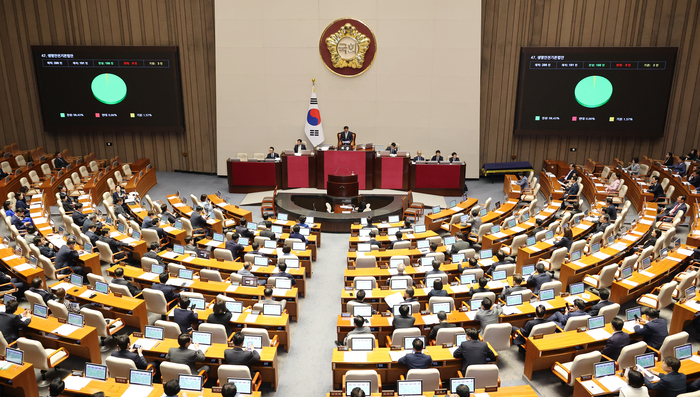
Source: South Korea Crypto FX Rules Spark Debate as Reach May Extend to 'Substantially Similar' Trades
On May 7, the National Assembly passed an amendment bringing cross-border remittances using virtual assets under the Foreign Exchange Transactions Act. Virtual-asset transfer businesses must register, and operating without registration is punishable by up to three years in prison. The amendment also creates criminal penalties for unauthorized currency swaps (hwanchigi) and arbitrage trades exploiting price gaps between domestic and overseas crypto exchanges, commonly referred to in Korea as the kimchi premium. Until now, cross-border fund movements using Bitcoin, Ether, and other virtual assets fell only under the anti-money-laundering framework of the Act on Reporting and Use of Certain Financial Transaction Information, leaving them outside the foreign-exchange regime. This revision is the first legislative step to close that gap. It takes effect six months after promulgation, possibly as early as November.
Lawyers have pointed to three common concerns: the regulatory scope could be far broader than expected, the practical reach of the criminal provisions remains unclear, and most of the core standards have been delegated to a presidential decree. The amendment defines "virtual-asset transfer business" in two categories. First, it covers virtual-asset service providers moving virtual assets between South Korea and foreign jurisdictions through sale, purchase, or exchange. Second, it covers cases that produce a "substantially similar effect" as defined by presidential decree. The second category could capture transactions structured as domestic trades in form if their economic effect mirrors a cross-border transfer, potentially pulling in stablecoin trades and structures routed through decentralized exchanges (DEXs).
1.2 Commentary
1.2.1 Moyed (ASA Contributor) – An FX Act Amendment That Leaves Everything to the Decree: The Real Regulatory Shape Will Emerge Before November
The essence of this amendment is less the declaration that virtual assets are now subject to the foreign-exchange regime, and more the fact that almost every meaningful variable defining its scope has been delegated to the presidential decree. The statute names cross-border transfers by virtual-asset service providers as the regulated activity, but the second definition, "substantially similar effect," is what will determine actual reach. Buying stablecoins with won and moving them to an overseas exchange before converting into dollars, swapping tokens through a DEX, or even trading stablecoins between domestic exchanges could all be in or out of scope depending on a single sentence in the decree.
This is why the law firms uniformly highlight the decree as the decisive piece. Yoon Ju-ho of Bae, Kim & Lee zeroes in on the definition of "unjust gains," Shin Dong-chan and Kim Si-mok of Yulchon on the applicability of the criminal provisions, and Shim Hee-jung and Yoo Jeong-han of Jipyong on the need to unify the meaning of "transfer." This legislation will likely become a watershed for the next phase of Korea's virtual-asset market. In a market where kimchi-premium arbitrage and informal currency swaps have effectively been tolerated, simply adding criminal penalties sends a strong signal. Yet much as the Digital Asset Basic Act's stablecoin clauses have drifted for more than a year over the question of who can issue them, the FX Act decree will likely take significant time to reconcile differences among the Bank of Korea, the Financial Services Commission, and the Ministry of Economy and Finance. The first real reading of regulatory scope will come whenever a draft decree is published before the November effective date.
2. Japan FSA Reclassifies Foreign Trust-Type Stablecoins as Payment Instruments, Absorbing Global Assets Through an 'Equivalence' Standard
2.1 [News] From FIEA 'Securities' to PSA 'Electronic Payment Instruments': From June 1, USDC and Other Foreign Assets Gain a Path Into Japan's Payment Rails
Source: Japan’s FSA opens qualified path for foreign trust-type stablecoins under new payment rules
Japan's Financial Services Agency (FSA) has finalized an ordinance reclassifying foreign trust-type stablecoins from "Securities" under the Financial Instruments and Exchange Act (FIEA) to "Electronic Payment Instruments" under the Payment Services Act (PSA). Stablecoins issued by foreign trust banks were previously bucketed as "specific trust beneficial rights," which made everyday payment use practically impossible. The amendment now gives them a clear legal footing as payment instruments. A newly added Item 4 under PSA Article 2, Paragraph 5 creates a dedicated track for foreign-issued assets, allowing entry into Japan's payment infrastructure conditional on meeting an "Equivalence" standard.
The Equivalence standard rests on four mandatory pillars. First, issuers must hold a foreign license equivalent to Japan's Banking Act or PSA and be supervised by a foreign administrative authority capable of robust information sharing with the FSA. Second, backing assets must be managed under standards equivalent to Japanese trust laws, verified by a Foreign Certified Public Accountant or equivalent audit firm. Third, issuers must possess the operational capacity to suspend transactions and freeze assets when notified by authorities of fraud, money laundering, or other criminal activity. Fourth, backing assets must be denominated in the same currency as the digital asset itself. Domestic specific trusts are generally bound by a 50% government-bond floor on backing assets, but for foreign issuers the FSA adopts a "performance-based equivalence" approach: if an issuer can demonstrate that its asset composition sufficiently limits credit, liquidity, and price risk to guarantee redemption at par, the FSA signals a willingness to grant approval.
Public consultation ran from February 3 to March 5, 2026, and 16 technical comments were reviewed. The amended ordinances were promulgated on May 19 and take effect on June 1. Transitional provisions ensure that acts committed before June 1 remain subject to the previous penal standards. In its official responses to the consultation, the FSA explicitly addressed architectures used by assets such as USDC, paving a compliant entry path for global stablecoin issuers.
2.2 Commentary
2.2.1 Moyed (ASA Contributor) – Japan's Strategy to Absorb Global Payment Assets, With 'Equivalence' as the Tool
The core of this ordinance is that Japan has moved one step beyond cultivating domestic stablecoins and entered a stage of actively absorbing global stablecoins into its own payment infrastructure. The 2023 PSA revision made Japan the first country in the world with a working framework for fiat-backed stablecoin issuance and distribution, and the 2025 launch of JPYC, the first yen-denominated stablecoin, set the domestic issuance machinery in motion. But Japan's market alone is not large enough to set a global payment standard, and what users actually want to hold is dollar-denominated assets. The FSA chose to face this reality head-on, opting to admit foreign assets through the Equivalence gate rather than block them outright.
The clever part of the Equivalence approach is not mere mutual recognition, but the adoption of a "performance-based" evaluation for backing assets. Domestic issuers must hold at least 50% in government bonds, but foreign issuers are granted compositional flexibility as long as they can guarantee redemption at par. In effect, this accepts the asset structure of USDC, which is composed of short-term US Treasuries and cash equivalents, more or less as is. At the same time, by requiring information-sharing arrangements with foreign supervisors, the FSA gives any foreign issuer that wants Japanese market access an incentive to deepen cooperation with its own home regulator. Japan opens its market while simultaneously gaining diplomatic leverage to strengthen regulatory cooperation abroad through that market access.
This move lands at a moment when Hong Kong, Singapore, and Korea are all working out their own stablecoin regimes. Hong Kong is keeping a tight cap on issuance licenses to control domestic supply, Singapore permits domestic issuance under MAS guidelines but requires single-currency pegs, and Korea remains stuck on the question of who can issue at all. Japan, in contrast, runs a "domestic issuance track" and a "foreign asset acceptance track" in parallel, building what may be the most open and at the same time most rule-bound market for global payment assets in Asia. The moment the first foreign trust-type stablecoin registers in Japan after June 1 will mark the opening of the next phase in Asia's stablecoin competition.
3. Franklin Templeton and DigiFT Bring the BENJI Platform to Asia, Setting the Stage for the Next Chapter of Institutional Tokenization
3.1 [News] A $1.74 Trillion AUM Asset Manager's Tokenized MMF Opens to Asian Institutional Investors Through a Singapore-Regulated Exchange
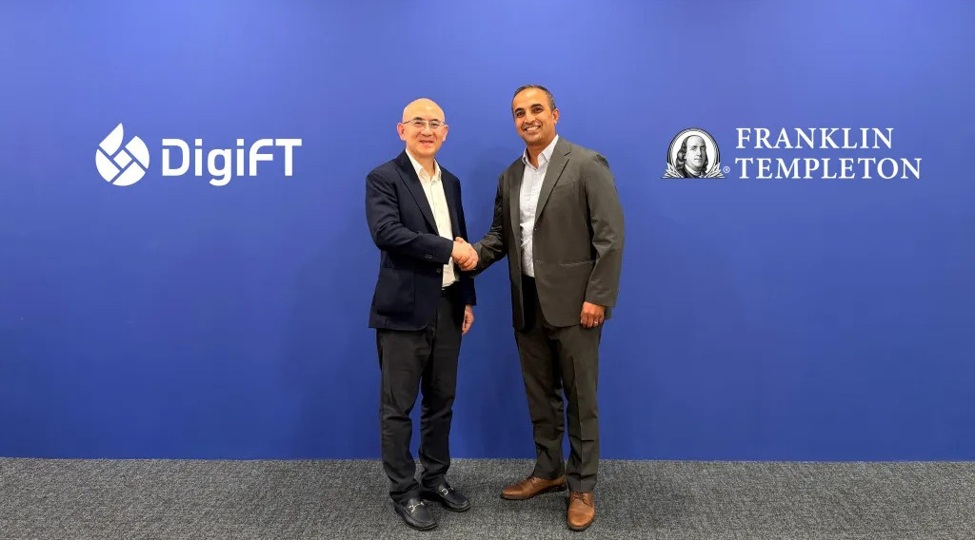
Source: BENJI Lands in Asia: Franklin Templeton and DigiFT Partner for Institutional Tokenisation
Franklin Templeton and Singapore-regulated digital-asset exchange DigiFT have announced a long-term strategic partnership to make the Benji Technology Platform and related tokenized products available to accredited and institutional investors. The Benji platform is Franklin Templeton's blockchain-based system for managing and transferring tokenized investment assets, and it is the underlying infrastructure for FOBXX (Franklin OnChain U.S. Government Money Fund), the first US-registered mutual fund to use a public blockchain as its official system of record for transaction processing and share ownership, launched in 2021.
DigiFT holds a Capital Markets Services (CMS) license, Recognised Market Operator (RMO) status, and a custodial license for tokenized assets from the Monetary Authority of Singapore (MAS), and Type 1 (dealing in securities) and Type 4 (advising on securities) licenses from the Hong Kong SFC. Existing partners include UBS Asset Management, Invesco, Wellington Management, DBS Bank, and CMBI Asset Management, and DigiFT has previously launched a tokenized stable-income strategy with Taikang AM (HK). Through this partnership, DigiFT will serve as the key channel for distributing BENJI products to institutional investors across Asia.
The tokenized real-world asset (RWA) market grew from roughly $5.5 billion to $18.6 billion on public blockchains over the course of 2025, with tokenized US Treasuries serving as the main engine. As of early 2026, the tokenized US Treasury market sits at roughly $12-13 billion, with BlackRock BUIDL at about $2.4 billion (around 40% market share), Ondo's OUSG and USDY at about $2.6 billion combined, Circle-owned USYC at about $2.7 billion, and Franklin Templeton BENJI at about $1.9 billion, marking the start of a real competitive field. The Benji platform also embeds a patent-pending Intraday Yield mechanism for tokenized assets backed by US Treasuries.
3.2 Commentary
3.2.1 Moyed (ASA Contributor) – The Game After Stablecoins: The Asia Entry Path for Tokenized MMFs
As stablecoins settle in as the standard payment asset of digital finance, attention has naturally shifted to what comes next. That the next chapter is tokenized money-market funds (MMFs) is already evident in the data. While the broader RWA market more than tripled in 2025, from $5.5 billion to $18.6 billion, tokenized US Treasuries were the main driver of that growth, reaching roughly $13 billion in early 2026. As stablecoins lock in as the "non-yielding payment asset," tokenized MMFs are evolving into the "yield-bearing payment asset," opening the on-chain entry path for institutional capital.
Franklin Templeton's trajectory shows the most consistent strategy in this market. FOBXX launched on Stellar in 2021 as the first US-registered MMF to use a public blockchain as its official system of record, then expanded across Polygon, Arbitrum, Avalanche, Aptos, Ethereum, and BNB Chain. Over the past five years, BENJI's cumulative peer-to-peer transfer volume has surpassed $211 million, and its investor base has grown by 140%. Whereas the competing BlackRock BUIDL entered the market through Securitize as an external tokenization agent, Franklin Templeton owns the Benji platform itself and controls issuance, transfer, and settlement infrastructure end to end.
Choosing DigiFT as the Asian channel is itself revealing. DigiFT is one of the only tokenization venues in Asia to hold MAS CMS, RMO, and custody licenses together, and to layer Type 1 and Type 4 licenses from the Hong Kong SFC on top of that. The fact that UBS, Invesco, Wellington, and DBS are already partners suggests DigiFT is becoming the standard gateway for Asian institutional capital entering tokenized assets. For Franklin Templeton, this is a way to reach Asian institutional capital under the dual supervisory frameworks of Singapore's Project Guardian and the Hong Kong SFC's tokenized fund guidelines without having to build its own broker-dealer footprint in the region.
4. Other News
This section is provided by rwa.xyz. To receive the latest stablecoin and RWA news, join RWA.xyz Newswire.
4.1 Theme 1. Banks and Institutions Accelerate Full-Stack Digital Asset Infrastructure Integration
4.1.1 Standard Chartered Acquires Zodia Custody, Moving Digital Assets Into Core Banking
- Crypto custody moves from SC Ventures into the Corporate and Investment Banking (CIB) division, the most comprehensive digital-asset stack assembled by any globally systemically important bank
- Zodia continues as a standalone white-label custody SaaS platform serving third-party banks and fintechs, removing overlap with internal services
- Completes a full-stack infrastructure spanning custody, trading, tokenization, market making, prime brokerage, and stablecoins
4.1.2 BitGo Launches Modular Digital Asset Infrastructure Platform for Banks
- Banks can integrate custody, trading, settlement, staking, and stablecoin services individually while retaining full control over compliance and governance
- Adopted by Erebor Bank, Banco de Crédito del Perú, TowerBank, and InvestiFi, among others
- Q1 2026 revenue of $3.8 billion, more than double the $1.8 billion of the year-ago quarter, driven by stablecoin and trading demand
4.1.3 Augustus Bank Receives Conditional OCC Approval for AI-Powered Stablecoin Clearing Bank
- The OCC grants conditional approval under the GENIUS Act for a Dallas-based national bank focused on stablecoins, AI-driven compliance, and automated operations
- CEO Ferdinand Dabitz argues that legacy banks cannot rebuild their systems from the ground up for AI and programmable money, positioning Augustus to replace correspondent clearing dominated by Citi and others
- Plans a three-layer stablecoin model: payment rail, treasury tool to unlock $3 trillion in trapped liquidity, and AI-agent interface
4.2 Theme 2. Korea, Hong Kong, and Japan Expand Tokenization and Stablecoin Infrastructure
4.2.1 KB Financial Completes Full-Cycle Won Stablecoin PoC Across Issuance, Payments, and Remittances
- Tests the full lifecycle of a Kaia-based won stablecoin: issuance, payments, settlement, and cross-border remittance
- Demonstrates QR-based offline payment at a Hollys Coffee store with automatic on-chain settlement and no separate digital wallet
- Cross-border remittance to Vietnam completed in 3 minutes with fees 87% lower than SWIFT, converting won to dollar stablecoin on chain
4.2.2 Shinhan Financial in Early Talks With Hong Kong Regulator for Expanded Digital Asset License
- Shinhan Investment & Securities seeks to broaden its Hong Kong license scope to cover security token offerings (STOs) and real-world asset (RWA) tokenization
- Targets professional investors, family offices, and high-net-worth individuals under a compliance-first approach
- Signals accelerating convergence of traditional finance and digital assets in Asia, and a license-acquisition race among Korean financial institutions in Hong Kong
4.2.3 XCURE and AlloyX Form Korea-Hong Kong JV for Asset Tokenization and Digital Security
- Joint venture combines digital asset wallet security, real-world asset tokenization, and stablecoin payment infrastructure
- Plans to launch USIM/eSIM-based security services and institutional wallet packages within six months, followed by initial Korea-Hong Kong tokenization deals
- Combines XCURE's quantum-resistant encryption with AlloyX's tokenization platform and stablecoin payment network
4.2.4 Japan's Ruling LDP Formally Adopts 'AI and On-Chain Finance' National Strategy
- The Liberal Democratic Party adopts the "Next-Generation AI and On-Chain Finance Concept" to build automated infrastructure supporting 24/7 AI-driven commerce on blockchain rails
- Backs tokenized deposits, including Bank of Japan current-account deposits, and yen-denominated stablecoins under clear legal frameworks
- A five-year roadmap to translate the concept into government policy, including public-private cooperation and regional partnerships across Asia
4.3 Theme 3. Emerging Markets and National Strategies Adopt Tokenization and Stablecoins
4.3.1 Saudi Arabia Pushes $12.5 Billion Initiative to Tokenize Its Multi-Trillion-Dollar Economy
- Faisal Monai, architect of Saudi Arabia's digital payment system, leads droppRWA in tokenizing real estate, energy, and manufacturing by 2030
- Stablecoin-based real estate settlement expected to go live in late 2026, compressing global capital flows from days to minutes under strict regulation
- Blockchain-based "always-on" settlement infrastructure positioned to insulate Gulf wealth from economic shocks, complementing rather than replacing the US dollar
4.3.2 Fasset Raises $51M Series B to Expand Blockchain-Based Banking in Emerging Markets
- Processes $32 billion in annualized transaction volume across 125 countries and 2 million wallets, serving unbanked populations with stablecoin and blockchain-based cross-border payments
- Plans to expand regulated banking infrastructure across 50+ corridors and enter new markets in Asia, Africa, and the Americas, with lending, SME banking, and trade finance services to follow
- Holds regulatory approvals in the UAE, Indonesia, EU, Turkey, Pakistan, and Malaysia; recently partnered with Tether to develop a gold-backed neobanking card and ATM network
The author of this report may have personal holdings or financial interests in assets or tokens discussed herein. However, the author affirms that no transactions have conducted using material non-public information obtained in the course of research or drafting. This report is intended solely for general information purposes and does not constitute legal, business, investment, or tax advice. It should not be used as a basis for making any investment decisions or as guidance for accounting, legal, or tax matters. Any references to specific assets or securities are made for informational purposes only and should not be construed as an offer, solicitation, or recommendation to invest. The opinions expressed herein are those of the author and may not reflect the views of any affiliated institutions, organizations, or individuals. The opinions and analyses expressed herein are subject to change without prior notice. In addition, beyond the individual disclosures included in each report, Four Pillars, may hold existing or prospective investments in some of the assets or protocols discussed herein. Furthermore, FP Validated, a division of Four Pillars, may already be operating as a node in certain networks or protocols discussed herein or may do so in the future. Please see below links in the footer for FP Validated's participating network disclosures and for broader disclosure details.


