


Table of Contents
- 1. Japan Reclassifies Digital Assets as Financial Products, Opening the Door to ETFs and Tax Reform
- 2. In Korea, Deposit Tokens and Tokenized Government Bonds Move First as Won Stablecoin Legislation Lags
- 3. SBI Connects Japan and Southeast Asian Digital Finance Through Its Acquisition of Singapore's Coinhako
- 4. Other News
- 4.1 Theme 1. Expansion of Stablecoin Payments and Yield Products
- 4.2 Theme 2. Tokenized Assets and Capital Market Infrastructure
- 4.3 Theme 3. Stronger Policy Clarity and AML Controls
Researcher

Japan’s reclassification of digital assets as financial products leads this week’s ASA News, alongside Korea’s deposit token push and SBI’s Coinhako acquisition.
1. Japan Reclassifies Digital Assets as Financial Products, Opening the Door to ETFs and Tax Reform

Key Update
- Japan's House of Councillors passed amendments on July 15 that move digital asset regulation from the Payment Services Act into the Financial Instruments and Exchange Act, redefining digital assets as financial products for the first time.
- The amendment introduces issuer disclosure obligations, insider trading rules, an administrative monetary penalty system, and much tougher criminal penalties for unregistered sales (up to ten years in prison and fines up to 10 million yen).
- Taxation may shift from comprehensive rates of up to 55% to separate taxation at around 20%, potentially from January 1, 2028, and spot ETFs have become the core next agenda item.
Commentary: From Payment Instrument to Financial Product, Japan's Regulatory Center of Gravity Shifts
Japan's amendment marks a change in regulatory philosophy, not just a change of legal home. By moving digital assets from the Payment Services Act to the Financial Instruments and Exchange Act, regulators now treat them as investment assets and market infrastructure rather than payment tools. Instead of trying to suppress price volatility, Japan has chosen to manage volatile assets inside the discipline of the regulated market.
The design logic of the amendment is deliberate balance. Insider trading rules, issuer disclosures, and heavier penalties for unregistered sales raise the threshold for entering the market. Meanwhile, the prospect of a roughly 20% tax rate and spot ETFs lowers the barrier for institutional capital.
The regional comparison shows how distinctive this path is. Korea's Basic Digital Asset Act and its debate over eligible won stablecoin issuers remain stalled in the National Assembly. Hong Kong opens specific use cases first, such as stablecoin licenses and tokenized fund approvals, and Singapore controls entry operator by operator through MAS licensing. Japan alone is redefining the legal nature of the entire market first, then building tax reform and ETFs on that foundation.
If the structure works, the payoff is significant. Japan's digital asset market would not merely progress from issuance to usage. It would be reorganized as investment market infrastructure capable of absorbing institutional capital through securities accounts and asset management channels.
2. In Korea, Deposit Tokens and Tokenized Government Bonds Move First as Won Stablecoin Legislation Lags
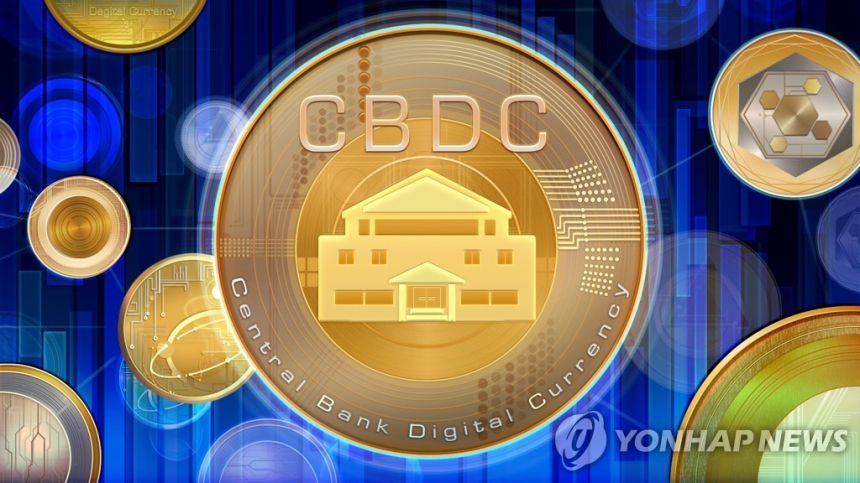
Source: Bank of Korea Accelerates Digital Deposit Innovation with Phase 2 of Project Hangang
Key Update
- The Bank of Korea will soon begin Project Hangang Phase 2, with live deposit token transactions expected as early as September.
- In the same week, the Ministry of Economy and Finance announced 2027 pilots to disburse treasury funds using deposit tokens and to tokenize government bonds on blockchain.
- The Basic Digital Asset Act remains delayed over eligible issuers of won stablecoins and limits on major shareholders' stakes in exchanges, with legislation targeted within 2026.
Commentary: The Digitization of Bank Deposits Is Moving Ahead of Stablecoins
Korea's direction is best read as a sequencing choice: the central bank and commercial banks are testing deposit tokens first while the institutionalization of won stablecoins waits. Project Hangang Phase 2 is more than a CBDC experiment; it tests whether bank deposits can move into digital form for real payments and settlement. In effect, Korea is bypassing the contested issuer debate by accelerating a unified ledger experiment that connects deposits directly to the central bank system.
The addition of treasury funds and government bond tokenization raises the stakes. When subsidy payments, deposit tokens, and bond tokenization sit in one policy package, digital money stops being a retail payments pilot and becomes public finance infrastructure. The government appears to view blockchain rails as a way to cut costs in fiscal execution and capital market settlement, which is a broader ambition than treating stablecoins as private payment instruments.
The regional comparison clarifies Korea's position. Korea trails Japan on legal classification and taxation, yet its experiments run closer to the central bank than anywhere else in the region. Hong Kong advances through licensed private issuers and tokenized funds, and Singapore disciplines private operators through payment and remittance licenses, while Korea puts the central bank and public finances in front.
The open question is how this sequencing resolves. If won stablecoin legislation slips further, deposit tokens could become the default pathway for digital money in won. The indicators to watch are how many real use cases deposit tokens capture in live transactions and how their relationship with private stablecoins is eventually defined.
3. SBI Connects Japan and Southeast Asian Digital Finance Through Its Acquisition of Singapore's Coinhako
Source: SBI Holdings Makes Singapore's Coinhako a Consolidated Subsidiary
Key Update
- SBI Holdings acquired a majority stake in Coinhako through SBI Ventures Asset (Singapore), completing the deal on July 16 with MAS approval and making Coinhako a consolidated subsidiary.
- Coinhako holds a MAS Major Payment Institution license through Hako Technology and has provided trading and custody for more than 100 digital assets across Asia since 2014.
- SBI plans to integrate JPYSC, Japan's first trust type yen stablecoin, and is simultaneously pursuing its Solana collaboration, Ondo Finance RWA partnership, and JPYSC lending services.
Commentary: How Japan's Vertical Integration Model Crosses Borders
SBI's acquisition of Coinhako is best understood as vertical integration crossing a border, not as one more overseas exchange purchase. Within Japan, SBI already gathers exchanges, stablecoins, tokenized assets, and lending under one group. Adding a platform that holds a Singapore Major Payment Institution license gives that stack a regulated distribution outlet, connecting issuance in Japan with usage in Southeast Asia.
The comparison across markets underscores how aggressive SBI's pace is. Korean financial groups are investing in digital asset funds and infrastructure, but exchange ownership and issuer rules remain political questions at home. Hong Kong's institutional entry is led by global banks and asset managers through licenses and fund approvals, whereas Japan lets financial groups own the infrastructure directly and reach abroad through operators licensed in Singapore.
Singapore's role completes the picture. If Hong Kong is the offshore hub between China and global banks, Singapore functions as a permissioned gateway for digital asset distribution in Southeast Asia. By securing that gateway, SBI positions yen stablecoins and tokenized assets to travel beyond Japan, and the markets a financial group secures first will shape where its assets circulate.
4. Other News
4.1 Theme 1. Expansion of Stablecoin Payments and Yield Products
4.1.1 Japanese Card Network JCB Partners with Circle to Explore Stablecoin Collaboration
- JCB partnered with Circle to explore USDC payments and international remittances, starting with an internal funds transfer PoC and global treasury management, opening a parallel structure between dollar and yen stablecoins in Japan's payment networks.
4.1.2 SBI to Pay 3% Annual Yield for Three Month Yen Stablecoin Deposits
- SBI VC Trade launched a lending service for JPYSC paying around 3% annualized yield on 12 week deposits, a Japanese style experiment in stablecoins expanding beyond payments into investment products.
4.1.3 Cebuana Lhuillier Builds Stablecoin Payment Rails with Fireblocks and Solana Support
- Philippine remittance company Cebuana Lhuillier is building stablecoin payment rails with Fireblocks and Solana support, broadening competition in digital payment infrastructure for Southeast Asia's remittance market.
4.2 Theme 2. Tokenized Assets and Capital Market Infrastructure
- SBI Holdings and Ondo Finance will pursue Japanese asset tokenization, exploring Japanese equities on Ondo's platform with JPYSC for settlement and collateral, opening an institutional RWA pathway between Japan's capital markets and the global tokenized asset market.
4.2.2 DigiFT and SBI Launch Tokenized Japanese Equity Fund on Solana
- DigiFT and SBI Global Asset Management launched the JX token, a tokenized fund of high dividend Japanese equities for qualified and institutional investors that tests 24 hour circulation of exposure to Japanese equities.
4.2.3 Baillie Gifford Secures SFC Approval for Tokenized Bond Fund in Hong Kong
- Baillie Gifford received SFC approval to offer a tokenized bond fund to professional investors on a public blockchain, a signal that Hong Kong's tokenization market is expanding beyond experimentation into approved fund products.
4.2.4 Doppler and SBI Digital Finance Partner to Build XRP Financial Infrastructure
- Doppler Finance and SBI Digital Finance partnered on XRP lending and collateral infrastructure for institutional investors, expanding Japan's tokenized financial infrastructure beyond equities and bonds into collateralized digital asset markets.
4.3 Theme 3. Stronger Policy Clarity and AML Controls
4.3.1 Bank of Thailand Strengthens AML Monitoring of Stablecoins Including USDT
- The Bank of Thailand, in coordination with Thailand's SEC, is intensifying monitoring of USDT and large stablecoin transactions to bring the routes used by Southeast Asian scam funds under regulated oversight.
4.3.2 Pakistan's Push to Bring Virtual Assets into the Regulated System Reignites Islamic Law Debate
- Pakistan's Virtual Assets Regulatory Authority is discussing institutionalization of stablecoins and RWA tokens with both technical and Sharia review, making regulatory design that distinguishes asset backed tokens from speculative assets a key variable for market expansion.
- With blockchain transaction activity in Asia Pacific up 69% year over year to roughly $22.4 trillion, WebX 2026 presented policy clarity, trust, and liquidity as the next axes of competition for Asia's digital asset market.
4.3.4 China Responds to Dollar Stablecoins by Using Hong Kong as a Yuan Hub
- China presented a plan to use Hong Kong as an offshore hub for yuan liquidity, gold settlement, and bond access, positioning the city as the meeting point between the global stablecoin market and China's currency strategy.
*[ASA News] is a weekly newsletter where we share the most important news related to stablecoin in Asia. (2026.07.13~07.19)
The author of this report may have personal holdings or financial interests in assets or tokens discussed herein. However, the author affirms that no transactions have conducted using material non-public information obtained in the course of research or drafting. This report is intended solely for general information purposes and does not constitute legal, business, investment, or tax advice. It should not be used as a basis for making any investment decisions or as guidance for accounting, legal, or tax matters. Any references to specific assets or securities are made for informational purposes only and should not be construed as an offer, solicitation, or recommendation to invest. The opinions expressed herein are those of the author and may not reflect the views of any affiliated institutions, organizations, or individuals. The opinions and analyses expressed herein are subject to change without prior notice. In addition, beyond the individual disclosures included in each report, Four Pillars, may hold existing or prospective investments in some of the assets or protocols discussed herein. Furthermore, FP Validated, a division of Four Pillars, may already be operating as a node in certain networks or protocols discussed herein or may do so in the future. Please see below links in the footer for FP Validated's participating network disclosures and for broader disclosure details.


