


Table of Contents
- Key Takeaways
- 1. A Quick Refresher on LUNA–UST
- 1.1 Price-Stabilization Mechanism
- 1.2 The Vicious-Cycle Scenario
- 1.3 The Collapse of LUNA–UST
- 2. MSTR–STRC
- 2.1 Capital-Raising Methods
- 2.2 STRC Price-Stabilization Mechanism
- 2.3 Vicious-Cycle Scenario
- 3. LUNA–UST vs. MSTR–STRC
- 3.1 Price-Stabilization Mechanism
- 3.2 Collateral / Claims
- 3.3 Interest / Dividend Payments
- 3.4 Death-Spiral Scenario
- 4. Is MSTR–STRC Sustainable?
- 4.1 The Sustainability of Capital Raising Is the Key
- 4.2 What If Strategy Goes Bankrupt?
- 4.3 Upcoming Convertible Note Maturities
- 5. The Key Is Surviving the Next Six Months
Researcher


Key Takeaways
- UST and STRC may look very similar in that 1) their prices are guided toward a specific reference level, 2) holders can earn a high yield, and 3) both structures contain the possibility of a death spiral. However, they are fundamentally different in terms of their price-stabilization mechanisms, the existence of legal claims, how interest/dividends are paid, and their internal operating structures.
- For Strategy to remain sustainable, continuous capital raising is essential. To do so, it needs a certain degree of investor confidence—both in the broader market and in Strategy itself. In a worst-case scenario, Strategy may fail to raise additional capital, but that does not necessarily imply a catastrophic “game over” event like LUNA–UST.
- Strategy’s current Net Leverage is around 11%, while its Amplification is around 42%. Even if MSTR and STRC were to enter a negative feedback loop, preferred shareholders would likely be able to preserve their principal through claims on residual assets as long as BTC remains above roughly ~$26K. Meanwhile, as long as BTC stays above roughly ~$8K, the probability of bankruptcy caused by debt appears low.
- The next six months will be critical. According to the Bitcoin four-year cycle theory, a bottom is expected in the second half of this year. Coincidentally, Strategy’s USD reserve is estimated to last for roughly six months. The key question is whether Strategy can regain momentum for its capital engine through healthy deleveraging over the next six months.
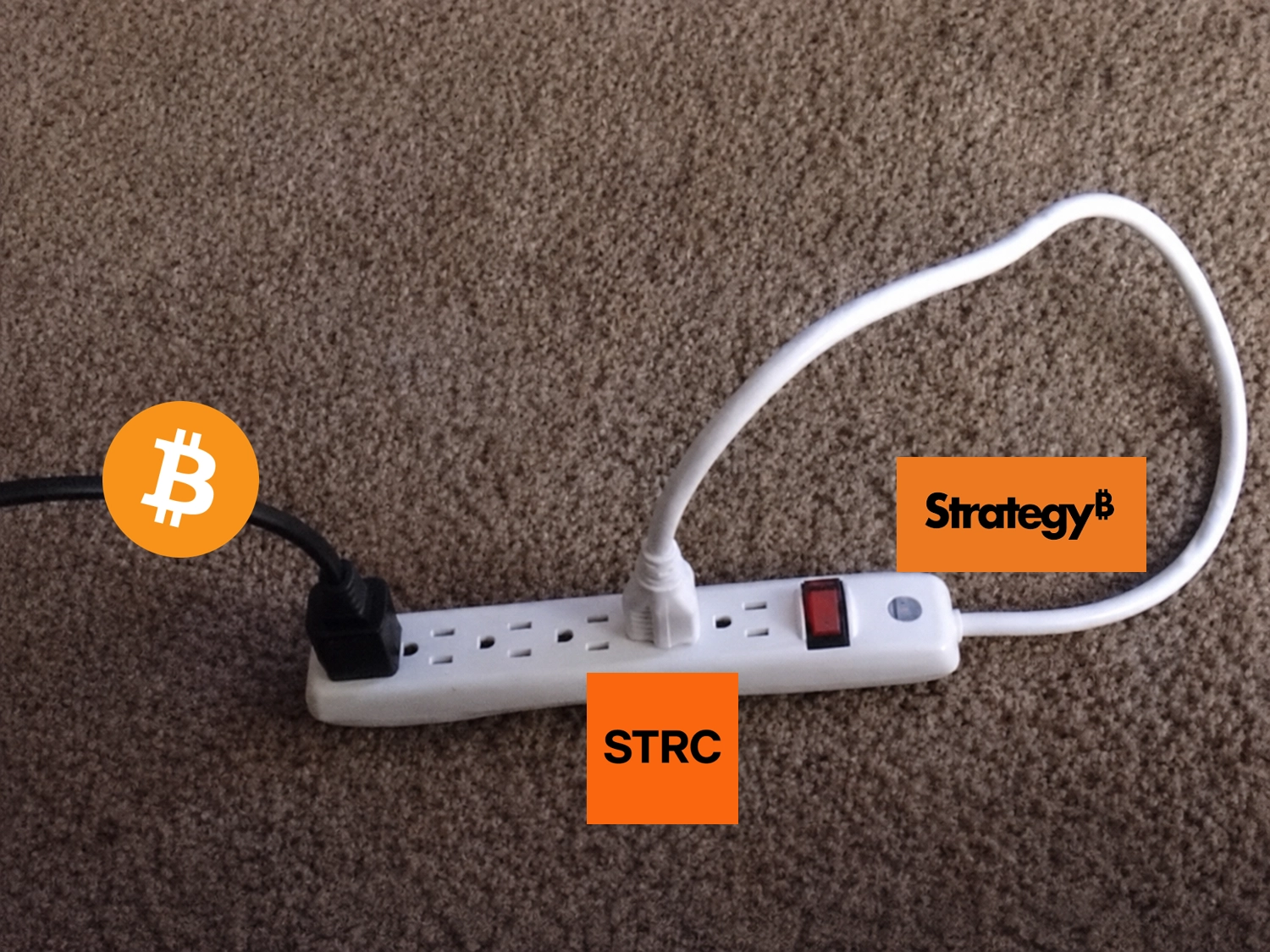
Strategy’s sale of 32 BTC, worth only $2.5 million, wiped out more than $100 billion in Bitcoin market capitalization. STRC, which is designed around a $100 reference price, fell as low as $94. MSTR, which had been trading at $150 per share, dropped to $123.
MSTR, BTC, and STRC are deeply and intricately interdependent. When market conditions are favorable, this structure acts as a capital engine that allows Strategy to aggressively accumulate BTC. But when market conditions deteriorate, as they have recently, the same structure can enter a vicious cycle in which each component negatively reinforces the others.
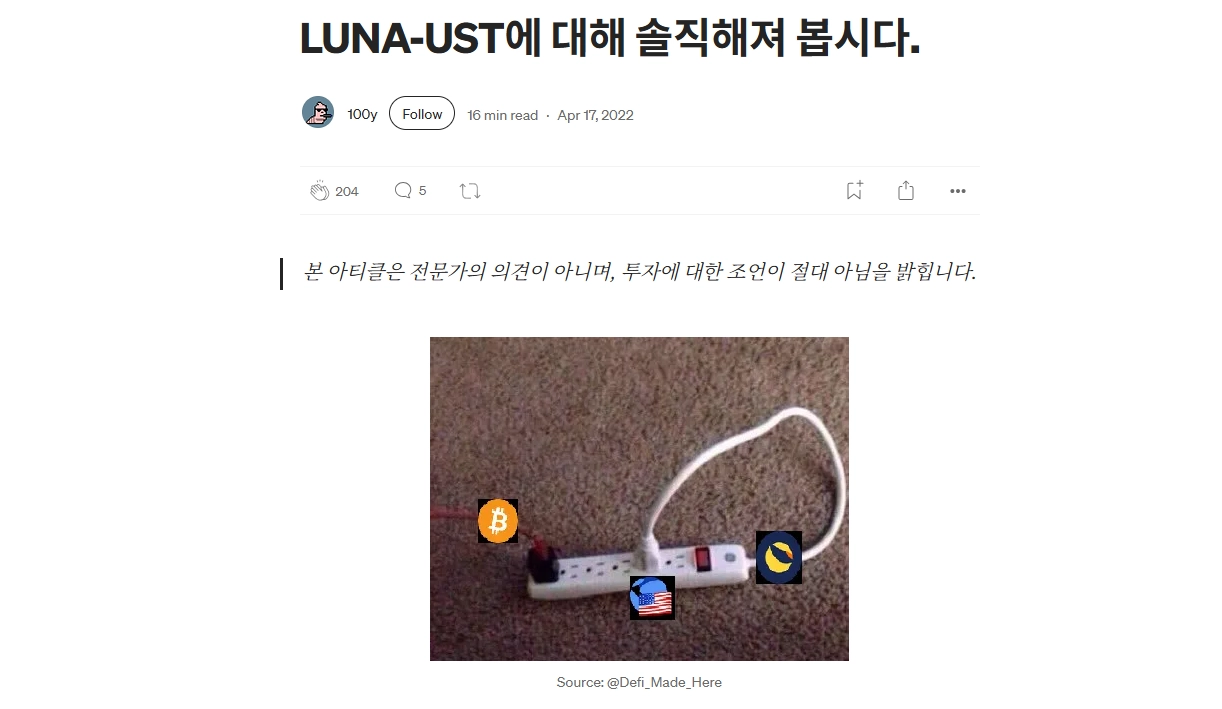
This is reminiscent of the old LUNA–UST structure. So, are MSTR and STRC truly sustainable?
p.s. For context, three weeks before LUNA and UST collapsed, I wrote a Korean post warning about the risks of LUNA–UST. MSTR–STRC does share one similarity with LUNA–UST: both contain a self-reinforcing feedback loop. However, their operating mechanisms and internal structures are completely different. In this piece, I will examine the similarities and differences between MSTR–STRC and LUNA–UST, and assess whether the structure is fundamentally sustainable.
1. A Quick Refresher on LUNA–UST
It has already been more than four years since LUNA–UST collapsed. Let’s quickly revisit what happened.
1.1 Price-Stabilization Mechanism
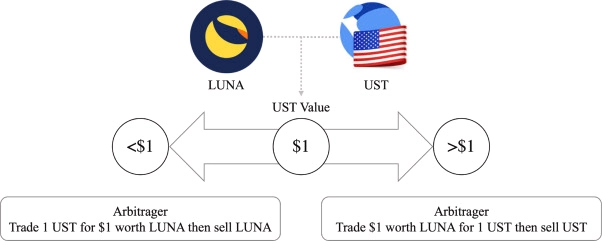
Source: Dissecting the Terra-LUNA crash: Evidence from the spillover effect and information flow
UST was an algorithmic stablecoin. It had no collateral, but it was designed to maintain its peg at $1 through an algorithmic mechanism. The system was built so that 1 UST could always be exchanged for $1 worth of LUNA:
- When 1 UST < $1: Users could burn UST, which was trading below $1, and receive $1 worth of LUNA, capturing the arbitrage spread. Because UST was burned, its supply decreased, which was supposed to push the price of UST back up toward the $1 peg.
- When 1 UST > $1: Users could do the opposite: provide $1 worth of LUNA and receive UST worth more than $1, again capturing the arbitrage spread. Because new UST was minted, its supply increased, which was supposed to push the price of UST back down toward the $1 peg.
1.2 The Vicious-Cycle Scenario
The more UST was issued, the more LUNA supply decreased, which could become a positive driver for LUNA’s price. In fact, Terraform Labs pursued an extremely aggressive business strategy to expand UST’s use cases.
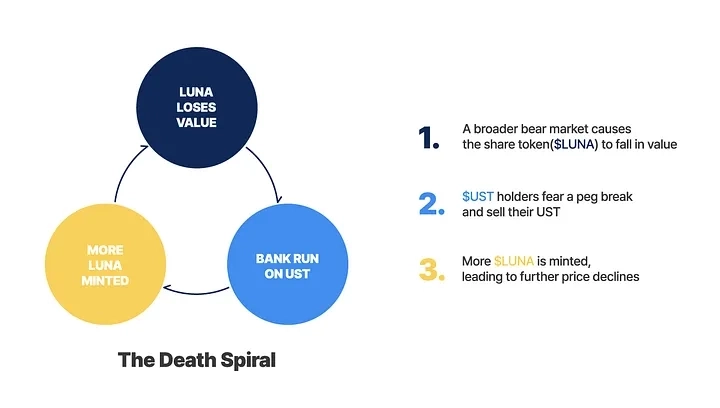
However, once confidence in LUNA–UST began to break down, this same structure could enter a vicious cycle commonly referred to as a death spiral:
- LUNA price falls → confidence in UST declines → UST price falls → LUNA issuance increases → LUNA price falls further
1.3 The Collapse of LUNA–UST
The collapse of LUNA–UST was also driven primarily by a collapse in confidence. As Terraform Labs was in the process of migrating UST liquidity on Curve Finance from the 3pool to the 4pool, the liquidity in the 3pool became relatively thin. At that point, an attacker sold $85 million worth of UST into the 3pool and broke the peg.
This triggered fear among existing UST holders. Large amounts of UST were withdrawn from Anchor Protocol, where users had been able to earn around 20% annual yield simply by depositing UST, and those withdrawals flooded the market with sell pressure.
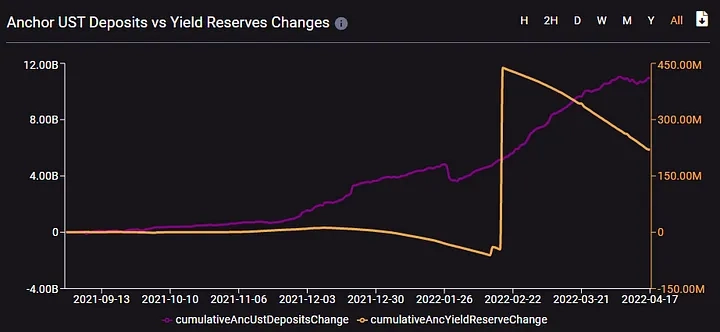
Source: Smartstake
Before the collapse of LUNA–UST, as much as 71% of all UST was deposited in Anchor Protocol alone. When it became increasingly clear that the 20% yield was not sustainable, the Luna Foundation Guard (LFG) even injected $450 million to support the system. Yet even that enormous subsidy was cut in half in just two months, which is something I warned about in my previous post.
As the bank run on UST deposits inside Anchor Protocol intensified, UST rapidly lost its peg. Because of the LUNA–UST peg mechanism, the price of LUNA also collapsed rapidly. The death spiral completely destroyed market confidence in LUNA–UST. In the end, LUNA’s supply exploded from roughly 350 million to around 6.5 trillion—an increase of 17,000x—and its value converged toward zero.
2. MSTR–STRC
One of Strategy’s most important objectives is to increase BPS, or BTC per share. To achieve this, Strategy raises capital through a variety of financial-engineering tools—such as convertible notes, perpetual preferred stock, and common-stock ATM offerings—and uses that capital to increase BPS.
2.1 Capital-Raising Methods
Strategy uses the following capital-raising methods:
* ADSO stands for Assumed Diluted Shares Outstanding. It refers to the total number of current common shares plus all shares that could potentially become common shares in the future. Strategy calculates BPS as “BTC held / ADSO.”
- Common-stock ATM issuance: This is a method by which Strategy issues small amounts of Class A common stock, MSTR, and sells them into the market to raise cash. Common-stock issuance causes ADSO dilution, but as of Q1 2026, when mNAV > 1.22, it can actually increase BPS.
- Convertible notes: These are borrowed funds, but under certain conditions they can be converted into MSTR common stock. Because convertible notes contain option value, Strategy can raise capital at very low interest rates. However, they also create pressure to repay principal.
- Perpetual preferred stock: These are shares whose dividends and liquidation preference rank senior to common stock but junior to creditors. They do not create principal repayment pressure, but they do impose a high dividend burden of close to 10%. In order of liquidation preference, Strategy has STRF, STRC, STRE, STRK, and STRD. Only STRK is convertible preferred stock; the others are non-convertible preferred stock. Because non-convertible preferred stock allows Strategy to raise capital without diluting ADSO, it is Strategy’s preferred funding method.
Strategy currently has to pay roughly $1.71 billion per year in interest and dividends to holders of its convertible notes and perpetual preferred stock. These payments are funded from its USD reserve. The USD reserve has so far been funded mostly through common-stock ATM issuance. Recently, Strategy also drew attention by selling 32 BTC to fund dividend payments.
2.2 STRC Price-Stabilization Mechanism
STRC is designed around a $100 reference price.
- When STRC > $100: Strategy can lower the dividend rate to push the price down, and it can also issue additional STRC to increase supply. In addition, Strategy has the right to redeem STRC for cash at $101 per share, which effectively caps STRC’s upside around $101.
- When STRC < $100: Strategy can raise the dividend rate to push the price up. STRC also has a liquidation preference of $100 per share, which acts as a mechanism that can help guide its price back toward $100.
For reference, STRC is currently paying an annual dividend of 11.50% based on the $100 reference price.
2.3 Vicious-Cycle Scenario
MSTR and STRC also influence each other and form a self-reinforcing feedback loop. When market conditions deteriorate, this structure can enter a vicious-cycle scenario:
- MSTR price falls → mNAV falls → common-stock ATM fundraising becomes more difficult → pressure to sell BTC rises → confidence in STRC declines → STRC price falls → MSTR price falls → …
However, one important point to keep in mind is that Strategy does not necessarily have to pay STRC dividends on time in cash. Cash dividend payments are subject to board declaration and the availability of sufficient funds. If they are not paid, they accumulate on STRC. In addition, Strategy can theoretically lower STRC’s dividend rate down to SOFR, the overnight market rate for borrowing cash against U.S. Treasury collateral.
Therefore, in a truly worst-case scenario, Strategy could gradually lower the dividend rate and defer dividend payments until conditions improve.
3. LUNA–UST vs. MSTR–STRC
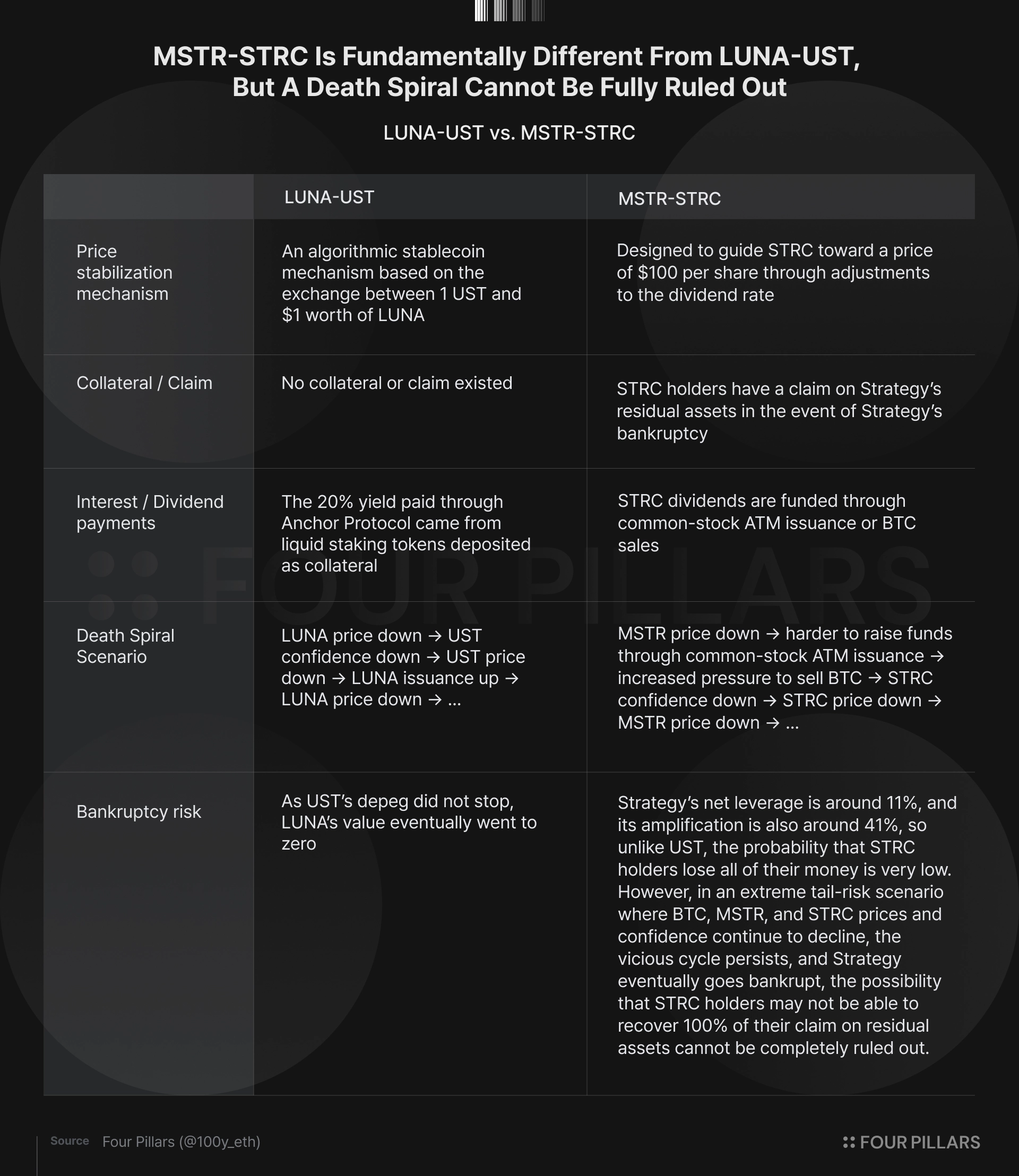
UST and STRC may look very similar in that 1) their prices are guided toward a specific reference level, 2) holders can earn a high yield, and 3) both structures contain the possibility of a death spiral. In reality, however, their internal operating mechanisms are completely different.
3.1 Price-Stabilization Mechanism
In the case of UST, price stabilization was achieved by adjusting the supply of LUNA. In contrast, STRC’s price is managed by adjusting its dividend rate. In other words, UST’s peg mechanism had a direct impact on both the price and supply of LUNA, whereas STRC’s price-stabilization mechanism does not directly affect the price or supply of MSTR.
That said, because the funding for STRC dividends primarily comes from MSTR ATM issuance, if MSTR’s value falls and mNAV drops below 1.22, it may become difficult to restore confidence in Strategy’s ability to continue paying dividends.
3.2 Collateral / Claims
UST had no collateral, which meant it could fall all the way to $0. STRC, as preferred stock, is also not collateralized. However, if the company goes bankrupt, STRC holders have a preferred claim on the company’s residual assets.
STRC has a liquidation preference of $100 per share. However, this does not mean STRC holders are guaranteed to receive $100 per share in the event of bankruptcy. Rather, it means they can claim residual assets only after assets have first been distributed to creditors and to STRF holders, who rank senior to STRC.
3.3 Interest / Dividend Payments
In the case of UST, simply holding UST did not generate interest. However, users could earn around 20% annual yield by depositing UST into Anchor Protocol. That yield came from borrowers on Anchor Protocol: borrowers paid interest to borrow UST, and additional yield was generated from the liquid staking tokens posted as collateral. In other words, while the 20% yield itself was unsustainable, the sources of the yield—1) borrowing interest and 2) staking yield—came from natural market demand.
Source: Strategy
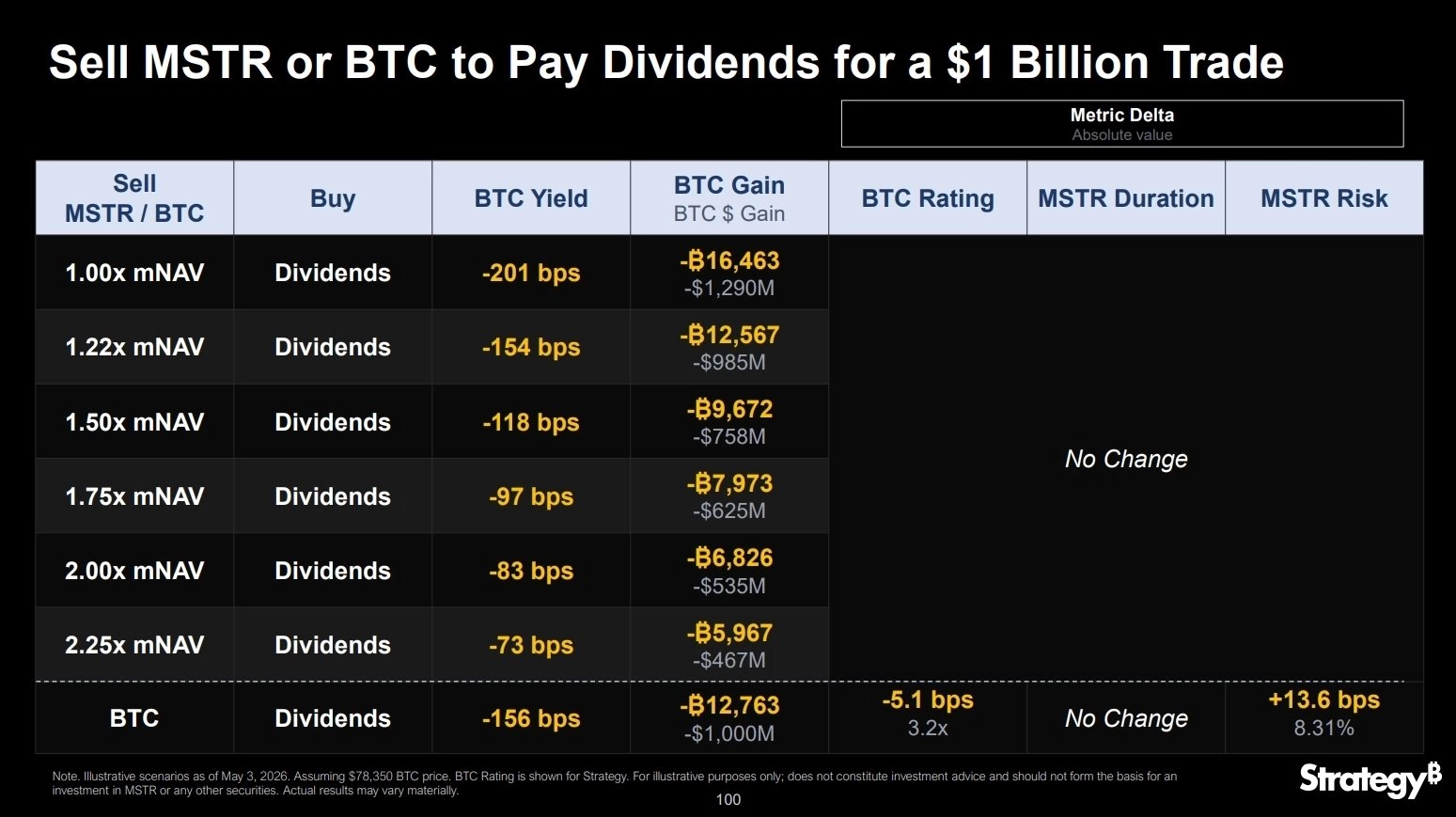
STRC dividends are funded mostly with capital raised through common-stock ATM issuance. However, depending on the situation, as seen on June 1, Strategy may also sell some of its BTC holdings to fund dividend payments. From a BPS perspective, common-stock ATM issuance is advantageous when mNAV is above 1.22, while BTC sales are more advantageous when mNAV is below 1.22.
In a sense, the funding source for STRC dividends is actually less natural than the source of Anchor Protocol’s yield. This is not to say that Anchor Protocol’s 20% yield was natural. Rather, the point is that borrowing interest and staking yield themselves are natural sources of yield. If Anchor Protocol had offered a much lower yield instead of 20%, it could have been sustainable. For STRC dividends to remain sustainable, mNAV needs to stay consistently around 1.22 or higher, which requires continued BTC price appreciation and sustained investor confidence in Strategy.
3.4 Death-Spiral Scenario
The LUNA–UST death-spiral scenario was straightforward: as UST’s price fell, more LUNA was issued, which pushed LUNA’s price lower, which then further damaged confidence and pushed UST’s price down again.
The STRC death-spiral scenario is more complex. However, there are two fundamental differences.
- First, the direct linkage in the death spiral is weaker than it was in LUNA–UST. Imagine a worst-case scenario in which mNAV is far below 1.22 and Strategy is struggling to pay STRC dividends. MSTR is not structured like an on-chain protocol where supply automatically increases in order to pay STRC dividends. In addition, Strategy can defer STRC dividend payments in an extreme scenario. Whereas LUNA–UST’s protocol automatically accelerated the death spiral between the two assets, MSTR–STRC has several braking mechanisms.
- Second, there is the existence of a legal claim. UST had no collateral to redeem against even if its price went to zero. STRC, on the other hand, gives holders the right to claim residual assets if Strategy goes bankrupt. This can help provide downside support for STRC’s price.
The key point here is that the common catalyst for both death spirals is “confidence.” As long as investor confidence in LUNA—or in this case, MSTR—remains strong, the structure can continue functioning. The biggest problem arises when that confidence collapses. MSTR’s $2.5 million BTC sale may not seem like a major issue intellectually, but emotionally, for investors, it can feel like a very big deal.
4. Is MSTR–STRC Sustainable?
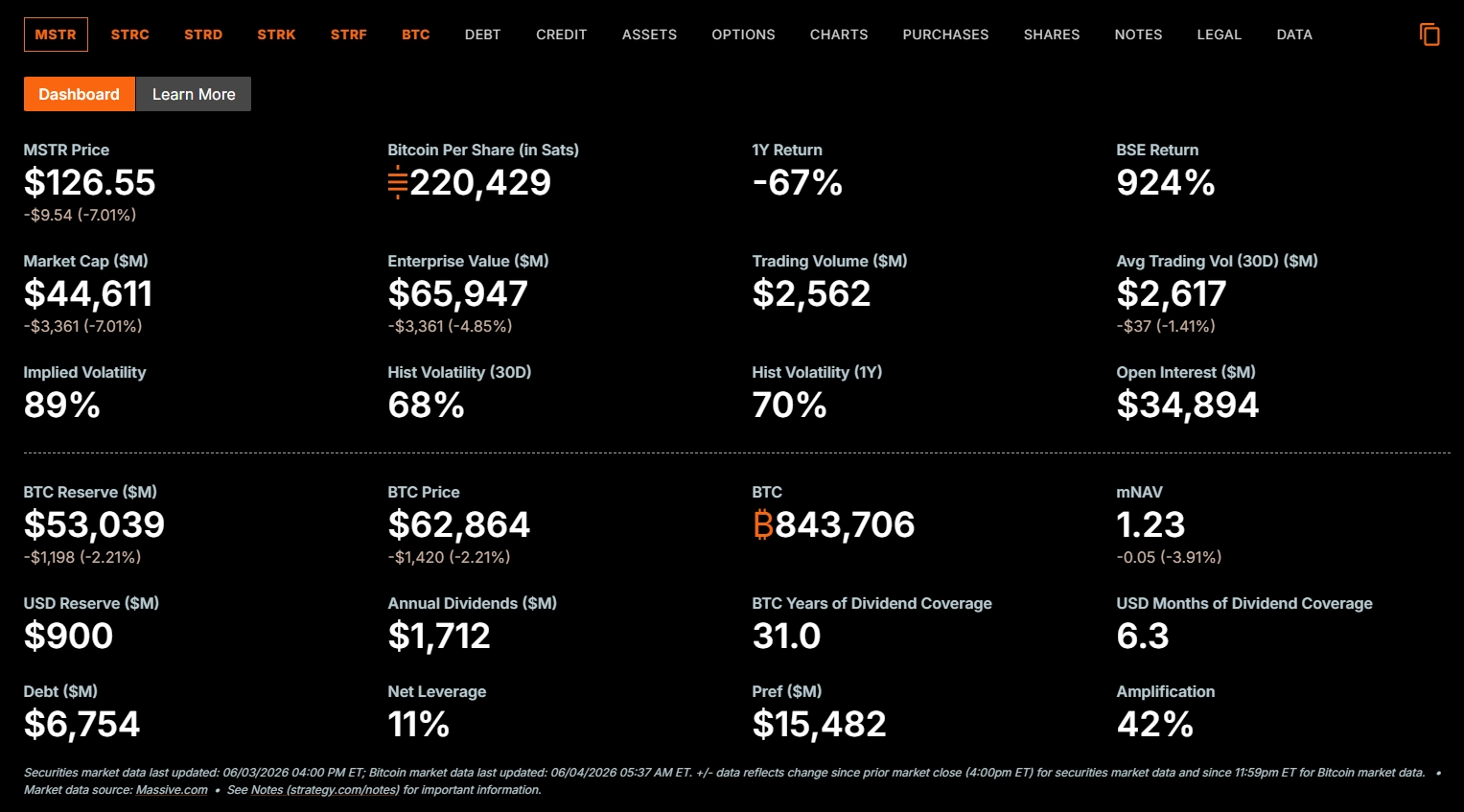
Now, let’s look at the key metrics related to MSTR and STRC and examine whether this structure is sustainable.
Source: Strategy
4.1 The Sustainability of Capital Raising Is the Key
Strategy currently holds $900 million in USD reserve, while its annual interest and dividend burden is $1.712 billion. In other words, if the current situation persists without any additional capital raising, Strategy can survive for about 6.3 months using its USD reserve.
If the USD reserve is depleted, Strategy has two ways to fund interest and dividend payments: 1) raising additional capital through common-stock or preferred-stock issuance, or 2) selling BTC. Assuming no additional capital is raised, Strategy could theoretically fund these payments by selling BTC for 31 years.
Ultimately, under current conditions, Strategy appears to need additional capital raising in order to remain sustainable. Selling BTC could also be an option, but given the butterfly effect triggered by the recent sale of just 32 BTC, doing so could inflict more damage on the company’s financial structure than necessary.
The conditions under which Strategy can raise additional capital are clear.
- For MSTR ATM issuance, mNAV needs to be above 1.22. Common-stock ATM issuance below 1.22 mNAV would actually reduce BPS.
- For STRC ATM issuance, STRC needs to remain around $99–100 for issuance to be efficient. If Strategy issues STRC into the market at a price below that level, it is effectively raising capital at an unnecessarily expensive cost.
In both cases, market “confidence” is the key. Investors need to believe that 1) BTC will appreciate over the long term, and 2) Strategy will eventually be able to create value beyond simply accumulating BTC. Only then can mNAV stay above 1.22 and STRC recover toward the $100 level.
However, given current market conditions, it appears difficult for Strategy to raise additional capital through common-stock or preferred-stock issuance in the near term. Without additional capital raising, what Strategy can do is rely on its USD reserve and wait for the market—and investor confidence—to recover.
But this does not mean Strategy is heading for bankruptcy. As explained earlier, Strategy is not obligated to pay preferred-stock dividends in cash every month without fail. Dividends continue to accrue on the preferred stock, but cash payments are made only when declared by the board and supported by sufficient available funds. In a worst-case scenario, Strategy could continue deferring dividend payments.
4.2 What If Strategy Goes Bankrupt?
We should also consider what would happen if Strategy were to go bankrupt.
- Strategy’s Net Leverage is 11%. Net Leverage is calculated as “(Debt - USD Reserve) / BTC Reserve,” and it represents the portion of BTC purchases funded through debt.
- The ratio that includes not only debt but also funds raised through preferred stock is called Amplification. Amplification is calculated as “(Debt + Pref) / BTC Reserve,” and it shows how large the claims senior to common stock are relative to the value of Strategy’s BTC holdings. Strategy’s current Amplification is around 42%.
Because Amplification is below 100%, if Strategy were to go bankrupt and could liquidate its BTC reserve at current market prices, creditors and preferred shareholders would be able to claim the residual assets and recover their full principal. This is the biggest difference from UST–LUNA.
However, if BTC’s market price were to fall sharply during the liquidation process, preferred shareholders could also suffer losses. If the value of Strategy’s BTC reserve were to fall to $22.236 billion—the combined amount of Debt and Pref—or, in other words, if BTC fell to around $26.3K, preferred shareholders would be highly likely to take losses.
4.3 Upcoming Convertible Note Maturities
Source: Strategy
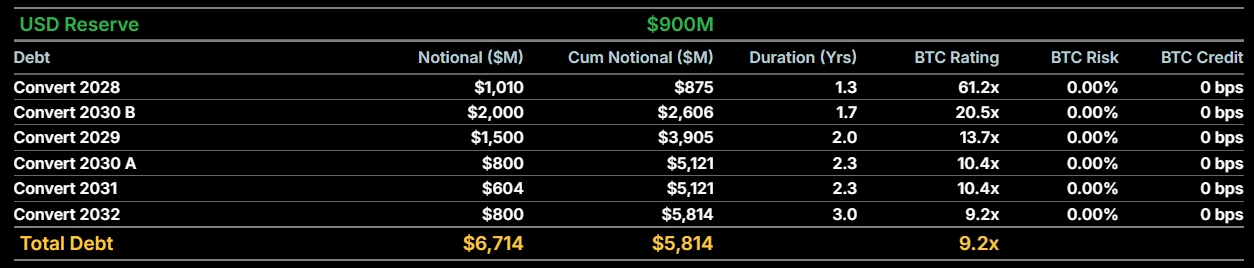
Strategy has no principal repayment obligation on its perpetual preferred stock. However, for the convertible notes it issued in the past, it does have a principal repayment obligation if bondholders do not convert them into shares.
Strategy has been gradually repaying principal using its cash on hand and proceeds raised through common-stock ATM issuance, and it currently has a total of $6.714 billion in debt outstanding. Since maturities begin as soon as 2028, Strategy needs to secure the funds required for repayment.
Strategy currently holds only $900 million in USD reserve. This means that if it cannot raise additional capital, it may have to sell some of its BTC holdings to repay debt. Of course, as discussed above, Strategy’s Net Leverage is only 11%, so the probability of bankruptcy caused by debt is extremely low. However, because BTC sales can have such large negative spillover effects—as demonstrated by the recent sale of just 32 BTC—Strategy will need to consider additional funding methods before resorting to further BTC sales.
For reference, if BTC were to fall below $10K in the future, the value of Strategy’s BTC reserve would become roughly similar to the size of its debt, creating potential bankruptcy risk.
5. The Key Is Surviving the Next Six Months
Source: Fidelity
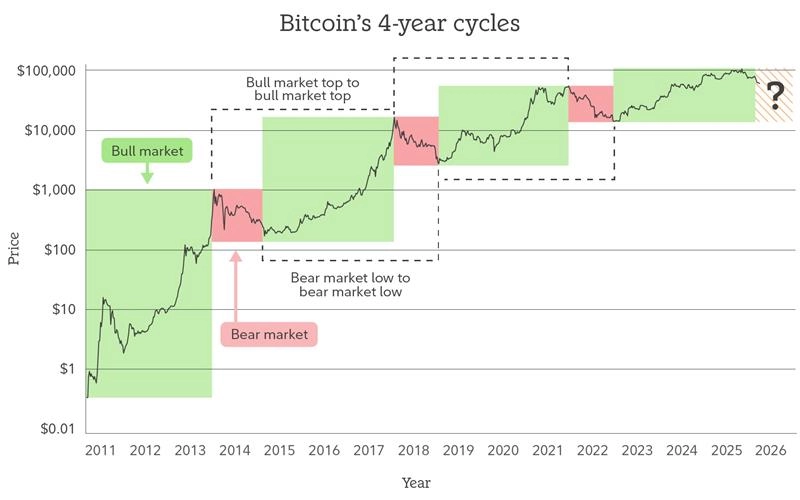
There has been a lot of debate over whether the Bitcoin four-year cycle theory has broken down during this cycle. But in hindsight, this cycle still appears to be following the four-year cycle fairly closely. If the theory remains valid, the bottom of this cycle is expected to occur in the second half of 2026.
Coincidentally, Strategy’s USD reserve is also estimated to last for roughly six more months. For Strategy to raise additional capital and restart its capital engine, market conditions need to provide at least some support. The next six months could therefore be an extremely difficult period for Strategy.
Although I used a provocative title and thumbnail, LUNA–UST and MSTR–STRC are fundamentally different structures, even if they may look similar on the surface. The probability that MSTR–STRC ends in a catastrophic collapse like LUNA–UST is very low.
The question now is whether Strategy can regain momentum for its capital engine through healthy deleveraging over the next six months—or whether it will fail to raise additional capital and remain merely one of the more interesting experiments in Bitcoin history.
The author of this report may have personal holdings or financial interests in assets or tokens discussed herein. However, the author affirms that no transactions have conducted using material non-public information obtained in the course of research or drafting. This report is intended solely for general information purposes and does not constitute legal, business, investment, or tax advice. It should not be used as a basis for making any investment decisions or as guidance for accounting, legal, or tax matters. Any references to specific assets or securities are made for informational purposes only and should not be construed as an offer, solicitation, or recommendation to invest. The opinions expressed herein are those of the author and may not reflect the views of any affiliated institutions, organizations, or individuals. The opinions and analyses expressed herein are subject to change without prior notice. In addition, beyond the individual disclosures included in each report, Four Pillars, may hold existing or prospective investments in some of the assets or protocols discussed herein. Furthermore, FP Validated, a division of Four Pillars, may already be operating as a node in certain networks or protocols discussed herein or may do so in the future. Please see below links in the footer for FP Validated's participating network disclosures and for broader disclosure details.


