


Table of Contents
- 1. Japan's FSA Officially Designates JPYC as a "Money Transfer Business": Stablecoin's Integration into Payment Infrastructure Confirmed
- 1.1 [News] FSA Publication First Explicitly Places JPYC Under the Same Legal Framework as Existing Payment Services
- 1.2 Commentary
- 2. Japan's First Verification of Security Token DVP Settlement Using Tokenized Deposits (DCJPY) Completed
- 2.1 [News] SBI Securities, Daiwa Securities, and SBI Shinsei Bank Verify DVP Settlement Through Cross-Blockchain Integration After Actual Issuance
- 2.2 Commentary
- 3. SBI Holdings in Talks to Acquire Stake in Crypto Exchange Bitbank, Eyes Subsidiary Status
- 3.1 [News] SBI Submits Letter of Intent, Begins Capital and Business Alliance Discussions with Bitbank
- 3.2 Commentary
- 4. Other News
- 4.1 Theme 1. Accelerating Stablecoin Adoption in Payment and Commerce Infrastructure
- 4.2 Theme 2. Bank and Institutional Stablecoin Ecosystem Building
- 4.3 Theme 3. National Stablecoin Regulatory Shifts
Researcher


*[ASA News] is a bi-weekly newsletter where we share the most important news related to stablecoin in Asia. (2026.04.27~05.10)
Written by Moyed
1. Japan's FSA Officially Designates JPYC as a "Money Transfer Business": Stablecoin's Integration into Payment Infrastructure Confirmed
1.1 [News] FSA Publication First Explicitly Places JPYC Under the Same Legal Framework as Existing Payment Services
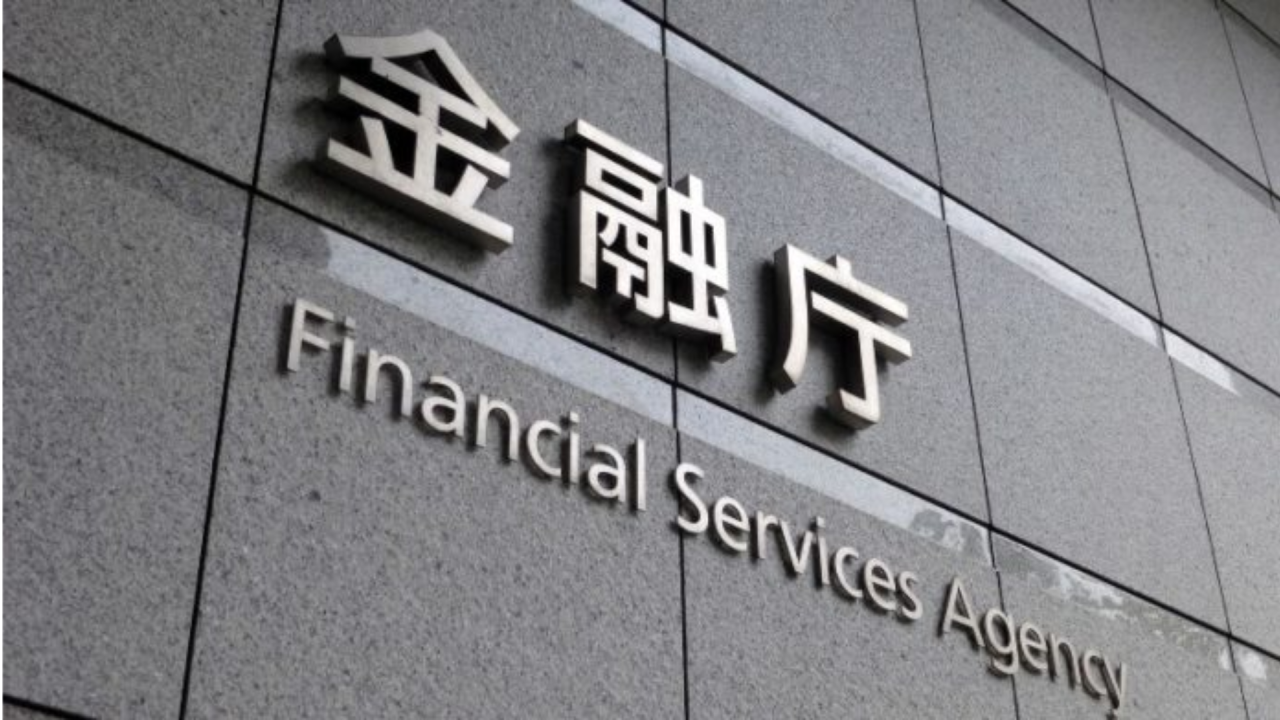
Source: FSA Explicitly Designates JPYC as "Money Transfer Business," First Mention in Official Documents
In April 2026, Japan's Financial Services Agency (FSA) officially designated JPYC, Japan's first yen-denominated stablecoin issuer, as a "money transfer service provider" in its "Access FSA" public information series, which explains the practical aspects of financial regulation. This marks the first time a primary source document has explicitly confirmed that JPYC is supervised under the same legal framework as payment services like PayPay and Rakuten Pay.
Kosuke Kishimoto, Payment Services Coordinator at the FSA's Comprehensive Policy Bureau, presented specific transaction flows to explain that the economic functions of stablecoins and payment services constitute "the same movement of funds." In the case of payment services, a user deposits 10,000 yen and sends it to a merchant. In the case of JPYC, a user pays 10,000 yen and receives stablecoins, which circulate until the final holder requests redemption from JPYC. Kishimoto stated, "From a broader perspective, the 10,000 yen initially contributed by the user ultimately reaches the final holder, which categorizes it as a money transfer business."
Money transfer businesses are classified into three types by transfer amount: Type 1 (high-value, no upper limit, permission required), Type 2 (conventional, up to 1 million yen per transaction, registration required), and Type 3 (small-amount, up to 50,000 yen per transaction, registration required). JPYC is obligated to protect more than 100% of assets under management within this framework. The FSA's "Fund Settlement Monitoring Office" supervises both payment services and stablecoins in the same department, and in November 2025, a dedicated "Payment Advancement Project" specializing in blockchain-based payment innovation was also established.
1.2 Commentary
1.2.1 Moyed (ASA Contributor) – "Regulatory Clarity" as Japan's Competitive Weapon: Anchoring Stablecoins into Payment Infrastructure
The FSA's explicit designation of JPYC as a money transfer service provider is not merely an administrative classification but the formalization of a regulatory philosophy: managing stablecoins as an extension of existing payment infrastructure. While Japan became the first country to establish a legal framework for fiat-backed stablecoin issuance and circulation following the revised Payment Services Act in 2023, this is the first time a regulator has specifically named an individual issuer in an official publication to confirm its legal positioning. The signal is clear: JPYC is no longer a "crypto experiment" but is treated as the same payment infrastructure as PayPay with its 70 million users.
The industrial implications of this classification are significant. As a confirmed money transfer service provider, JPYC cannot create credit like banks, but faces no restrictions on concurrent businesses, securing a flexible position to experiment with diverse services. Since formally issuing Japan's first yen stablecoin in November 2025, JPYC has raised approximately $30 million in its Series B, expanded partnerships with regional banks including Hokkaido Bank and Yokohama Bank, and accumulated real-world use cases such as Metaplanet using it as an on/off-ramp for its Bitcoin treasury operations. The FSA's simultaneous activation of the "Fintech Support Desk," "Fintech PoC Hub," and "Payment Advancement Project" to actively attract new entrants is equally noteworthy. Regulatory clarity doesn't merely protect existing operators; it lowers entry costs for new players.
The contrast with South Korea is stark. Korea's Digital Asset Basic Act stablecoin provisions remain stalled as the Bank of Korea (demanding banks hold 51%+ equity in issuers) and the Financial Services Commission (supporting a more open structure) disagree on issuer qualification. Japan, by contrast, settled the legal status debate early through a "function-based" approach and has now moved to the next stage of competition: who can fastest secure use cases on top of regulated infrastructure. JPYC's money transfer business designation is the official confirmation of that starting line.
2. Japan's First Verification of Security Token DVP Settlement Using Tokenized Deposits (DCJPY) Completed
2.1 [News] SBI Securities, Daiwa Securities, and SBI Shinsei Bank Verify DVP Settlement Through Cross-Blockchain Integration After Actual Issuance
Six institutions including SBI Securities, Daiwa Securities, SBI Shinsei Bank, BOOSTRY, Osaka Digital Exchange (ODX), and DeCurret DCP have completed a demonstration of DVP settlement for security tokens (ST) using the tokenized deposit DCJPY. This is the first case in Japan where DVP settlement was verified after actual issuance of both ST and digital currency.
The demonstration involved selling digital corporate bonds issued by DeCurret DCP from Daiwa Securities to SBI Securities (secondary transaction) and from SBI Securities to Daiwa Securities (tertiary transaction). By integrating the blockchain "ibet for Fin" (developed primarily by BOOSTRY) where STs are managed, with DCJPY issued by SBI Shinsei Bank on DeCurret DCP's platform, the team achieved escrow-type DVP settlement where DCJPY transfer and ST delivery execute simultaneously. Japan's ST market has seen accelerated product diversification and expanded institutional participation since the first digital bond issuance in 2020, but the mismatch between instant blockchain-based ST delivery and conventional bank transfer-based fund settlement has been identified as a persistent challenge in settlement risk management and operational burden.
Challenges for commercialization include automating data linkage between ibet for Fin and the DCJPY network, automating settlement reconciliation and order processing, improving UI/UX, connectivity with existing systems and market infrastructure of securities companies and banks, and developing operational procedures including accounting, fund management, and access control. Participating institutions plan to start small-scale with limited participants to develop operational models, with medium-to-long-term goals of expanding participants, connecting with existing market infrastructure, and preparing standardization conditions for a general-purpose settlement platform.
2.2 Commentary
2.2.1 Moyed (ASA Contributor) – DCJPY: First Real-World Answer to the "Settlement Layer Standard" Question for Japan's Security Token Market
The significance of this demonstration lies not in technical success but in providing the first tangible answer to the question of what will become the settlement layer standard for Japan's security token market. While Japan's ST market has grown rapidly since 2023, surpassing 100 billion yen in outstanding issuance, a structural mismatch has persisted: ST delivery occurs instantly on-chain while fund settlement relies on conventional bank transfers (T+2~3). DVP (Delivery versus Payment), the simultaneous completion of securities delivery and fund settlement, is the only way to resolve this mismatch, and tokenized deposits are emerging as the instrument of choice.
DCJPY leads this competition because of its design structure. As a tokenized deposit linked to bank deposits, DCJPY benefits from deposit insurance eligibility, easy compatibility with existing bank accounting systems, and guaranteed value stability. SBI Shinsei Bank handles issuance while DeCurret DCP's network enables programmable settlement. This aligns with the "money transfer business" framework the FSA articulated in this same issue. A division of labor is forming: stablecoins (like JPYC) handle P2P payments and circulation under the money transfer business framework, while tokenized deposits (like DCJPY) handle inter-bank and institutional securities settlement.
In the global context, this is also significant. Hong Kong's HKMA achieved DVP using e-HKD for tokenized green bonds in November 2025, and Singapore's MAS tested DVP with JP Morgan's JPM Coin through Project Guardian. Japan's demonstration is smaller in scale but presents a unique model: "private-sector-led tokenized deposits + consortium blockchain." ODX's participation as an observer, examining future application to PTS (proprietary trading system) settlement, demonstrates this model's potential to expand beyond PoC into market infrastructure.
3. SBI Holdings in Talks to Acquire Stake in Crypto Exchange Bitbank, Eyes Subsidiary Status
3.1 [News] SBI Submits Letter of Intent, Begins Capital and Business Alliance Discussions with Bitbank

Source: SBI Holdings in talks to acquire stake in crypto exchange Bitbank, eyes subsidiary status
SBI Holdings has entered into talks to acquire shares in Bitbank, a major Japanese crypto exchange. SBI Chairman and President Yoshitaka Kitao stated on May 1 that the company submitted a letter of intent regarding share acquisition and began discussions on a capital and business alliance. The plan is to acquire Bitbank shares after conducting due diligence and internal procedures, with specific timing and structure under separate discussion. The goal is to make Bitbank a consolidated subsidiary of the SBI Group.
Bitbank, founded in May 2014, positions security as its key differentiator, having never experienced a hacking incident. The talks are an extension of SBI Group's ongoing consolidation of crypto operations around its in-house exchange, SBI VC Trade. Last month, it merged Bitpoint Japan into SBI VC Trade to streamline operations and improve profitability. As crypto assets move toward inclusion under the Financial Instruments and Exchange Act (FIEA), SBI stated that bringing Bitbank into the group would strengthen its position in Japan's crypto market. Bitbank also launched Japan's first crypto-linked credit card earlier this week.
3.2 Commentary
3.2.1 Moyed (ASA Contributor) – SBI's Exchange Consolidation Strategy: A License Acquisition Race Ahead of FIEA Transition
SBI Holdings' pursuit of Bitbank is not simply about market share expansion but strategic positioning ahead of a historic transition in Japan's crypto regulatory framework from the Payment Services Act to the Financial Instruments and Exchange Act (FIEA). As of 2026, the FSA has submitted legislation to bring crypto assets under FIEA jurisdiction. Once this transition takes effect, operating under a mere "crypto asset exchange" registration will no longer suffice; disclosure obligations, business classifications, and insider trading regulations comparable to the securities industry will be imposed. With license restructuring on the horizon, securing existing exchanges preemptively is a strategy to bypass the entry barriers that will emerge post-transition.
Bitbank's attractiveness as an acquisition target rests on three pillars. First, its security track record of zero hacking incidents since 2014 is advantageous for meeting the system safety standards that will be required under the FIEA regime. Second, Bitbank holds a valid crypto asset exchange license registered with the Kanto Local Finance Bureau and maintains a consistently top-tier position in domestic BTC/JPY spot trading volume. Third, with the launch of Japan's first crypto-linked credit card this week, Bitbank is expanding beyond exchange operations into payments and retail finance, creating significant synergies with SBI Group's securities, banking, and payment network.
Viewing SBI's moves chronologically makes the strategy even clearer. SBI connects to over 80% of Japanese banks through its joint venture SBI Ripple Asia, operates its own exchange via SBI VC Trade, and merged Bitpoint Japan in 2025 to consolidate user bases. SBI Shinsei Bank serves as DCJPY's issuing bank, playing a central role in tokenized deposit infrastructure, while SBI Securities participated in this issue's DVP demonstration. Adding Bitbank as a consolidated subsidiary would make SBI Group Japan's only full-stack digital asset financial group, vertically integrating issuance (SBI Shinsei Bank/DCJPY), trading (SBI VC Trade + Bitbank), settlement (Ripple), and security tokens (SBI Securities/BOOSTRY). The long-term strategy of consolidating fragmented crypto infrastructure under a single group, leveraging the FIEA transition as a regulatory inflection point, is crystallizing.
4. Other News
This section is provided by rwa.xyz. To receive the latest stablecoin and RWA news, join RWA.xyz Newswire.
4.1 Theme 1. Accelerating Stablecoin Adoption in Payment and Commerce Infrastructure
4.1.1 Fireblocks Selected as Core Infrastructure for Western Union's USD Stablecoin USDPT Rollout
- Managing treasury, issuance, custody, and payment flows across Western Union's global network connecting 2,400+ institutional counterparties in 100+ countries
- Initial rollout targeting Philippines and Bolivia for markets with currency volatility, global expansion planned through 2026
- Integration of Dynamic's non-custodial wallets and TRES's onchain-to-SWIFT format conversion for transitioning existing settlement infrastructure onchain
4.1.2 MoonPay Launches 'MoonAgents Card': First Mastercard Debit Card for AI Agents to Spend Stablecoins
- AI agents spend stablecoins from self-custodial wallets directly at Mastercard merchants, with crypto-to-fiat conversion at point-of-sale
- Programmatic control via MoonPay CLI and Agents workflows enables autonomous transactions across millions of merchants globally
- Live in UK and LATAM with US and EU expansion planned, over 4 million tool calls processed since launch
4.1.3 Shinhan Card Partners with Solana Foundation to Develop Web3 Payment Infrastructure
- Strategic MOU focused on stablecoin payments, non-custodial wallet validation, and hybrid TradFi-DeFi finance models
- Advanced proof-of-concept testing planned on Solana testnet to assess payment scenarios, blockchain stability, and user experience
- Combining traditional financial infrastructure with DeFi efficiency using Oracle technology, emphasizing regulatory compliance and security
4.1.4 Meta Adds USDC Stablecoin Payouts for Creators in Colombia and Philippines
- Using Circle's USDC on Solana and Polygon blockchains for faster settlements compared to traditional international bank transfers
- Creators must register their own third-party crypto wallet address; USDC-to-local-currency conversion is their responsibility
- Stripe supporting the rollout with crypto-specific tax reporting, reflecting growing mainstream stablecoin payment adoption across major tech platforms
4.2 Theme 2. Bank and Institutional Stablecoin Ecosystem Building
4.2.1 Spain's Sabadell and Bankinter to Join European Stablecoin Consortium Qivalis
- Qivalis consortium plans euro-pegged stablecoin launch in H2 2026, with official announcement expected in coming weeks
- Alliance includes 12+ major institutions: ING, UniCredit, BNP Paribas, CaixaBank, BBVA, and others
- Aims to counter U.S. dominance in digital payments and help traditional banks compete in the crypto sector
4.2.2 KB Financial Partners with Pantera Capital to Accelerate Blockchain Strategy
- Partnership signed April 28 in Seoul with U.S.-based Pantera Capital, managing approximately $5.2 billion in blockchain assets
- Leveraging Pantera's global expertise in digital asset investments, blockchain infrastructure, and fund management opportunities
- Expanding KB Financial's digital finance ecosystem following partnerships with Bank of Korea's Project Han River and Circle for stablecoin integration
4.2.3 MoonPay Acquires Key Management Firm Sodot, Launches Institutional Digital Asset Platform
- Sodot's key management infrastructure secured over $50 billion in transactions for clients including eToro, BitGo, and Flow Traders
- End-to-end infrastructure for financial institutions across 200+ chains: wallet infrastructure, custody, trade execution, and stablecoin services
- Led by former acting CFTC Chairman Caroline D. Pham, targeting demand as 71% of asset managers plan to increase digital asset exposure within 12 months
4.2.4 Coinbase and Superstate to Launch Institutional Stablecoin Yield Fund in Q2
- CUSHY fund focusing on stablecoin lending and private credit opportunities
- First external fund on Superstate's FundOS platform, tokenizing fund units on Solana, Ethereum, and Base
- Tokenized units usable as collateral on DeFi protocols or tradeable 24/7, enhancing institutional capital efficiency
4.3 Theme 3. National Stablecoin Regulatory Shifts
4.3.1 Tetra Digital Group Launches CADD, Canada's First CAD-Backed Stablecoin from a Financial Institution
- Backed 1:1 by Canadian dollars, issued by Tetra Trust Company through CAD Digital Inc.
- Received regulatory approval from Alberta Treasury Board and Finance, operating under a financial services regulatory framework
- Canada's first deployment of national currency on blockchain infrastructure, marking a milestone for the country's digital asset ecosystem
4.3.2 Hong Kong to Strictly Limit Stablecoin Licenses as First Issuers Prepare Launch
- HKMA Chief Eddie Yue expects first licensed stablecoin by mid-2025, second by year-end
- Authority will monitor existing operations before issuing additional licenses, with number to be strictly limited
- Cautious approach aimed at assessing market capacity and identifying emerging risks before expansion
4.3.3 Brazil Bans Crypto and Stablecoin Settlement for Cross-Border Remittances by eFX Companies
- New central bank rules effective October 1 prohibit eFX companies from using crypto/stablecoins to settle overseas payments
- Targeting remittance firms like Wise, Nomad, and Braza Bank that embedded stablecoin settlement into cross-border flows
- Does not affect crypto trading itself; rationale based on expanding real-time payment infrastructure offering similar speed and cost benefits without blockchain
The author of this report may have personal holdings or financial interests in assets or tokens discussed herein. However, the author affirms that no transactions have conducted using material non-public information obtained in the course of research or drafting. This report is intended solely for general information purposes and does not constitute legal, business, investment, or tax advice. It should not be used as a basis for making any investment decisions or as guidance for accounting, legal, or tax matters. Any references to specific assets or securities are made for informational purposes only and should not be construed as an offer, solicitation, or recommendation to invest. The opinions expressed herein are those of the author and may not reflect the views of any affiliated institutions, organizations, or individuals. The opinions and analyses expressed herein are subject to change without prior notice. In addition, beyond the individual disclosures included in each report, Four Pillars, may hold existing or prospective investments in some of the assets or protocols discussed herein. Furthermore, FP Validated, a division of Four Pillars, may already be operating as a node in certain networks or protocols discussed herein or may do so in the future. Please see below links in the footer for FP Validated's participating network disclosures and for broader disclosure details.


