


Table of Contents
- 1. MoonPay Invests in Korean Fintech Pioneer Finger, Laying Groundwork for a Korean Won Stablecoin Ecosystem
- 1.1 [News] Combining Global Crypto Payment Infrastructure with Korea's Domestic Financial Software Network
- 1.2 Commentary
- 2. KRWQ Lists on EDX Markets as First Korean Won Stablecoin, Launches Integrated Spot and Derivatives Trading
- 2.1 [News] World's First Non-USD Stablecoin to Achieve an Integrated Spot-Derivatives Trading Stack
- 2.2 Commentary
- 3. Ripple Partners with Korea's Kyobo Life to Pilot Tokenized Government Bond Settlement
- 3.1 [News] Using Ripple Custody to Compress T+2 Settlement Toward Near Real-Time
- 3.2 Commentary
- 4. Other News
- 4.1 Theme 1. Accelerating Stablecoin Integration in Global Payment Infrastructure
- 4.2 Theme 2. Asia's Stablecoin Ecosystem Expansion
- 4.3 Theme 3. National Regulatory Shifts and the Rise of Non-USD Stablecoin Models
Researcher


*[ASA News] is a bi-weekly newsletter where we share the most important news related to stablecoin in Asia. (2026.04.13~04.26)
Written by Moyed
1. MoonPay Invests in Korean Fintech Pioneer Finger, Laying Groundwork for a Korean Won Stablecoin Ecosystem
1.1 [News] Combining Global Crypto Payment Infrastructure with Korea's Domestic Financial Software Network
Global crypto payments network MoonPay is co-investing in Finger, one of Korea's first-generation fintech companies, alongside KOSDAQ-listed Sungho Electronics and Pantos Holdings. The approximately KRW 110 billion (~$76M) deal aims to combine MoonPay's stablecoin issuance and orchestration infrastructure with Finger's domestic financial software network, building out the full stack needed for a Korean won stablecoin ecosystem from issuance to real-world usage.
Founded in 2000, Finger developed the mobile banking apps used by tens of millions of Koreans daily, serving major financial institutions including Shinhan Bank, KB Kookmin Bank, KakaoBank, NongHyup Bank, and IBK Industrial Bank. Its flagship "Full Banking" service is a comprehensive financial platform solution covering account inquiry, transfers, payments, asset management, integrated account aggregation, and simple payment services. Its client base also includes public institutions such as the National Pension Service and the Korea Minting and Security Printing Corporation; last year it recorded annual revenue of KRW 91.6 billion and operating profit of KRW 1.4 billion. Pantos Holdings, a strategic investor wholly owned by Koo Bon-ho, a member of the LG founding family, plans to link Finger's cloud ERP solution "Pharos" with MoonPay's payment rails to commercialize stablecoin-based settlement for corporate trade payments.
1.2 Commentary
1.2.1 Moyed (ASA Contributor, Delta Network) - MoonPay's Korea Entry: Pre-emptive Positioning Amid Regulatory Uncertainty
MoonPay's investment in Finger is not a simple fintech M&A. Rather, it reads as a strategic move to secure infrastructure before Korea's won stablecoin regulatory framework is finalized. The central sticking point in Korea's pending Digital Asset Basic Act is who qualifies to issue stablecoins. The Bank of Korea insists that banks must hold at least 51% of any stablecoin issuer, while the Financial Services Commission (FSC) advocates for a more open structure, citing that 14 of 15 licensed stablecoin issuers under the EU's MiCA are e-money institutions rather than banks, and that Japan's yen stablecoins are similarly led by fintech firms. With this debate unresolved, the bill's passage continues to be delayed.
The logic behind MoonPay choosing Finger at this juncture is clear. As the company that built the mobile banking infrastructure for Korea's major banks, Finger occupies an essential position at the usage layer regardless of whether banks or fintechs ultimately win the issuance debate. Stablecoin issuance is determined by regulation, but distribution and usage ultimately run on existing financial apps and payment infrastructure. By partnering with the firm whose technology underpins the banking apps used by tens of millions daily, MoonPay is signaling that it intends to compete not on issuance, but on distribution infrastructure. Korea has roughly 18 million crypto investors, one of the highest participation rates globally, yet the won's status as a restricted (non-internationalized) currency and capital controls mean stablecoin infrastructure is virtually nonexistent. Securing the distribution network before regulation is finalized is MoonPay's core bet.
2. KRWQ Lists on EDX Markets as First Korean Won Stablecoin, Launches Integrated Spot and Derivatives Trading
2.1 [News] World's First Non-USD Stablecoin to Achieve an Integrated Spot-Derivatives Trading Stack
Source: Korean Won Stablecoins Debut on EDX Markets
KRWQ, a Korean won-pegged stablecoin, has launched spot trading on EDX Markets and simultaneously listed perpetual futures on EDXM International, its Singapore-based affiliate. KRWQ claims this marks the first time a non-USD stablecoin is available across a fully integrated trading stack spanning both spot and derivatives on regulated venues.
KRWQ is the first fiat-backed stablecoin pegged 1:1 to the Korean won, positioning itself as a blockchain-based alternative to the $100 billion-plus won NDF and offshore markets. KRWQ and EDX say they are targeting "one of the largest opportunities in global FX and crypto markets," encompassing more than $60 billion in daily won NDF volume and over $40 billion in daily won spot trading. By operating within EDX Markets' regulated framework in the U.S., KRWQ provides institutional investors with a compliant pathway to access onchain won exposure, while combining EDXM International's perpetual futures with EDX Markets' spot trading for more efficient price discovery and risk management.
2.2 Commentary
2.2.1 Moyed (ASA Contributor, Delta Network) - The Won Goes Onchain Offshore: Targeting the Structural Inefficiencies of the NDF Market
KRWQ's launch of integrated spot and derivatives trading on EDX represents an attempt to fundamentally redesign how the won, a non-internationalized currency, is accessed offshore. The Korean won has been a restricted currency subject to tightened capital controls since the 1997 Asian financial crisis, with all won transactions required to go through licensed domestic financial institutions. Because the won cannot circulate freely offshore, the NDF market has been the only avenue for foreign investors to gain won exposure. The won NDF market, at roughly $27 billion in daily volume, is the world's largest, forming a core pillar of the global NDF market alongside the Indian rupee and New Taiwan dollar. However, NDFs are structurally bilateral OTC contracts carrying counterparty risk, with settlement limited to USD-denominated net differences at maturity, resulting in low capital efficiency. Price transparency is also limited, and access is restricted to large institutions.
KRWQ is positioned to replace these structural inefficiencies with onchain infrastructure. Co-developed by IQ and Frax Finance and utilizing LayerZero's omnichain standard, it operates across multiple chains starting with Base. Since its launch in October last year, it has built its reserve structure by acquiring Korean government bonds through Shinhan Securities and has joined FraxNet, Frax's GENIUS Act-compatible network. EDX Markets is an institutional-grade exchange backed by Citadel Securities, Fidelity Digital Assets, and Charles Schwab, employing a traditional exchange model where customer assets are not directly custodied. By offering both spot (EDX) and perpetual futures (EDXM International, Singapore) on this infrastructure, KRWQ provides institutional investors with a regulated pathway to gain and hedge won exposure.
Notably, KRWQ operates under U.S. (EDX) and Singaporean (EDXM) regulatory frameworks rather than Korea's domestic regime. While the regulatory debate over who can issue won stablecoins remains deadlocked within Korea, KRWQ has built an offshore pathway for won exposure first. This raises a new question for Korean regulators: if the onchain infrastructure for the won forms offshore while domestic regulation is delayed, Korea risks losing sovereignty over the digital infrastructure of its own currency.
3. Ripple Partners with Korea's Kyobo Life to Pilot Tokenized Government Bond Settlement
3.1 [News] Using Ripple Custody to Compress T+2 Settlement Toward Near Real-Time
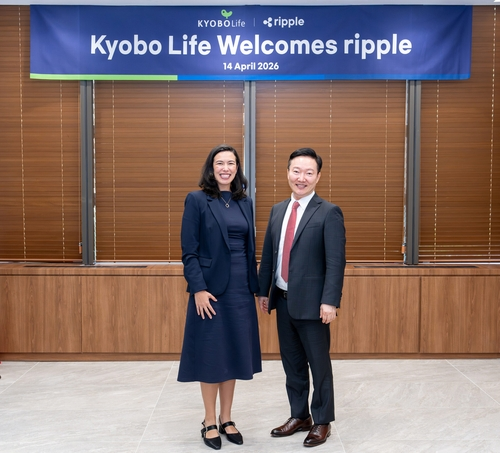
Source: Ripple partners with Korea's Kyobo Life to tokenize government bond settlement
Ripple has partnered with Kyobo Life Insurance, one of Korea's largest life insurers, to pilot tokenized settlement of Korean government bonds using the Ripple Custody platform. The deal marks Ripple's first partnership with a Korean insurance institution, aiming to compress Korea's standard T+2 bond settlement cycle toward near real-time execution. However, transaction sizes, go-live dates, and specific government bond series have not been specified; both parties describe the arrangement as a "strategic partnership" to assess the technical and regulatory feasibility of tokenized government bond settlement.
Kyobo Life will also explore stablecoin-based payment rails through Ripple. The deal comes amid a growing wave of institutional tokenization efforts across Asia, where regulators in Korea, Japan, Hong Kong, and Singapore have moved faster than U.S. counterparts in building digital asset frameworks. Since the SEC dropped its lawsuit in 2024, Ripple has accelerated its push into Asian institutional infrastructure, announcing custody and payment partnerships across Japan, Singapore, and the UAE, positioning Ripple Custody as a settlement layer for regulated financial institutions rather than a retail-facing product.
3.2 Commentary
3.2.1 Moyed (ASA Contributor, Delta Network) - Korea's First Step in Tokenized Bonds: A Late Entrant's Move Within Asia's Competitive Landscape
The Kyobo Life-Ripple pilot is meaningful as the first attempt at institutional-grade tokenized bond settlement in Korea, but within Asia's competitive landscape, Korea is a clear late entrant. The Hong Kong Monetary Authority (HKMA) issued its first tokenized green bond in February 2023, followed by a HK$10 billion (~$1.3 billion) tokenized green bond in November 2025 that became the world's first government bond to settle using digital fiat currencies (e-CNY and e-HKD), compressing settlement from five days to one. In Japan, JSCC, Mizuho, and Nomura launched a trial in April 2026 to put Japanese Government Bonds (JGBs) on blockchain for collateral management. Singapore's MAS has signaled plans to test tokenized MAS Bills (government securities) in 2026. Korea's Kyobo Life pilot, by contrast, remains at the "feasibility assessment" stage with no confirmed transaction sizes, target bond series, or commercialization timeline.
That said, Kyobo Life's choice of Ripple as its partner is noteworthy. Ripple Custody is built on bank-grade technology acquired through the $250 million Metaco acquisition in 2023 and is used by tier-one global banks including BBVA, DBS, and Intesa Sanpaolo. In 2025, Ripple acquired Hidden Road for $1.25 billion, expanding into prime brokerage as "Ripple Prime" with approximately $3 trillion in annual processing volume. In Japan, Ripple is connected to over 80% of the banking network through SBI Holdings. Kyobo Life had previously been the only Korean insurer to participate in the public testnet of Circle's blockchain network "Arc," and has recently been accelerating its AI-driven digital transformation. An insurer stepping forward as the first pilot participant for tokenized bond settlement reflects genuine demand from institutional investors managing large bond portfolios.
4. Other News
This section is provided by rwa.xyz. To receive the latest stablecoin and RWA news, join RWA.xyz Newswire.
4.1 Theme 1. Accelerating Stablecoin Integration in Global Payment Infrastructure
4.1.1 DoorDash Partners with Tempo for Global Stablecoin Payouts
- Tempo blockchain-based payments for delivery workers in 40+ countries, completing settlements in seconds instead of days
- Aims to reduce costs and complexity of managing multiple currencies and international regulations
- Tempo, incubated by Stripe and Paradigm, also works with Visa and Shopify, signaling accelerating enterprise adoption of blockchain infrastructure
4.1.2 Peter Thiel-Backed Fintech Ramp Adds Zero-Fee USDT Conversions Across Platform
- The $32 billion fintech unicorn supports USDT on Ethereum, Solana, and Plasma with zero-fee USD conversions
- Adds the world's largest stablecoin (~$190 billion in circulation) following existing USDC integration
- Enables enterprise clients to hold, send, receive, and spend USDT through corporate cards and expense management tools
4.1.3 Meow Partners with BVNK to Expand Stablecoin Payment Options
- Enables business customers to accept stablecoin and crypto payments and convert to USD within a single platform
- Integrates traditional SWIFT payments with stablecoin rails, targeting cross-border transactions across 200+ countries
- Follows Mastercard's $1.8 billion acquisition deal of BVNK, signaling institutional adoption of crypto payment infrastructure
4.2 Theme 2. Asia's Stablecoin Ecosystem Expansion
4.2.1 Metaplanet Joins JPYC's $17.62M Series B for Japanese Yen Stablecoin
- JPYC has raised nearly $30M total in Series B, backed by major Japanese banks including Hokuyo Bank and Bank of Yokohama, signaling institutional trust
- Japan's leading Bitcoin treasury firm Metaplanet joins to use yen stablecoins as on/off ramps between BTC holdings and operational expenses
- Operates under Japan's Payment Services Act, supports Ethereum, Polygon, and Avalanche, with Layer 2 expansion planned for 2026
4.2.2 Toss Partners with Korea Mint to Build Blockchain Payment Infrastructure
- Connects existing payment systems and explores new blockchain-based payment methods for 30 million Toss users
- Plans pilot projects for deposit tokens and stablecoins to test real-world payment applications
- Combines Toss's user base with Korea Mint's public payment infrastructure serving 80+ municipalities nationwide
4.2.3 Circle and OSL Expand USDC Access for Asian Institutional Clients
- OSL Global enables 1:1 USD/USDC conversion and offers dedicated USDC trading pairs against BTC, ETH, SOL, USD, and USDT
- Provides access to Circle's tokenized money market fund USYC and allows USDC as unified margin asset for improved capital efficiency
- Reflects growing institutional demand for regulated stablecoin infrastructure in cross-border settlements, particularly in Hong Kong and broader Asia
4.2.4 RD Technologies Subsidiary Secures SFC Licenses for Web3 Corporate Finance
- RD InnoVest obtains Type 1 (Dealing in Securities) and Type 4 (Advising on Securities) licenses from Hong Kong's SFC
- OristaPay platform integrates five core services: custody, on/off ramps, stablecoins, yield generation, and spend management
- Establishes foundation for regulated digital asset portfolio launches, strengthening Hong Kong's position as a digital asset hub
4.3 Theme 3. National Regulatory Shifts and the Rise of Non-USD Stablecoin Models
4.3.1 Japan's FSA Advances Crypto Regulatory Overhaul and Launches Three Stablecoin Payment Pilots
- Submitted bill to transition crypto from Payment Services Act to Financial Instruments and Exchange Act, covering disclosure rules, operator classifications, and insider trading regulations
- Three concurrent pilots: cross-border payments with yen stablecoins, 24/7 onchain settlement of government and corporate bonds, and interbank tokenized deposit transfers
- Coordinated with Bank of Japan's CBDC tokenization sandbox, signaling a systematic government-level approach to blockchain-based financial infrastructure
4.3.2 PUSD Shariah-Compliant Stablecoin Expands to ADI Chain for Middle East Settlement
- ADI Chain is a Layer 2 network for institutional settlement across Gulf and Africa; PUSD has $2.3 billion in circulation
- Backed 1:1 by Saudi riyals and UAE dirhams (both USD-pegged), fully Shariah-compliant
- Targets the global Islamic finance market worth over $3 trillion, operating alongside existing dollar and dirham stablecoins on the network
The author of this report may have personal holdings or financial interests in assets or tokens discussed herein. However, the author affirms that no transactions have conducted using material non-public information obtained in the course of research or drafting. This report is intended solely for general information purposes and does not constitute legal, business, investment, or tax advice. It should not be used as a basis for making any investment decisions or as guidance for accounting, legal, or tax matters. Any references to specific assets or securities are made for informational purposes only and should not be construed as an offer, solicitation, or recommendation to invest. The opinions expressed herein are those of the author and may not reflect the views of any affiliated institutions, organizations, or individuals. The opinions and analyses expressed herein are subject to change without prior notice. In addition, beyond the individual disclosures included in each report, Four Pillars, may hold existing or prospective investments in some of the assets or protocols discussed herein. Furthermore, FP Validated, a division of Four Pillars, may already be operating as a node in certain networks or protocols discussed herein or may do so in the future. Please see here for FP Validated’s participating network disclosures and here for broader disclosure details.


