

Table of Contents
- Key Takeaways
- 1. The Future of Asset Management
- 1.1 The History of Asset Management
- 1.2 The Evolution of Asset Management: Blockchain and AI
- 1.3 AI-powered Vaults
- 2. INFINIT: Building the Infrastructure for the Next Generation of Asset Management
- 2.1 Abstracting the DeFi Experience Through AI
- 2.2 AI-powered Vaults: From Abstracting Transactions to Abstracting Asset Management
- 2.3 APEX Multi-Strategy Vault: The First Example of AI-Powered Asset Management
- 3. Conclusion
Researcher

Related Projects

Key Takeaways
- Over the past 250 years, asset management has evolved through investment funds, ETFs, and robo-advisors. More recently, AI-powered vaults have emerged as a new model combining blockchain-based financial infrastructure with AI-driven investment decisions.
- INFINIT has focused on abstracting the complexities of DeFi through AI agents. It is now expanding beyond automated trade execution into an AI-powered Trading Strategy Platform designed to abstract the asset management experience itself.
- Through INFINIT OS, the platform provides shared infrastructure for custody, accounting, and settlement. The INFINIT Standard adds strategy manager verification and risk management requirements, allowing professional investment strategies to be offered through onchain vaults.
- Its debut trading strategy, run by Apex Quant Capital strategy manager, APEX Multi-Strategy pursues returns from relative performance differences across asset classes using an AI-powered dollar-neutral long-short strategy. During its first term, it reported an APR of approximately 35% alongside lower volatility than the S&P 500.
1. The Future of Asset Management
1.1 The History of Asset Management
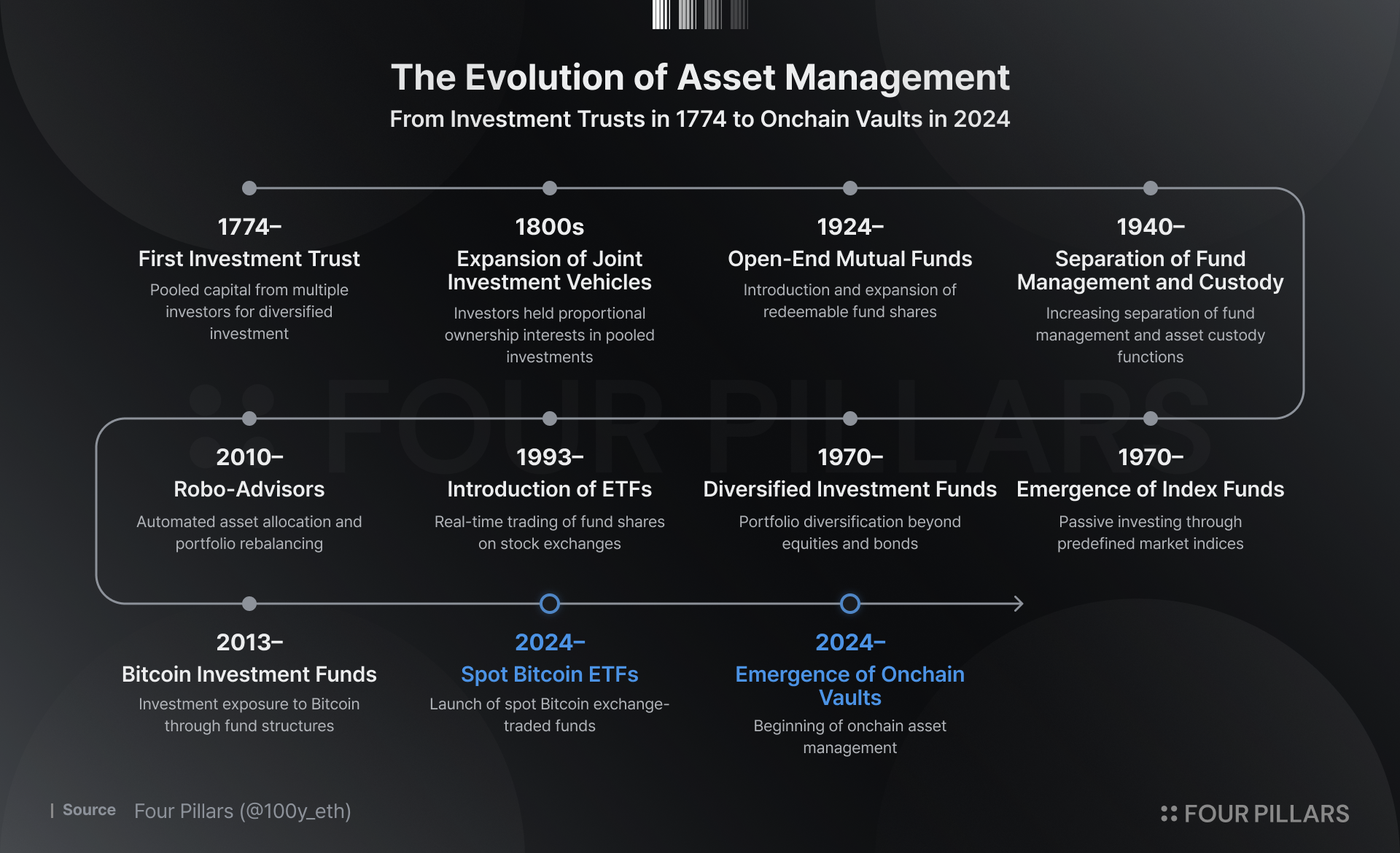
Today, convenient products such as ETFs have made asset management a familiar part of investing for countless people. Yet the concept of asset management dates back only to 1774, roughly 250 years ago. Over this period, which can seem either short or long depending on one's perspective, asset management has evolved into many different forms.
1.1.1 1774: The First Investment Fund
The first fund to embody the concept of asset management emerged in the Netherlands in 1774. At the time, the Netherlands was a leading financial center. The founding of the Dutch East India Company (VOC) in 1602 helped spur the development of joint-stock companies and stock markets. Bond markets also expanded to finance governments and colonial activities.
During the seventeenth and eighteenth centuries, the financial industries of the Netherlands, Britain, and other European countries grew considerably and became increasingly interconnected internationally. Yet financial markets faced a structural problem: concentration risk. Diversification is taken for granted today, but investors with limited capital at the time tended to concentrate their investments in individual securities. The credit crisis that began in Britain in 1772 and continued into 1773 also affected the Netherlands, directly contributing to the emergence of investment funds.

Source: Exchange History NL
On July 1, 1774, Amsterdam broker Abraham van Ketwich proposed pooling capital from multiple investors to invest in a diversified collection of bonds. The result was Eendragt Maakt Magt, Dutch for “Unity Makes Strength,” widely regarded as the first modern pooled investment fund and the first fund with an explicit diversification principle.
Investors contributed a set amount, and the fund used the pooled capital to purchase different types of bonds, distributing interest income according to each investor's ownership share. Unlike modern open-end funds, which continually issue and redeem shares, it was essentially a closed-end structure with a limited number of shares.
1.1.2 1924: The Emergence of the Modern Open-End Mutual Fund
Investment trusts, which had developed primarily in Britain during the late nineteenth century, spread to the United States in the early twentieth century. In the 1920s, US industrial production and consumer spending grew rapidly after World War I. New industries, including automobiles, electricity, and telecommunications, expanded, fueling a stock market boom. Ordinary retail investors increasingly took an interest in equities, a market previously viewed largely as the domain of the wealthy.
Most investment trusts at the time, however, still operated as closed-end funds, much like the first Dutch fund of 1774 and Britain's Foreign & Colonial Government Trust established in 1868. Closed-end funds issued a fixed number of shares. To recover their capital, investors had to sell those shares to another investor rather than redeem them directly with the fund. Because the market price of a fund's shares could diverge from the value of its underlying assets, investors faced the risk of having to sell below net asset value (NAV).
On March 21, 1924, Edward Leffler, Charles Learoyd, Hatherly Foster Jr., and others established Massachusetts Investors Trust (MIT) in Boston. The fund, which became the foundation of today's MFS Investment Management, is widely recognized as the first modern open-end mutual fund in the United States.
Its most important departure from closed-end funds was an open-end structure that allowed investors to subscribe to and redeem fund shares. When new investors contributed capital, the fund issued additional shares. When existing investors wanted to withdraw, the fund redeemed their shares. In September 1924, the fund formally introduced a mechanism allowing investors to redeem their holdings based on NAV.
This addressed an important limitation of closed-end funds, under which investors had to find someone willing to buy their shares. It reduced the risk of fund shares trading at prices substantially different from NAV and allowed ordinary retail investors to participate in professionally managed, diversified portfolios and recover their capital more easily.
1.1.3 1940: The Separation and Regulation of Funds and Asset Managers
The introduction of open-end mutual funds in 1924 accelerated the growth of the US asset management industry. However, a sufficient regulatory framework for fund operations and investor protection had yet to emerge. As numerous investment trusts were established during the stock market boom of the 1920s, conflicts of interest between fund managers and investors became increasingly apparent.
Some investment trusts prioritized the interests of their sponsors and managing financial institutions over those of fund investors. In certain cases, managers placed distressed securities held by themselves or their affiliates into the funds, or took excessive leverage to pursue risky investments. Moreover, because fund assets and the manager's business interests were not clearly separated, investors found it difficult to monitor or constrain managerial decisions.
These problems became more severe following the 1929 stock market crash and the Great Depression. Many investment trusts suffered substantial losses as markets declined, exposing complex capital structures and conflicts of interest among managers. This intensified calls for reforms to protect investors.
The US government enacted the Securities Act of 1933 and the Securities Exchange Act of 1934. Beginning in 1935, the Securities and Exchange Commission (SEC) conducted a broad investigation into the investment company industry. The investigation found that certain investment companies operated in the interests of managers and their affiliates rather than investors. To address these problems, Congress enacted the Investment Company Act of 1940 and the Investment Advisers Act of 1940.
Together, these laws marked an important step toward formally distinguishing the roles and responsibilities of the fund vehicle and the investment adviser.
Under this framework, the fund developed into a separate investment vehicle holding investors' capital and investment assets, while the asset manager formulated strategies, selected securities, and managed the portfolio under an investment management agreement. Managers received management fees in return, while fund boards represented investors' interests by overseeing management agreements and the manager's activities.
1.1.4 1993: The Arrival of ETFs
The emergence of index funds in the 1970s brought another major shift. Whereas active funds sought to outperform the market through the security selection skills of professional managers, index funds focused on tracking broad market returns while reducing investment costs.
Mutual funds nonetheless retained structural limitations. Investors generally subscribed to and redeemed open-end funds directly with the fund, with transactions typically priced at NAV calculated once per day. As a result, investors could not easily trade fund shares intraday as they could stocks. Closed-end funds, meanwhile, traded freely on exchanges but could experience substantial deviations between market prices and NAV.
In January 1993, State Street and the American Stock Exchange (AMEX) launched the SPDR S&P 500 ETF Trust (SPY), which tracks the S&P 500 Index. SPY began operations with its initial share issuance on January 22 and started trading on the American Stock Exchange on January 29. It is recognized as the first US ETF and the starting point of the modern ETF industry.
The ETF's principal innovation was combining the diversification benefits of open-end mutual funds with the intraday tradability of closed-end funds. Investors could buy or sell ETF shares on an exchange like individual stocks while gaining diversified exposure to hundreds of companies in the S&P 500 through a single product.
ETFs also introduced a distinctive creation and redemption mechanism. Authorized Participants (APs) could deliver a sufficiently large basket of underlying assets to the fund in exchange for newly created ETF shares, or return ETF shares and receive the underlying assets. This mechanism enabled arbitrage when the ETF's market price diverged from NAV, helping narrow such discrepancies.
It addressed a key drawback of closed-end funds, whose shares could trade at substantial premiums or discounts to NAV. Investors could also trade with one another on exchanges rather than requesting redemption directly from the fund, allowing asset managers to maintain long-term portfolios while offering investors greater trading convenience.
1.1.5 The 2010s: The Rise of Robo-Advisors
Source: Betterment
Following the advent of ETFs in 1993, the asset management industry developed rapidly around index investing and low-cost products. In the 2000s, widespread internet access and online brokerage services made financial markets easier for individuals to access. ETFs also made it possible to diversify across assets with relatively modest capital.
However, easier access to investment products did not necessarily make it easy for individuals to construct and continuously manage portfolios suited to their goals and risk tolerance. Establishing an asset allocation strategy, adjusting weights between equities and bonds, and rebalancing portfolios as markets changed still required considerable expertise and time.
Traditionally, such services were offered through private banking or professional wealth management firms, but high advisory fees and minimum investment requirements meant they were largely geared toward high-net-worth clients. Ordinary investors could purchase low-cost ETFs, but they still had to make their own investment decisions or seek professional advice to design and manage appropriate portfolios.
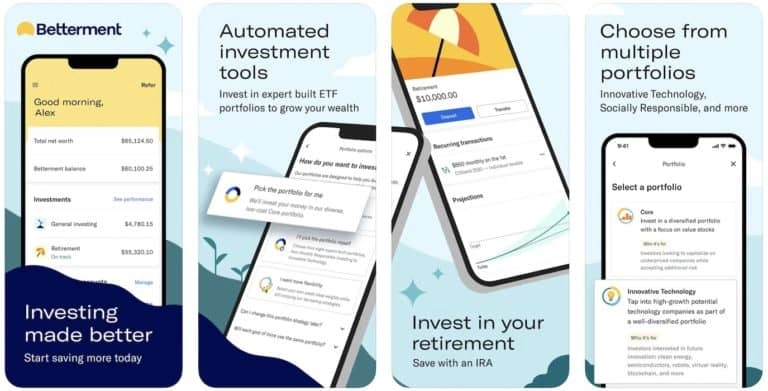
Against this backdrop, Betterment launched an automated investment management service for retail investors in the United States in 2010, helping establish the robo-advisor industry. Wealthfront followed with an automated wealth management service in December 2011, contributing to the market's development.
The central innovation of robo-advisors was the use of software to automate portfolio construction, asset allocation, trade execution, and ongoing management for individual investors using existing investment theories and products.
Investors answered questions about their investment goals, time horizons, and risk tolerance through an online platform. Based on those responses, the robo-advisor proposed a suitable model portfolio and asset allocation. It then used ETFs covering equities, bonds, and other asset classes to construct the portfolio, automatically rebalancing when market movements caused asset weights to deviate from their targets.
Robo-advisors also changed how asset management services were delivered. Previously, investors typically had to consult experts, formulate strategies, and continually oversee portfolios. By automating much of this process, robo-advisors made professional asset allocation and portfolio management available to smaller investors at relatively low cost.
1.2 The Evolution of Asset Management: Blockchain and AI
The asset management industry has evolved by addressing how investors' capital can be pooled, managed, and traded. The first investment fund in 1774 enabled diversification; the mutual fund of 1924 improved redemption mechanisms; the ETF of 1993 allowed fund shares to trade like stocks in real time; and robo-advisors in the 2010s automated asset allocation and portfolio management, expanding access to professional wealth management.
These developments can be divided into two broad directions:
- The evolution of financial infrastructure for holding and trading investors' assets.
- The evolution of investment management methods for analyzing assets and making investment decisions.
Today, blockchain and AI are driving new changes in these two areas, respectively.
1.2.1 Blockchain: New Financial Rails for Asset Management
Traditional asset management evolved around a division of responsibilities among asset managers, custodians, distributors, fund administrators, exchanges, and other financial institutions. This separation has been important for investor protection and specialization, but it has also created time and costs associated with reconciling data across institutions, processing trades, settling transactions, and transferring assets.
Blockchain has the potential to transform this financial infrastructure.
On a blockchain, asset ownership and transaction records can be recorded on a shared ledger, while smart contracts can automatically execute predefined financial transactions. This allows some functions traditionally processed across multiple systems, including the issuance and transfer of fund shares, deposits and withdrawals, and income distributions, to be implemented within a single programmable environment.
One representative structure for implementing blockchain-based asset management is the vault.
A vault is an onchain investment vehicle in which investors deposit assets that are managed according to rules and strategies defined in smart contracts, with the resulting returns attributed to the investors.
In conventional ETFs, investor transactions take place through stock exchanges, while APs, custodians, asset managers, and other institutions handle creation, redemption, and asset management. In an onchain vault, by contrast, investors can deposit assets directly into a smart contract and receive corresponding share tokens. Asset management, return settlement, and redemption can also be executed under predefined rules, potentially reducing some intermediaries and operating costs for onchain assets.
Transparency can improve as well. Traditional ETFs disclose holdings and NAV at specified intervals, whereas onchain vaults can offer near-real-time visibility into asset movements, transaction histories, NAV, and share minting and burning through blockchain records.
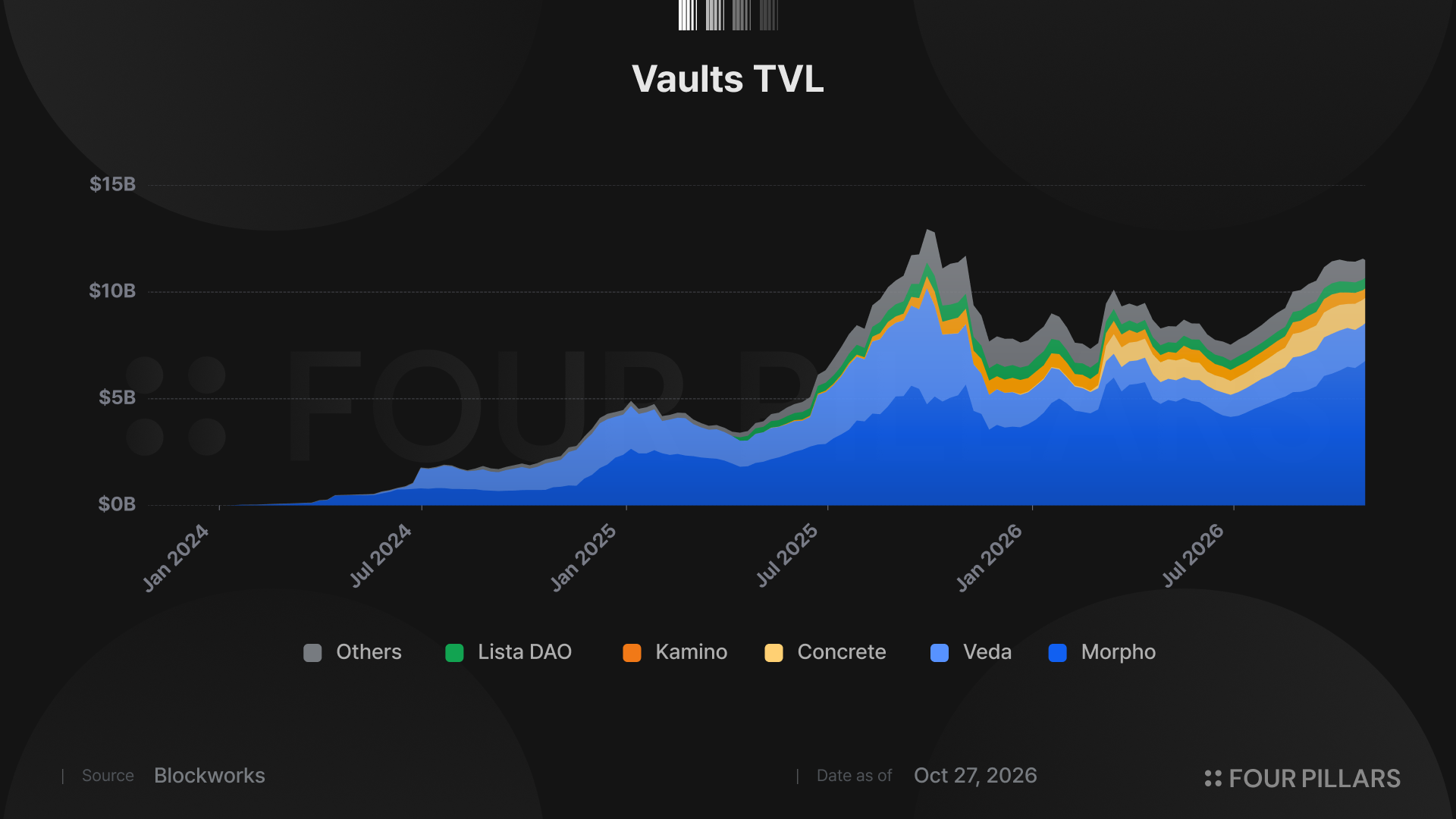
There is no universal consensus on what should count as a vault. However, excluding products with functions beyond straightforward investment strategies, such as staking and yield-bearing stablecoins, vaults designed for strategic investment have grown rapidly, with TVL trending upward and exceeding $11 billion.
1.2.2 AI: From Automation to Investment Decision-Making
While blockchain is transforming the infrastructure of asset management, AI is changing how investment decisions are made.
Traditional robo-advisors assigned investors to predefined model portfolios based on risk tolerance and investment goals, then rebalanced those portfolios according to established rules. Although they automated much of the investment management process, the strategies themselves were still largely designed and managed by humans.
Recent advances in AI, however, are expanding automation into the investment decision-making process. AI can analyze large volumes of market data, news, corporate information, and onchain data to identify opportunities or recommend portfolio adjustments as market conditions change. AI agents can go further by selecting strategies, executing trades, and continuously monitoring outcomes within predetermined objectives and constraints.
This represents a step beyond traditional rule-based automation. It does not mean AI guarantees higher returns than human managers or can independently handle every investment decision. AI decisions remain sensitive to data quality, model limitations, and changes in market conditions, and separate safeguards are needed to prevent dangerous decisions.
What matters is that AI is evolving into a new participant in the investment management process, capable of handling some of the analysis and decisions historically performed by humans.
1.3 AI-powered Vaults
At the intersection of these two developments, a new form of asset management may emerge: vaults powered by AI on blockchain infrastructure.
Investors deposit assets into a vault, while AI analyzes market data and determines investment strategies and asset allocations. The selected strategies are implemented through execution systems connected to smart contracts, and investors can inspect onchain records to follow asset movements and management results.
In this model, blockchain serves as the financial rails supporting custody, trading, and settlement, while AI serves as the investment engine responsible for decision-making and portfolio management.
If the traditional asset management industry evolved around fund vehicles and professional management firms, the future may see smart contract-based vaults take on the functions of funds while AI agents perform parts of the investment management process. In a sense, this would be like combining an ETF and a robo-advisor on a blockchain.
Over the past 250 years, asset management has evolved toward allowing more investors to access professional management services more conveniently and at lower cost. The fund of 1774 changed how capital was pooled, the ETF of 1993 changed how investment products were traded, and robo-advisors in the 2010s changed how asset management services were delivered. Blockchain and AI now offer the possibility of transforming both the infrastructure and decision-making architecture of asset management at once.
Blockchain as new financial rails, with AI managing assets on top of them. AI-powered vaults represent one of the most promising potential implementations of this future model of asset management.
2. INFINIT: Building the Infrastructure for the Next Generation of Asset Management

The convergence of blockchain and AI presents new possibilities for asset management. Yet turning these technological possibilities into actual financial services requires systems that connect complex onchain financial infrastructure with AI-driven decisions.
INFINIT is a project focused on precisely this problem. Initially, it concentrated on simplifying complex DeFi interactions through AI agents. More recently, it has expanded into asset management infrastructure that offers AI-powered investment strategies as onchain financial products.
2.1 Abstracting the DeFi Experience Through AI
DeFi has developed rapidly, implementing lending, borrowing, swaps, liquidity provision, and a wide range of other financial services on blockchain networks. But as these services have expanded, using them has often become more complicated. To execute a particular yield strategy, users have had to understand the structures and risks of multiple protocols, exchange assets, bridge between networks, and perform several transactions themselves. Strategies combining multiple protocols present especially high barriers for ordinary investors, who must also consider fees, slippage, and smart contract risk at each step.
INFINIT emerged with the goal of abstracting this complexity. Rather than requiring users to explore various DeFi protocols and execute each transaction themselves, INFINIT focused on making these processes accessible through a unified environment.
- The project's beginnings: In September 2024, INFINIT raised $6 million in a funding round involving Electric Capital, Maelstrom, and other investors, accelerating development of its DeFi abstraction infrastructure. Its early focus was on infrastructure that helped developers build and integrate complex DeFi functionality more easily. It subsequently evolved toward simplifying the DeFi experience for end users through AI agents.
- INFINIT Terminal: In January 2025, INFINIT announced INFINIT Terminal, an interface designed to let users interact with DeFi services through AI agents. Instead of operating each protocol's interface directly, users could describe what they wanted in natural language and have AI agents translate their requests into executable onchain transactions. For example, when a user asked how to earn yield on a particular asset or requested a strategy involving multiple protocols, the system would search for relevant information and assist with the steps required for execution.
- INFINIT Launcher: In March 2025, INFINIT introduced INFINIT Launcher to simplify token launches through AI agents. Launching a token traditionally required an understanding of smart contracts and additional technical work. INFINIT Launcher was designed to enable users to complete the process within minutes using an AI agent. It demonstrated how INFINIT's AI-powered abstraction capabilities could extend beyond DeFi trading into onchain activities such as token issuance.
- INFINIT Intelligence: INFINIT Intelligence analyzed wallet holdings, investment objectives, risk tolerance, and onchain and offchain data to discover and recommend relevant DeFi opportunities.
- INFINIT Strategies: INFINIT Strategies focused on bringing complex transactions across multiple protocols into a single execution workflow. Rather than designing which protocols to use and in what order, users could review the strategy and execution steps proposed by AI and approve the transaction.
- INFINIT Agent Swarm: The core infrastructure enabling these capabilities was INFINIT Agent Swarm, a collaborative system of AI agents specializing in particular protocols or tasks. It connected user intent expressed in natural language to actual DeFi transactions. By combining this architecture with multiple large language models (LLMs) and integrated onchain and offchain data, INFINIT sought to offer opportunity discovery, strategy construction, and execution within one service.
- Prompt-to-DeFi: INFINIT went a step further by developing Prompt-to-DeFi. Previously, building sophisticated DeFi strategies required users to design transaction sequences and select protocols themselves. Prompt-to-DeFi allowed users to describe investment ideas in natural language and have the system turn them into executable strategies. The goal was to help professional investors and DeFi researchers translate their ideas into onchain strategies without coding, which other users could then access.
What these products have in common is that they reduce the amount of complexity users must understand and handle themselves, allowing AI and software to manage more of the process. Rather than inventing entirely new financial primitives, INFINIT has focused on improving how users discover, combine, and execute strategies using existing protocols and liquidity.
Yet this approach had limitations. Even if AI could recommend opportunities and simplify complex transactions, users still had to choose strategies, approve trades, and manage their positions. In other words, INFINIT's earlier products reduced the complexity of executing investment strategies but did not fully take over ongoing investment decisions and asset management.
Seen in this context, INFINIT's newer AI-powered trading strategy platform is an extension of its original approach. Instead of simply helping users discover and execute DeFi strategies, it allows independent strategy managers to manage capital through AI while users deposit into vaults implementing those strategies. INFINIT is moving from abstracting DeFi trade execution toward abstracting the asset management experience itself.
2.2 AI-powered Vaults: From Abstracting Transactions to Abstracting Asset Management
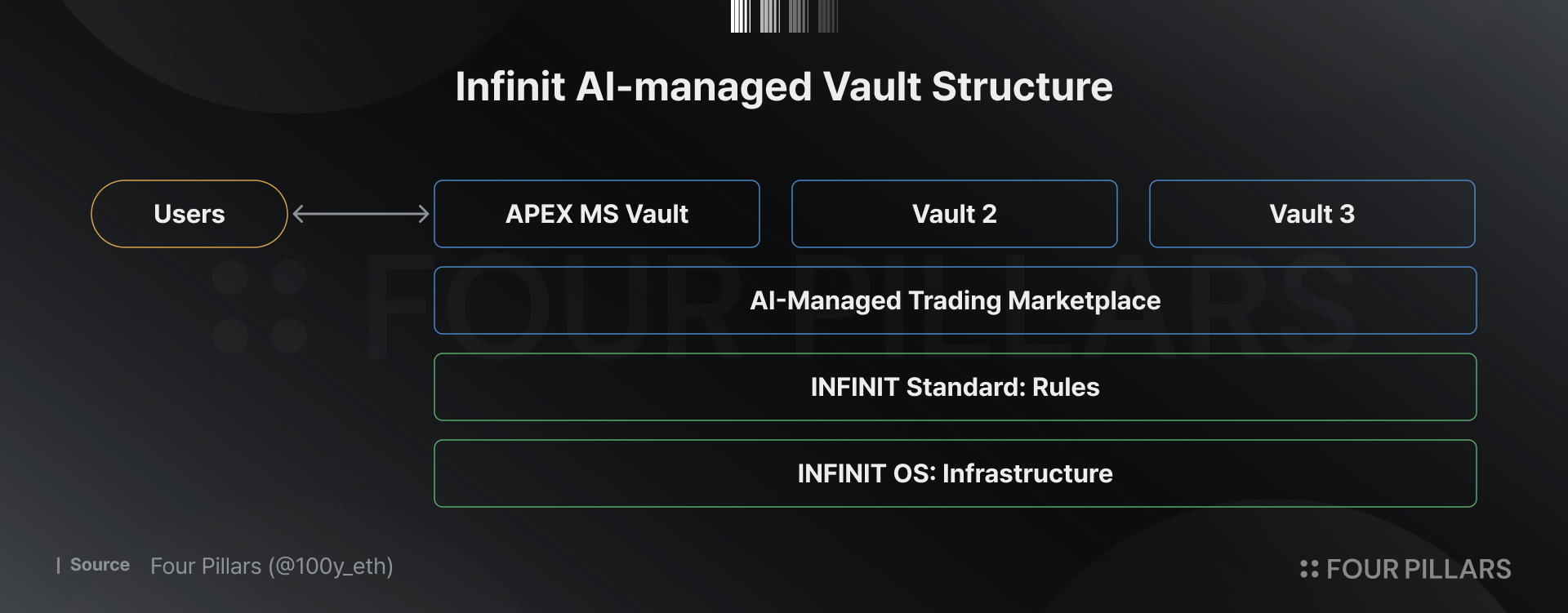
2.2.1 AI-powered Trading Strategy Platform
INFINIT's institutional-grade trading vault platform is independent, verified strategy managers can offer their investment strategies through vaults and investors can deposit into the vaults of their choice.
Each strategy manager independently sets not only the investment strategy but also the trading period, fees, eligible markets, leverage limits, and risk management requirements. As a result, the same platform can host multiple vaults with different strategies and risk profiles.
Rather than having to access each manager's system or execute complex transactions themselves, investors can review a vault's strategy and terms through INFINIT's unified interface and deposit their assets.
A vault follows five main stages:
- Vault creation: The strategy manager establishes the investment strategy, deposit window, lock period, fees, and risk management parameters.
- Deposit: During the deposit window, investors deposit USDC and receive ERC-20 receipt tokens representing their proportional ownership of the vault.
- Strategy execution: The strategy manager deploys the assets in accordance with the investment strategy disclosed in advance.
- Asset valuation: The vault's net asset value (NAV) is calculated daily, incorporating management and performance fees.
- Redemption at maturity: At the end of the term, investors burn their receipt tokens and receive their proportional share of the vault's final asset value, net of fees.
Receipt tokens play a role similar to fund shares in traditional asset management. Investors receive receipt tokens at a 1:1 ratio when they deposit USDC, but the economic value of those tokens subsequently changes with the vault's performance. The amount redeemed at maturity may therefore be higher or lower than the original deposit.
Like other ERC-20 tokens, receipt tokens are transferable. They are also designed to be traded on secondary markets in the future or used in supported DeFi protocols. This would allow investors to connect their ownership interests in trading vaults with other onchain financial services. However, vaults currently do not allow early redemption, and secondary-market trading remains a feature under development.
2.2.2 INFINIT OS: Shared Infrastructure for Trading Vault Operations
An important feature of INFINIT's platform is the separation of investment strategies from the infrastructure used to operate vaults. In traditional asset management, managers formulate investment strategies, and fund administrators calculate NAV and perform other operational functions. INFINIT adopts a similar separation between strategy management and vault operations.
The shared infrastructure underpinning these operations is INFINIT OS. It allows strategy managers to launch and manage investment products without building an entirely separate vault operating system. Specifically, it provides vault smart contracts, trading venue connectivity, receipt token issuance, NAV calculations, fee settlement, redemptions at maturity, and an on-chain Hyperliquid database that enables strategy managers to backtest their trading strategies.
Deposited assets are held in multisignature wallets using Gnosis Safe and Hypersig, with a three-of-four signing threshold for fund movements. Strategy managers may trade with the assets but hold no multisig signing keys, preventing them from directly withdrawing deposited funds.
In addition, INFINIT, rather than the strategy manager, calculates each vault's NAV daily. The valuation incorporates cash and the mark-to-market value of open positions, deducts accrued fees, and is published on the marketplace.
This allows strategy managers to focus on developing and executing investment strategies, while INFINIT independently handles shared operational responsibilities such as custody, accounting, settlement, and reporting, ensuring objective and unbiased financial records and performance reporting.
The significance of this structure is that it supports different managers and investment strategies on the same infrastructure rather than being tied to a single strategy. New managers do not need to rebuild all the common vault operating functions from scratch.
2.2.3 The INFINIT Standard: Shared Requirements for Strategy Managers
Beyond providing technical infrastructure, INFINIT has established common requirements that every strategy manager and vault must meet to be listed on the platform. These requirements are known as the INFINIT Standard.
In a platform where independent managers operate investors' capital, verifying the credibility of those managers and their risk management capabilities is essential. In particular, because AI-powered automated trading does not require a human to make every trade decision, operating terms and risk limits need to be clearly defined in advance.
To address this, INFINIT requires business and beneficial ownership verification (KYB), restrictions on managers' ability to withdraw funds, advance disclosure of vault terms, limits on eligible markets and leverage, and regular reporting on operations.
Before launching a vault, managers must disclose their investment strategy, trading venue, eligible markets, position limits, fees, and trading period. They must comply with these terms and, in the event of a breach, notify INFINIT immediately and remedy the violation within 48 hours. INFINIT OS also employs Monitoring Agents to monitor trading activity against the disclosed strategy and risk limits. If a potential breach is detected, INFINIT’s risk team reviews the suspected violation and may restrict new trades or revoke the manager’s trading access.
Not every risk management requirement is enforced directly by smart contracts. Certain controls, including limits on withdrawal permissions, are enforced technically, while requirements such as leverage and position limits rely on contractual obligations and INFINIT's monitoring.
The INFINIT Standard is therefore a common operating framework intended to strengthen investor protection and transparency, but it does not prevent every risky trade in advance or guarantee invested principal.
2.3 APEX Multi-Strategy Vault: The First Example of AI-Powered Asset Management
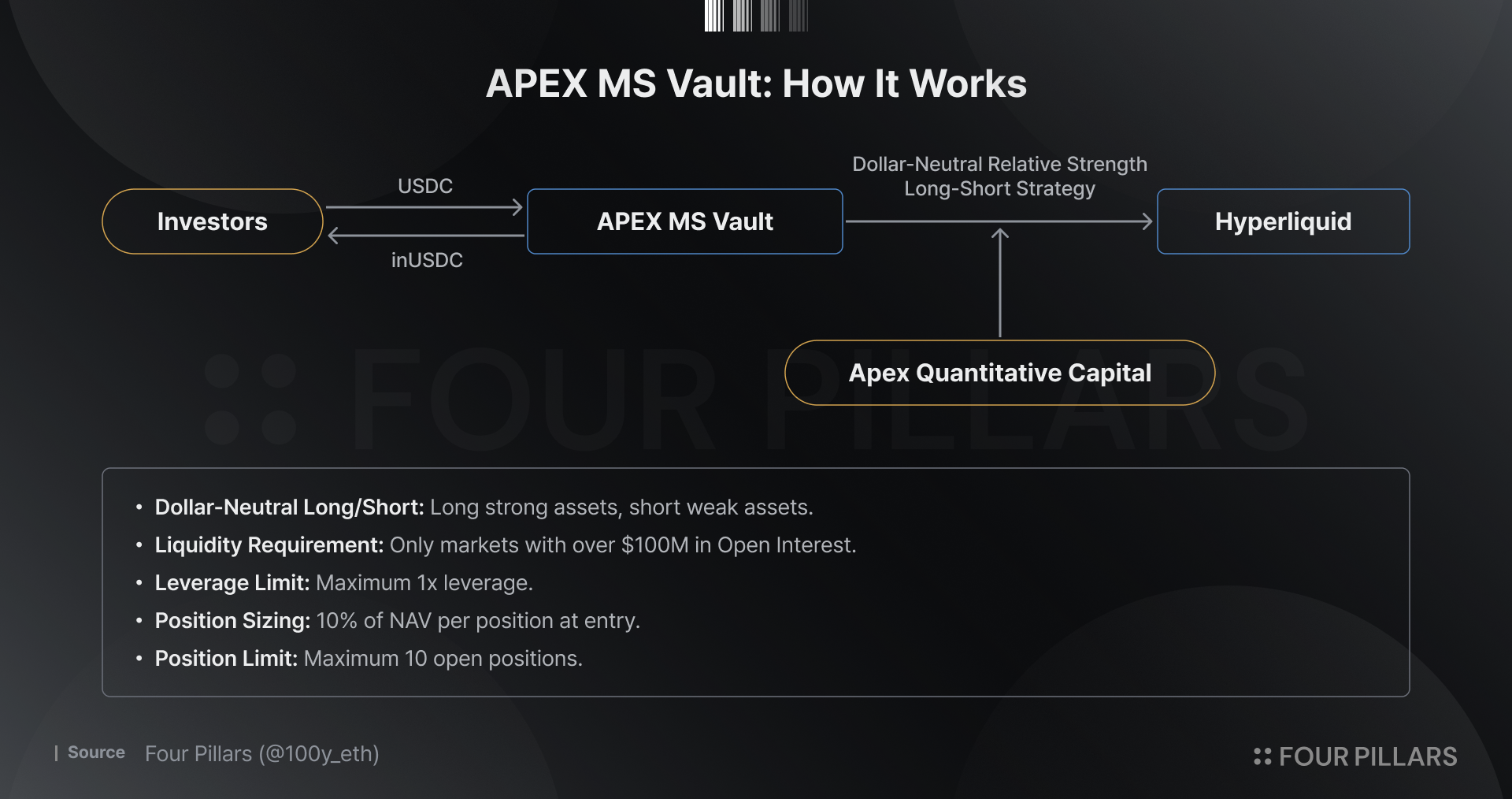
INFINIT's first strategy manager on its AI-powered Trading Strategy Platform is the APEX Multi-Strategy Vault (APEX MS). Managed by the independent quantitative trading team Apex Quantitative Capital, APEX MS is a dollar-neutral, CTA momentum long-short trading strategy on hyperliquid perp. It trades multiple asset clases including equities, commodities, indexes, crypto, and takes no leverage at all times.
2.3.1 Strategy Manager and Vault Structure
Apex Quantitative Capital is responsible for developing the investment strategy and executing trades for APEX MS. The team uses its proprietary quantitative trading system to analyze markets and construct positions, while INFINIT provides the common infrastructure for vault smart contracts, accounting, and settlement.
The USDC deposited by investors belongs to the vault, and investors receive inUSDC, an ERC-20 receipt token representing their proportional share. Assets under management are held through multisignature wallets based on Gnosis Safe and Hypersig. The strategy manager has permission to trade but cannot directly withdraw funds.
APEX MS began operating its first vault in July 2026 with a 90-day term. It charges a 2% annual management fee and a 20% performance fee on realized profits above the high-water mark. The first vault has now completed its trading period, recording an APR of approximately 35%. Including the next vaults, cumulative TVL reaches approximately $4.4 million.
2.3.2 Investment Strategy: Focusing on Relative Performance Rather Than Market Direction
The core APEX MS strategy is Dollar-Neutral Relative Strength Long-Short.
A conventional directional strategy seeks returns by taking long positions when a market or particular asset is expected to rise. A relative strength long-short strategy instead seeks to distinguish stronger assets from weaker ones and profit from the performance gap between the two groups, rather than predicting whether the broader market will rise or fall.
For example, if Bitcoin is expected to exhibit stronger momentum than Ethereum, the strategy might go long BTC and short ETH. Even if both assets decline, the combined positions could generate a profit if Bitcoin falls less than Ethereum.
APEX MS applies this strategy not only to crypto but also to equity indices, commodities, and other asset classes. It screens Hyperliquid perpetual futures markets for those with more than $100 million in open interest, selecting relatively liquid markets and analyzing each asset's price trends.
Its trading system calculates relative strength scores against a broad equity benchmark, with scores ranging approximately from -40 to +40. Assets showing relatively strong uptrends become long candidates, while those displaying relatively weak trends become short candidates.
The AI engine evaluates markets every 15 minutes, but enters trades only when predefined entry thresholds are met. Each position is limited to 10% of vault NAV at entry, with a maximum of ten open positions. Leverage is capped at 1x, and the vault uses isolated margin.
Beyond these position limits, APEX MS employs additional measures to manage risks associated with the trading venue and strategy execution. First, only the working capital required for trading is deployed on Hyperliquid, limiting the vault’s exposure to the trading venue. Rather than relying on fixed stop-loss orders, the strategy uses exit signals based on changes in market trends. It also evaluates the strategy’s effectiveness using actual trade execution prices and transaction costs, in addition to backtested results.
However, the absence of fixed stop-loss orders may limit the strategy’s ability to respond immediately to sudden market movements. Furthermore, even dollar-neutral positioning may fail to provide sufficient risk mitigation during periods of market stress, particularly when correlations between assets change.
Another distinctive feature is the ability to invest across asset classes simultaneously. Even when the broader crypto market is falling, commodities or equity indices may be rising, allowing the strategy to identify opportunities by constructing positions in different directions across markets.
However, a dollar-neutral structure does not eliminate risk. If the assets held long underperform those held short, losses can occur regardless of the market's overall direction. Performance therefore depends heavily on how reliably the strategy's relative strength signals work in live markets.
2.3.3 A Live Trading Example: Long Commodities and Short Crypto
Source: X (@ApexQuants)
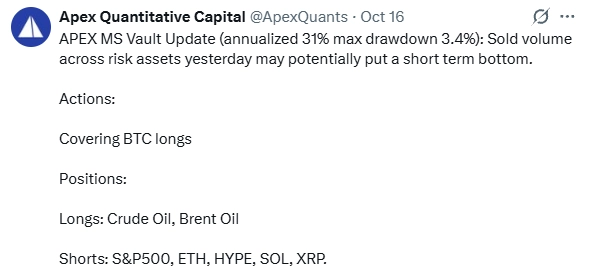
The actual trading activity of APEX MS illustrates how this strategy works in practice. In October 2026, oil prices rose while major cryptocurrencies weakened. APEX MS responded by establishing long positions in oil-related assets and maintaining short positions in certain cryptocurrencies.
The team held a long position in Brent crude from October 1 and added a WTI crude oil long in mid-October. It subsequently closed the WTI position for a gain of approximately 8.6% while taking some profits on Brent.
In crypto, the strategy established short positions in HYPE, XRP, SOL, and ETH, profiting from falling prices. On October 19, it also added a short position in gold and subsequently realized profits as gold prices declined.
According to position-level performance figures released by INFINIT on October 24, the Brent long had gained approximately 11.1% since entry. Short positions in HYPE and XRP had gained roughly 10.2% and 8.2%, respectively, while the SOL and ETH shorts had generated gains of approximately 8.0% and 6.4%.
This illustrates how APEX MS does not depend on the crypto market rising to generate returns. During the same period, the strategy held short positions in several cryptocurrencies while maintaining long exposure to commodities such as crude oil.
2.3.4 Actual Returns and Benchmark Comparison
Source: INFINIT
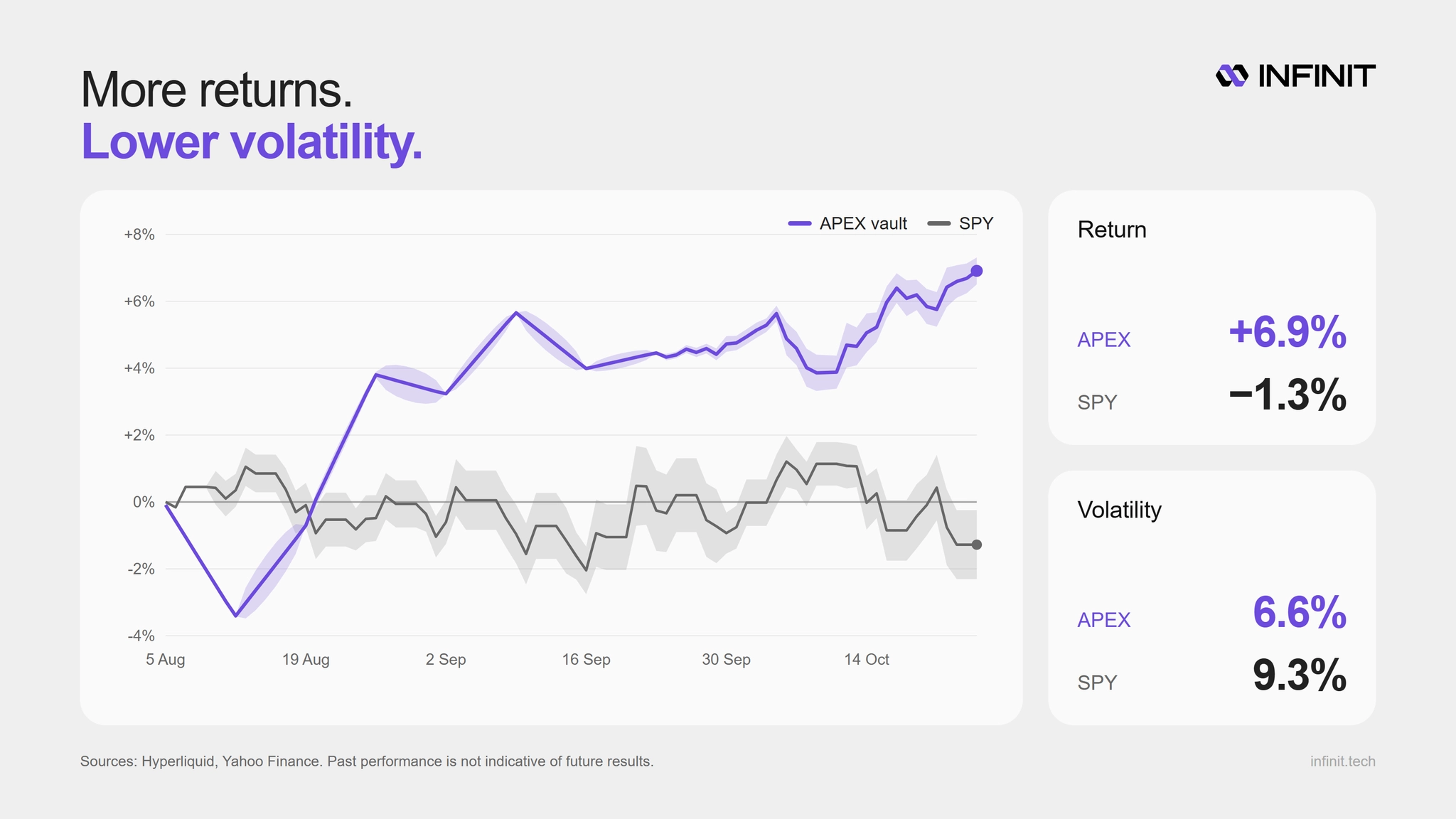
What stands out about APEX MS is not just its absolute return but also its volatility relative to the broader market. According to figures released by INFINIT on October 26, 2026, APEX MS generated a cumulative return of approximately 6.9% over the comparison period. The S&P 500 Index, a benchmark for US equities, declined by around 1.3% over the same period.
Based on INFINIT's announcement, APEX MS outperformed the S&P 500 by approximately 8.2 percentage points while exhibiting lower volatility. Its reported volatility of 6.6% was about 29% below the S&P 500's 9.3% over the same period. This suggests that APEX MS experienced relatively more stable return fluctuations than the benchmark during that period.
This result is consistent with the strategy's focus on relative price movements across assets rather than the direction of the broader market. Even when equity markets decline, the strategy may seek returns by going long relatively stronger assets and short relatively weaker ones.
2.3.5 INFINIT’s Next Vaults
The first APEX MS vault mentioned above was launched in July and successfully completed its 90-day term, delivering a solid APR of approximately 35%. Following the maturity of the first vault, Infinit launched two APEX MS 2 vaults, one with a one-month term and the other with a three-month term. Both vaults employ the same investment strategy as the first APEX MS vault. Given that early withdrawals are difficult due to the nature of APEX MS vaults, these options are expected to provide investors with greater flexibility in choosing their investment duration.
3. Conclusion
INFINIT originally focused on abstracting complex DeFi transactions and strategy execution through AI agents. More recently, it has expanded into abstracting asset management itself through its AI-powered Trading Strategy Platform. Strategy managers develop investment strategies, INFINIT provides the shared infrastructure and standards needed to operate vaults, and investors gain access to a range of strategies through a single marketplace.
The debut APEX Multi-Strategy Vault offers an early example of this model's potential. Whereas traditional DeFi vaults have largely relied on lending yields or liquidity provision fees, APEX MS seeks returns through AI-powered market analysis and active trading. By using perpetual futures on Hyperliquid, it can also gain exposure to price movements across crypto, commodities, equity indices, and other asset classes. During its first term of approximately three months, the vault recorded an APR of 35%, demonstrating the potential to seek returns without relying heavily on overall market direction and offering a differentiated approach from existing onchain yield strategies.
Yet using AI does not guarantee high returns or stable performance. AI-driven investment decisions remain dependent on data quality, model limitations, and changing market conditions. Incorrect relative strength signals or abrupt trend reversals can generate losses, while perpetual futures introduce additional risks associated with liquidation, funding fees, and exchange outages.
Custody and management permissions are equally important. INFINIT separates strategy managers from the entities controlling custody and uses multisignature wallets to prevent managers from withdrawing funds directly. However, this alone does not eliminate every form of custody risk. The actual authority of multisig signers and the controls governing asset movements require verification, while some risk management requirements are enforced through contracts and monitoring rather than smart contract code. Investors also face liquidity risk because early redemption is prohibited during the lock period.
Ultimately, INFINIT will need more than a handful of high-return AI trading strategies to build a sustainable competitive advantage. It must accumulate proven performance records across different market environments, continually attract skilled strategy managers, and demonstrate the reliability of its custody and risk management systems. It is also important to provide investors with transparent information about each vault's operations and risks.
INFINIT is seeking to change how investors access professional asset management by combining AI as a new investment management technology with blockchain as financial infrastructure. The model remains at an early stage and faces many challenges, but a structure in which AI manages investment strategies and blockchain turns them into accessible financial products offers one potential direction for the evolution of asset management.
If the past 250 years of asset management have been a story of making professional financial services accessible to more investors, INFINIT's AI-powered vaults represent an experiment in extending that evolution onchain.
The report is based on the independent research of the author sponsored/funded by INFINIT. The author of this report may have personal holdings or financial interests in assets or tokens discussed herein. However, the author affirms that no transactions have conducted using material non-public information obtained in the course of research or drafting. This report is intended solely for general information purposes and does not constitute legal, business, investment, or tax advice. It should not be used as a basis for making any investment decisions or as guidance for accounting, legal, or tax matters. Any references to specific assets or securities are made for informational purposes only and should not be construed as an offer, solicitation, or recommendation to invest. The opinions expressed herein are those of the author and may not reflect the views of any affiliated institutions, organizations, or individuals. The opinions and analyses expressed herein are subject to change without prior notice. In addition, beyond the individual disclosures included in each report, Four Pillars, may hold existing or prospective investments in some of the assets or protocols discussed herein. Furthermore, FP Validated, a division of Four Pillars, may already be operating as a node in certain networks or protocols discussed herein or may do so in the future. Please see below links in the footer for FP Validated's participating network disclosures and for broader disclosure details.


