


Table of Contents
- 1. Hong Kong Moves Licensed Stablecoins Into Real Distribution With the HKDAP Phase 1 Launch
- 2. Korea Tightens Both Operator Screening and Transfer Management Under the Specific Financial Information Act
- 3. Japan Moves Into a Core Institutional Finance Market as MUFG Brings JGB Repo Onchain
- 4. Other News
- 4.1 Theme 1. Won Based Tokenization and Stablecoin Preparation
- 4.2 Theme 2. Expanding Tokenization Use Cases in Asia
- 4.3 Theme 3. More Granular Regulatory Overhaul and Market Surveillance


1. Hong Kong Moves Licensed Stablecoins Into Real Distribution With the HKDAP Phase 1 Launch
Source: Hong Kong Stablecoin HKDAP Begins Launch
Key Update
- Anchorpoint Financial, a joint venture between Standard Chartered Hong Kong, Animoca Brands, and HKT, began the Phase 1 launch of HKDAP on August 12, introducing the first Hong Kong dollar stablecoin issued under the current HKMA framework.
- Phase 1 targets institutions and professional investors, with an initial focus on real economy use cases such as international payments and RWA tokenization, and OSL Group and HashKey Exchange participating as distribution partners.
- HashKey Exchange completed the first issuance and redemption transactions for eligible clients, with 24 hour transfers and payment efficiency presented as core use cases, while expansion to the general public is scheduled for after the end of 2026.
Commentary: Hong Kong's First Test From Issuance to Real Use
The HKDAP launch marks the first moment in which Hong Kong's stablecoin framework moves into actual payment rails, with the licensed issuer, trading platforms, institutional investors, and professional distributors all operating within a single structure. Hong Kong now has to validate the results of its regulatory design through market operations.
The initial focus on international payments and RWA tokenization treats HKDAP as a settlement asset for banks and institutions, while Korea is still discussing on specifics on issuers for won denominated stablecoins and Japan phases distribution through its electronic payment instrument framework. If HKDAP accumulates institutional payment volume, Hong Kong could be redefined as an Asian payment experimentation ground on top of its role as an issuance hub.
2. Korea Tightens Both Operator Screening and Transfer Management Under the Specific Financial Information Act
Key Update
- The Financial Services Commission announced that an amendment to the Enforcement Decree of the Act on Reporting and Using Specified Financial Transaction Information was approved at a cabinet meeting on August 11.
- The KRW 1 million Travel Rule threshold for transfers between domestic virtual asset service providers will be abolished, and information provision obligations will apply to all domestic transfers starting six months after promulgation.
- From 2027, virtual asset service providers must establish their own suspicious transaction management systems for transfers to overseas exchanges and personal wallets, mainly for transactions of KRW 10 million or more, with additional authentication for high risk or unclear counterparties.
Commentary: Korea's Regulatory Focus Gatekeeping
The package bundles market entry control and asset movement control into one supervisory framework, placing who the operators are and where assets move under the same discipline. Korea is reorganizing control over the distribution network before setting rules for stablecoin issuance.
The review of de facto controlling shareholders targets exchange ownership structures, including foreign major shareholders such as OKX and Binance, and treats exchanges as supervisory targets closer to financial companies. When won denominated stablecoins eventually arrive, ownership structures and transfer controls will decide whether Kakao Pay, banks, exchanges, and fintechs can enter the issuance discussion.
3. Japan Moves Into a Core Institutional Finance Market as MUFG Brings JGB Repo Onchain
Source: MUFG Pursues Proof of Concept for Onchain JGB Repo Using Canton Network
Key Update
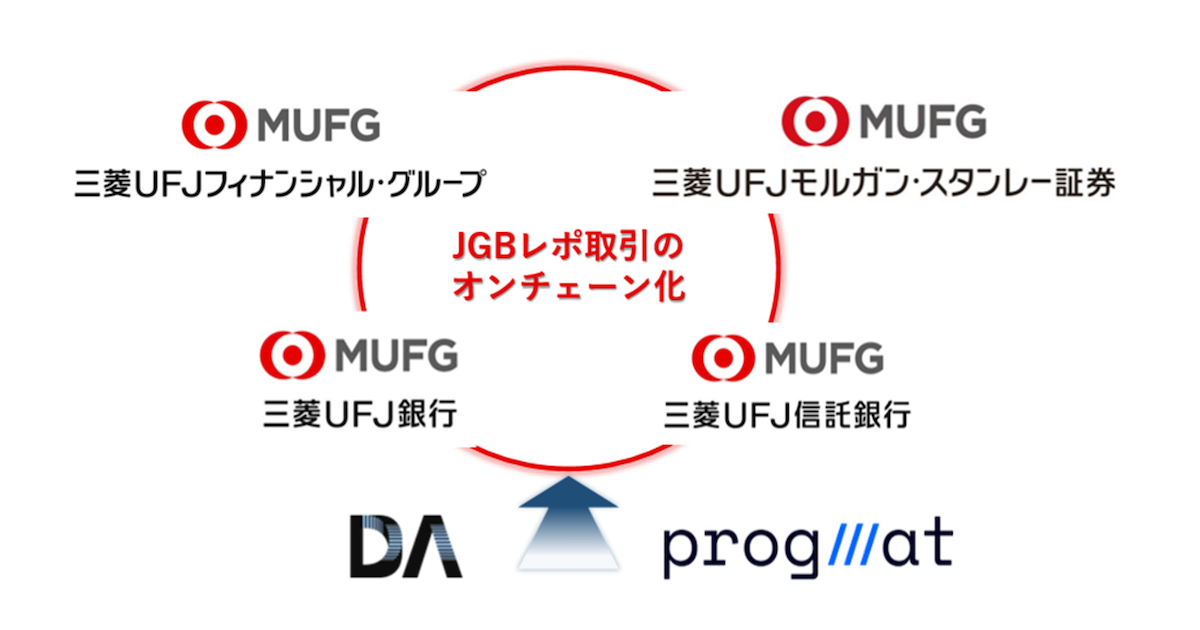
- MUFG, Mitsubishi UFJ Morgan Stanley Securities, Mitsubishi UFJ Trust and Banking, and Mitsubishi UFJ Bank are beginning a proof of concept with Digital Asset and Progmat to bring Japanese government bond repo transactions onchain using Canton Network, a network designed for institutional investor finance.
- The experiment was selected in February 2026 as a supported project under the Japan Financial Services Agency's payment modernization initiative.
- The first proof of concept tests simultaneous settlement of JGBs and digital money, preserving the legal nature of JGBs while linking onchain transaction results to updates of the existing JGB ledger, with tokenized deposits or stablecoins considered as settlement instruments.
- The second proof of concept brings the entire repo process onchain, testing whether post trade reconciliation, delivery of funds and collateral, interest calculation, maturity management, and collateral return can run through smart contracts toward 24/7/365 operations.
Commentary: Tokenization's Center of Gravity Moves Toward the Repo Market
Repo markets connect government bond collateral, short term liquidity, reconciliation, settlement, and collateral return within a single market. Success in this area could therefore open a much broader path toward other institutional financial products. This design also resembles a unified ledger, as legal rights to Japanese government bonds remain on existing ledgers while onchain outcomes instruct ledger updates and settlement assets enter the same transaction flow.
The division of responsibilities is particularly significant because it has been structured with commercialization in mind. Digital Asset will provide the Canton Network based tokenization framework and handle token issuance and management, while Progmat will analyze existing market practices and support commercialization. Initial transactions will take place among MUFG group companies, with the goal of reducing the current settlement cycle for Japanese government bond repos from more than one day to near instant settlement.
The next point to monitor is when the pilot connects with actual repo liquidity. The tokenized Japanese government bond working group led by Progmat includes BlackRock Japan, Japan’s three megabanks, major securities firms, and custodians, and is considering a tokenized government bond issuance. The speed at which the Japanese pilot secures commercial transaction volume will therefore become an important benchmark for the onchain transformation of institutional finance in Asia.
4. Other News
This section summarizes other Asia news from the period related to RWA, stablecoins, tokenization, and digital asset infrastructure.
4.1 Theme 1. Won Based Tokenization and Stablecoin Preparation
4.1.1 Shinhan Asset Management Conducts Won Denominated Tokenized Fund Proof of Concept With Plume
- Shinhan Asset Management is validating the full issuance and distribution process for a won denominated ultra short term bond fund with Plume Network, choosing an offshore structure that blocks access by domestic residents to reduce regulatory burden.
4.1.2 Kakao Pay Hires Dedicated Staff for Won Denominated Stablecoins
- Kakao Pay is hiring personnel for KRW stablecoin issuance and distribution systems as well as wallet products, moving won denominated stablecoin discussion into the private business design stage before legislation.
4.1.3 Sovereign Wealth Fund KIC Makes New Investment in Stablecoin Issuer Circle
- Korea Investment Corporation newly held 65,443 Circle shares valued at about USD 4,098,695 in the second quarter of 2026, adding issuer equity to its digital asset related portfolio and changing the form of institutional stablecoin exposure.
4.2 Theme 2. Expanding Tokenization Use Cases in Asia
4.2.1 Bappenas Promotes RWA Tokenization as a Key Tool to Reduce Indonesia's Economic Gaps
- Indonesia's Bappenas presented RWA tokenization as a means of expanding investment access and opening new financing channels for regional economies, positioning tokenization as a policy tool for financial inclusion.
4.2.2 Blockchain Enters the Creative Economy as Menekraf Pursues IP Tokenization
- Indonesia's Menekraf is pursuing tokenization of creators' intellectual property to make royalties easier to secure and commercialize, extending RWA tokenization beyond government bonds and funds into cultural assets and creator finance.
4.2.3 Kyobo Life Partners With Toss to Build Virtual Asset Financial Services
- Kyobo Life signed an MOU with Toss to build a digital asset ecosystem and develop virtual asset based financial services after technical validation, a combination of an insurer and a fintech that signals broadening digital asset use cases in Korea.
4.3 Theme 3. More Granular Regulatory Overhaul and Market Surveillance
4.3.1 Bitazza Adopts Sumsub Solution Ahead of Thailand Travel Rule Implementation
- Bitazza Thailand adopted Sumsub's Travel Rule solution ahead of new SEC requirements for collecting and exchanging digital asset transfer information, as Southeast Asian exchanges build transfer infrastructure aligned with FATF standards.
4.3.2 Four Organizations to Create APAC Guidance for Permissionless Blockchains
- Elliptic, DAA, RFI, and Baker McKenzie launched the Project Pigeon working group in Singapore to develop governance and risk management standards for Asia Pacific financial institutions using permissionless blockchains, following MAS consultation papers.
4.3.3 Criteria for Determining “Personal Wallets Excluded From Reporting” Specified in Four Points
- The FIU presented four criteria for determining whether non custodial personal wallets are excluded from reporting requirements, centered on whether the operator exclusively manages private keys and holds sole transfer authority.
4.3.4 National Tax Service Introduces Additional Digital Asset Transaction Tracking Program
- The National Tax Service introduced an additional transaction tracking program and will upgrade AI based forensic systems to trace movement paths and ultimate beneficiaries, incorporating digital assets into tax investigation infrastructure.
[ASA News] is a weekly newsletter that summarizes key stablecoin related news across Asia and shares perspectives from industry participants. (2026.08.10~08.16)
The author of this report may have personal holdings or financial interests in assets or tokens discussed herein. However, the author affirms that no transactions have conducted using material non-public information obtained in the course of research or drafting. This report is intended solely for general information purposes and does not constitute legal, business, investment, or tax advice. It should not be used as a basis for making any investment decisions or as guidance for accounting, legal, or tax matters. Any references to specific assets or securities are made for informational purposes only and should not be construed as an offer, solicitation, or recommendation to invest. The opinions expressed herein are those of the author and may not reflect the views of any affiliated institutions, organizations, or individuals. The opinions and analyses expressed herein are subject to change without prior notice. In addition, beyond the individual disclosures included in each report, Four Pillars, may hold existing or prospective investments in some of the assets or protocols discussed herein. Furthermore, FP Validated, a division of Four Pillars, may already be operating as a node in certain networks or protocols discussed herein or may do so in the future. Please see below links in the footer for FP Validated's participating network disclosures and for broader disclosure details.


